



Gender equality key to addressing low fertility







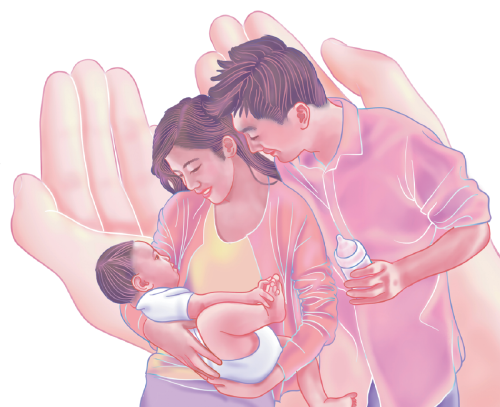
Women and their partners across developed economies in Europe and Asia have identified one of the key reasons why they choose to have no children or only one child — it is unaffordable.
Does this mean if governments want to address low fertility rate, all they need to do is make child rearing more affordable with better financial support? Not necessarily.
Over the past 16 years, the Republic of Korea has spent $200 billion on a generous package of family support measures intended to boost the population, but at 0.84 births per woman its fertility rate remains one of the lowest in the world. Similarly, Singapore provides a generous support package for children, including up to $18,000 in financial support for the first born and $28,000 for subsequent children, but its fertility rate has remained at 1.12.
A package of family support measures throughout childhood, with the right design, is welcome as it enables greater reproductive choice for women and their partners, while also addressing inequalities faced by children born into low-income households. But it does not guarantee a national increase in the number of births.
Low fertility in a population doesn't necessarily mean that women and their partners don't want to have children. Across developed economies, we see that the average desired family size is higher than the actual family size. China is no different: in 2020 the fertility rate was an average of 1.3 births per women but when asked about ideal family size, the average was 1.8 births. So, what stops women from realizing their fertility aspirations?
In a world of high work demand and a modern style of more intensive parenting, if women reach a point where the conflict between the demands of work and parenting cannot be reconciled, they either have to withdraw from work, or choose to have fewer or no children. But for many, leaving work is not an option because of the high cost of living, nor is it wanted given the satisfaction and independence gained from working. As provinces across China begin to introduce a range of strengthened family-support measures, what can we learn from the global experience?
If family support policies only focus on working mothers, for example through access to benefits and flexibility not available to working fathers, rather than reconciling the conflict between work and motherhood, women can end up being pushed even further out of senior and career track positions because they are seen as costing more or being "more complicated" to employ. When they return to work after maternity leave, women's pay has been shown to permanently fall behind that of women and men who didn't take time away from work. This contributes to a lifetime gender inequality in earnings.
To address this gender imbalance, China could learn from the experience of countries that are trialing more flexible approaches to parental leave, where both parents can choose between longer leave with lower financial support and shorter leave with higher levels of replacement income, as well as offering blocks of shorter paid leave in the preschool years.
In some countries where there are societal expectations toward parenting roles based on entrenched gender norms, a "use it or lose it" longer parental leave has been introduced, specifically targeting fathers. This supports a norm of equal parenting responsibility for mothers and fathers, enables women to take less time away from their careers, and addresses negative perceptions of maternity leave, while still ensuring babies benefit from close parental care.
Beyond the first year of a child's life, working parents need a system of childcare that supports pre-school and afterschool care. Childcare needs to be conveniently located, of a high quality standard that is reliable enough for parents to want to send their children, and, importantly, it needs to be affordable. In some countries, when childcare costs rise too steeply, couples realize that it is more cost effective for one parent to stay at home until the children start school — and this is very often the woman — thus, negating the gender equality benefits of shared parental leave, and signaling to young women that the conflict between work and family cannot be reconciled.
Making work more flexible could also help women and their partners juggle the demands of work and parenting. Opportunities for greater flexibility, such as working remotely, job-sharing and a 4-day week, could help employers retain talent and maintain labor productivity, whilst making the demands of working life and parenting more compatible for women and their partners.
But what about when women get home after a long, demanding day at work? Who does the childcare, the cooking, the cleaning? Women can balance work and family responsibilities better if there is simply less for them to do at home, and evidence suggests that when men spend more time in childcare, couples are more likely to have an additional child. In China, a 2018 study found that women spend 2.6 times more time than men on unpaid care and domestic work. However, these gendered patterns can be hard to change. The domestic sphere can fall outside of the reach of public policy, and gender norms can be so deeply rooted that both men and women will justify an imbalance in the allocation of unpaid domestic work. We see this globally and across different economic quintiles.
To address low fertility at the national level, women need to be able to address the often unbearable conflict between the demands of work and family at the personal level. Rather than focusing family support measures on women alone, policies need to be designed around the principles of maximizing reproductive choices and supporting couples' fertility aspirations, by achieving gender equality at home and at work and introducing practices that contribute to changing gender norms.
The author is the representative of the United Nations Population Fund in China. The views don't necessarily represent those of China Daily.
The views don't necessarily reflect those of China Daily.





