US Hegemony and Its Perils







IV. Technological Hegemony -- Monopoly and Suppression
The United States seeks to deter other countries' scientific, technological and economic development by wielding monopoly power, suppression measures and technology restrictions in high-tech fields.
- The United States monopolizes intellectual property in the name of protection. Taking advantage of the weak position of other countries, especially developing ones, on intellectual property rights and the institutional vacancy in relevant fields, the United States reaps excessive profits through monopoly. In 1994, the United States pushed forward the Agreement on Trade-Related Aspects of Intellectual Property Rights (TRIPS), forcing the Americanized process and standards in intellectual property protection in an attempt to solidify its monopoly on technology.
In the 1980s, to contain the development of Japan's semiconductor industry, the United States launched the "301" investigation, built bargaining power in bilateral negotiations through multilateral agreements, threatened to label Japan as conducting unfair trade, and imposed retaliatory tariffs, forcing Japan to sign the US-Japan Semiconductor Agreement. As a result, Japanese semiconductor enterprises were almost completely driven out of global competition, and their market share dropped from 50 percent to 10 percent. Meanwhile, with the support of the US government, a large number of US semiconductor enterprises took the opportunity and grabbed larger market share.
- The United States politicizes, weaponizes technological issues and uses them as ideological tools. Over-stretching the concept of national security, the United States mobilized state power to suppress and sanction Chinese company Huawei, restricted the entry of Huawei products into the US market, cut off its supply of chips and operating systems, and coerced other countries to ban Huawei from undertaking local 5G network construction. It even talked Canada into unwarrantedly detaining Huawei's CFO Meng Wanzhou for nearly three years.
The United States has fabricated a slew of excuses to clamp down on China's high-tech enterprises with global competitiveness, and has put more than 1,000 Chinese enterprises on sanction lists. In addition, the United States has also imposed controls on biotechnology, artificial intelligence and other high-end technologies, reinforced export restrictions, tightened investment screening, suppressed Chinese social media apps such as TikTok and WeChat, and lobbied the Netherlands and Japan to restrict exports of chips and related equipment or technology to China.
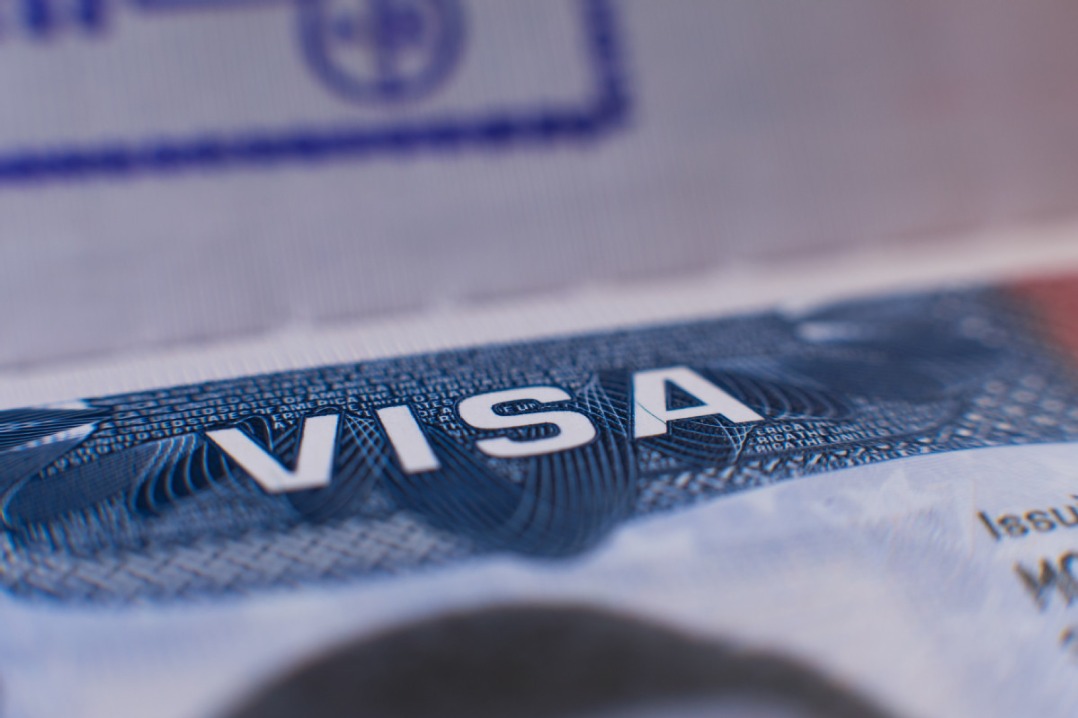
The United States has also practiced double standards in its policy on China-related technological professionals. To sideline and suppress Chinese researchers, since June 2018, visa validity has been shortened for Chinese students majoring in certain high-tech-related disciplines, repeated cases have occurred where Chinese scholars and students going to the United States for exchange programs and study were unjustifiably denied and harassed, and large-scale investigation on Chinese scholars working in the United States was carried out.
- The United States solidifies its technological monopoly in the name of protecting democracy. By building small blocs on technology such as the "chips alliance" and "clean network," the United States has put "democracy" and "human rights" labels on high-technology, and turned technological issues into political and ideological issues, so as to fabricate excuses for its technological blockade against other countries. In May 2019, the United States enlisted 32 countries to the Prague 5G Security Conference in the Czech Republic and issued the Prague Proposal in an attempt to exclude China's 5G products. In April 2020, then US Secretary of State Mike Pompeo announced the "5G clean path," a plan designed to build technological alliance in the 5G field with partners bonded by their shared ideology on democracy and the need to protect "cyber security." The measures, in essence, are the US attempts to maintain its technological hegemony through technological alliances.
- The United States abuses its technological hegemony by carrying out cyber attacks and eavesdropping. The United States has long been notorious as an "empire of hackers," blamed for its rampant acts of cyber theft around the world. It has all kinds of means to enforce pervasive cyber attacks and surveillance, including using analog base station signals to access mobile phones for data theft, manipulating mobile apps, infiltrating cloud servers, and stealing through undersea cables. The list goes on.
US surveillance is indiscriminate. All can be targets of its surveillance, be they rivals or allies, even leaders of allied countries such as former German Chancellor Angela Merkel and several French Presidents. Cyber surveillance and attacks launched by the United States such as "Prism,""Dirtbox,""Irritant Horn" and "Telescreen Operation" are all proof that the United States is closely monitoring its allies and partners. Such eavesdropping on allies and partners has already caused worldwide outrage. Julian Assange, the founder of Wikileaks, a website that has exposed US surveillance programs, said that "do not expect a global surveillance superpower to act with honor or respect. There is only one rule: there are no rules."