High-quality cooperation in the Belt and Road Initiative







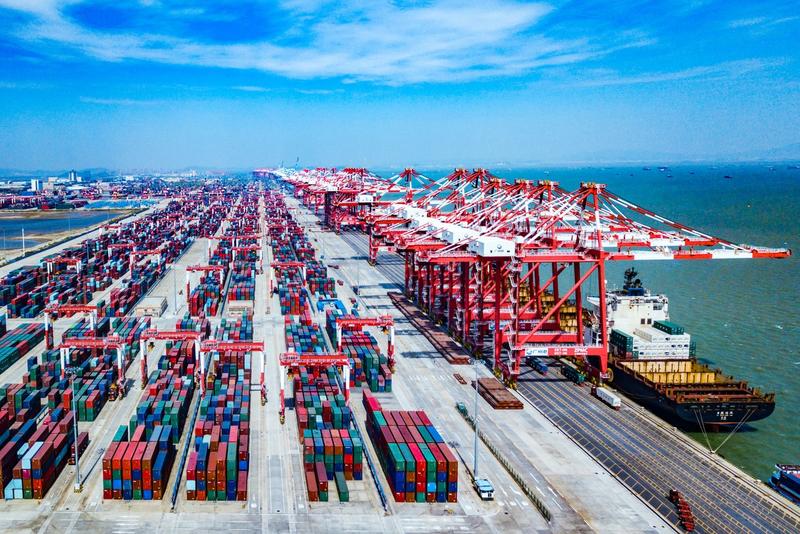
As the world faces a prospect of retreat from globalisation towards hyper-nationalism due to present conflicts and wars, it is prudent to reflect on the benefits of the Belt and Road Initiative (BRI) launched in 2013 by the People's Republic of China President Xi Jinping.
This reflection is important in a context of efforts underway to rebuild countries still suffering from negative effects of Covid-19 on trade and cooperation in multilateral institutions. The BRI benefits can be quantified to underline a reason why President Xi presently speaks of promoting high-quality BRI cooperation.
For one, 151 countries and 32 international organizations have joined the BRI by January 6, 2023. Tangible and practical material fruits from these agreements have yielded trade of over $9.2 trillion (R135 trillion), and the PRC's business investments in countries along the Belt and Road has been pegged at $130 billion between 2013 and 2020.
This explains why President Xi is on record in declaring that, while the "BRI may be China's idea, but its opportunities and outcomes are going to benefit the world. China has no geopolitical motives, seeks no exclusionary blocs, and imposes no business deals on others".
These positive remarks debunk the unfounded myth that the PRC imposes a debt trap on developing nations and is unconcerned about the environmental impact of its policies and projects at home and abroad. Instead, the available solid evidence paints and points to a BRI, which promotes, in word and deed, confidence-building growth, carbon-neutral development and shared prosperity, and mutual benefits among the participants.
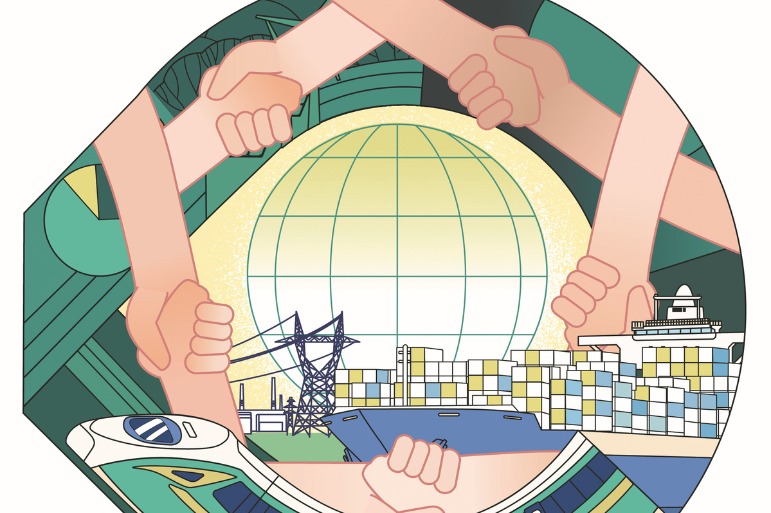
The BRI building blocks are now well-established, namely, the advancement of "hard connectivity" of infrastructure development, "institutional connectivity" focusing on strengthening multilateral bodies (like the UN, WHO, WTO) to advance shared rules and standards, and "soft connectivity" premised on people-to-people understanding and deepening solidarity.
These connectivity channels – mainly linking Asia to Europe and Africa plus Latin America using maritime and land route networks – remain relevant in a post-Covid-19 period where emphasis now includes risk mitigation strategies and integrating green finance to project management.
Why does the BRI emphasise "high-quality" development? President Xi has set out the clear requirements parameters and requirements for high-quality BRI cooperation.
Firstly, it speaks to further opening up of the PRC domestic market to investments and competition of and for services and goods by foreign-owned businesses and enterprises. Such competition can only serve to promote innovation and shared prosperity.
Secondly, cooperation in sharing and strengthening intellectual property protection will be paramount. This has been highlighted by the Covid-19 health and economic pandemic that an enabling environment for cooperation rather than competition for IP is central if humanity as a whole will defeat pandemics and crises that cross borders without regard for nationality, class, ideology or technological barriers.
In his own words, President Xi is emphatic that the PRC will promote technological exchanges and cooperation with other countries on the basis of market principles and the rule of law. The Republic of South Africa (RSA) can certainly gain from sharing in advanced technology from the PRC, which has enabled the latter to deal decisively with assorted crises.
Thirdly, while China is "both a global factory and a global market" and has the "world's largest and fastest-growing middle-income population", there is ample space and political will in this vast country in its international trade to avoid creating directly and indirectly, trade surpluses so that a balanced fair-trade climate is facilitated. Here again, the RSA has much to profit in China's consumer market hungry for beneficiated goods.
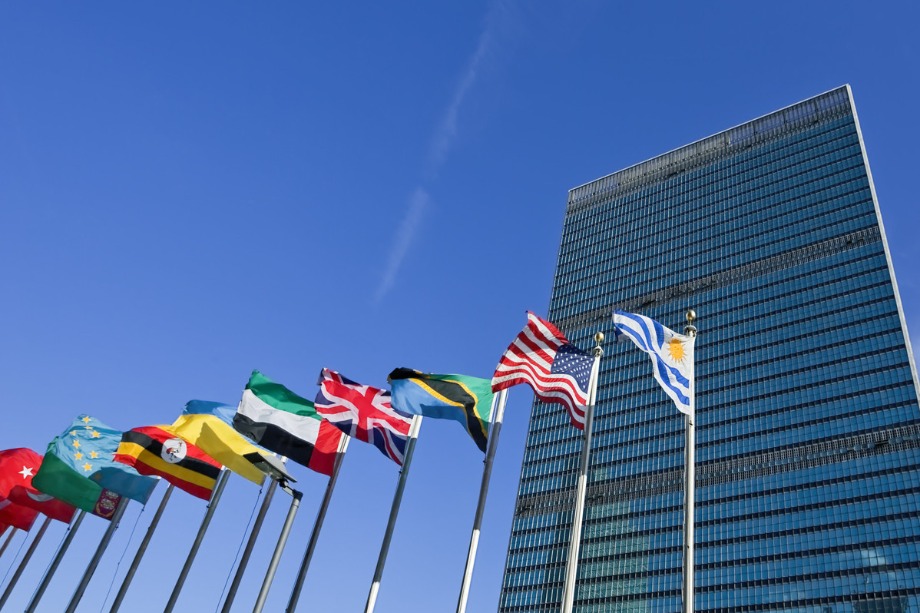
Fourthly, there is no doubt international cooperation and solidarity is indispensably crucial to addressing global crises such as conflicts, terrorism, climate change and trade protectionism. Global governance institutions like the WTO, WHO and UN require active and continuous support and not abuse through unilateral sanctions and politicisation of human suffering.
It is encouraging that the PRC and the RSA are enthusiastic supporters of multilateral bodies and the international norms and standards they are mandated to champion.
In this sense, both countries are indeed all-weather friends in endorsing and honouring multilateral and bilateral agreements such as the Joint Comprehensive Plan of Action (JCPOA), known as the Iran Nuclear Deal, which was sadly hijacked and bastardised by the short-termist domestic politics of the United States of America. This makes the Chinese truism all the more seminal that to honour a promise carries the weight of gold.
Fifthly, promoting and maintaining high-standard and high quality is a 21st-century existential necessity. It talks to environmentally friendly practices, sustainable projects, frugal economic partnerships, and international best practices that respect and honour the sovereignty of each country and its civilisation. Above all, it is about intolerance for greed and corruption, which robs the poor and disenfranchised of opportunities and benefits that flow and accrue from high-quality BRI.
China's Belt and Road Initiative is certainly a game-changer in international affairs, trade and financial relations, and the governance of multilateral institutions. It is estimated by a World Bank Report that the BRI projects in 2030 could assist in uplifting more than 7.6 million people from extreme poverty and 32 million from moderate poverty. In this regard, protectionism, trade barriers, unilateralism, exceptionalism and manifest destiny attitudes and behaviour are anathema to high-quality BRI cooperation.
It is not by coincidence President Xi is fond of referencing the saying that "pursuing protectionism is like locking oneself in a dark room".
The author Paul Tembe is a sinologist and founder of SELE Encounters.