



Tap opportunities of population trends







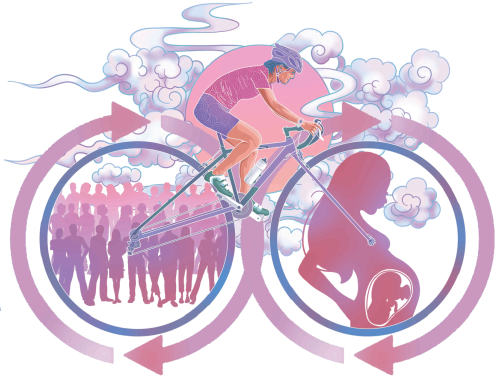
There are always two sides of the same coin for a populous country: a large population may prop up growth, but will also impose pressure on resources and environment.
According to the latest forecast of the United Nations, China's population will remain above 1.4 billion before 2035, and will stay above 1.3 billion in 2050. China remains one of the two countries with a population exceeding 1 billion.
Across the world, the 37 developed countries that have achieved modernization have a total population of 1.09 billion, most of which have only a few million or tens of millions of people. That China is on the road to becoming a modern society with a population of more than 1 billion is a unique and pioneering undertaking in human history.
China's population will see negative growth in the 14th Five-Year Plan period (2021-25). Over the next 30 years, the overlapping negative population growth and aging in China will profoundly drag on economic and social development. The number of people aged 60 and above and the level of aging will both double, from 264 million or 18.7 percent in 2020 to a peak of 520 million or more than 40 percent in 2054, and the country will become a super-aging society. Besides, the scarcity of labor resources will continue to intensify. The size of the working-age population aged 15-59 will continue to shrink, from 890 million people, 63.2 percent of the total population in 2020, to 650 million people, 50 percent of the projected population in 2050.
In addition, more emphasis will be placed on supporting the elderly instead of raising children. In 2020, the number of elderly people exceeded the number of children. Moreover, the level of urbanization will steadily increase. The total rural permanent population peaked at 860 million in 1995 and then declined to 499 million in 2021 while the urban permanent population continued to increase from 352 million in 1995 to 914 million. Negative population growth, deepening aging, and accelerating urbanization will significantly affect people's production, life, and social interactions, and change the structure and model of social governance and social services.
Looking ahead, promoting an increase in fertility rate is a necessary choice to propel the long-term balanced development of the population.
But the fertility policy and its supporting measures that try to increase the fertility level will not be able to achieve the same significant effect as that in the era of reducing the fertility rate, and nor can the fertility level be raised overnight. The practice of developed countries in the past half century has proved as such.
Therefore, formulating and implementing fertility support policies requires patience, confidence, perseverance, and sustained efforts. The birth support policy system consists of a series of elements, which requires decision-makers to move with the times, comprehensively implement policies, take a long-term view, and not be narrow-minded. In policy formulation, the requirements for the number of children in a family, the way of implementing policies, especially the supporting package of economic, social and family support measures, need to be considered. The key is to be close to the people, introducing measures that are targeted, operable, practical and effective.
A fair and neutral childbirth public policy system should be constructed to optimize childbirth policy.
In the future, the endogenous pressure that will really hinder fertility will not come from the fertility policy, but the development environment. The childbearing policy should be neutral, fair, just, and equal, including urban and rural areas, regions, birth order, ethnic groups, etc. The government should improve social public policies, improve people's livelihoods, strengthen social governance systems and build a unified social public policy, economic policy and family support policy system related to childbirth welfare, childbirth safety and childbirth care, strengthen service management, meet the diverse needs of different childbearing groups, and help them achieve their childbearing goals.
Focusing on the overall improvement of the quality of the population, including health quality, education level, and skill and technology accumulation, should be the core of promoting the long-term balanced development of the population under the current population size and structure.
In addition, China should seek and develop new opportunities while actively adapting to the new population situation. These new opportunities should be fully tapped and utilized to create new miracles of economic and social development.
The author is a professor with the School of Economics of Nankai University and vice-chairman of the China Population Association. The views don't necessarily represent those of China Daily.
If you have a specific expertise, or would like to share your thought about our stories, then send us your writings at opinion@chinadaily.com.cn, and comment@chinadaily.com.cn.





