US midterms: Set against a fractured nation







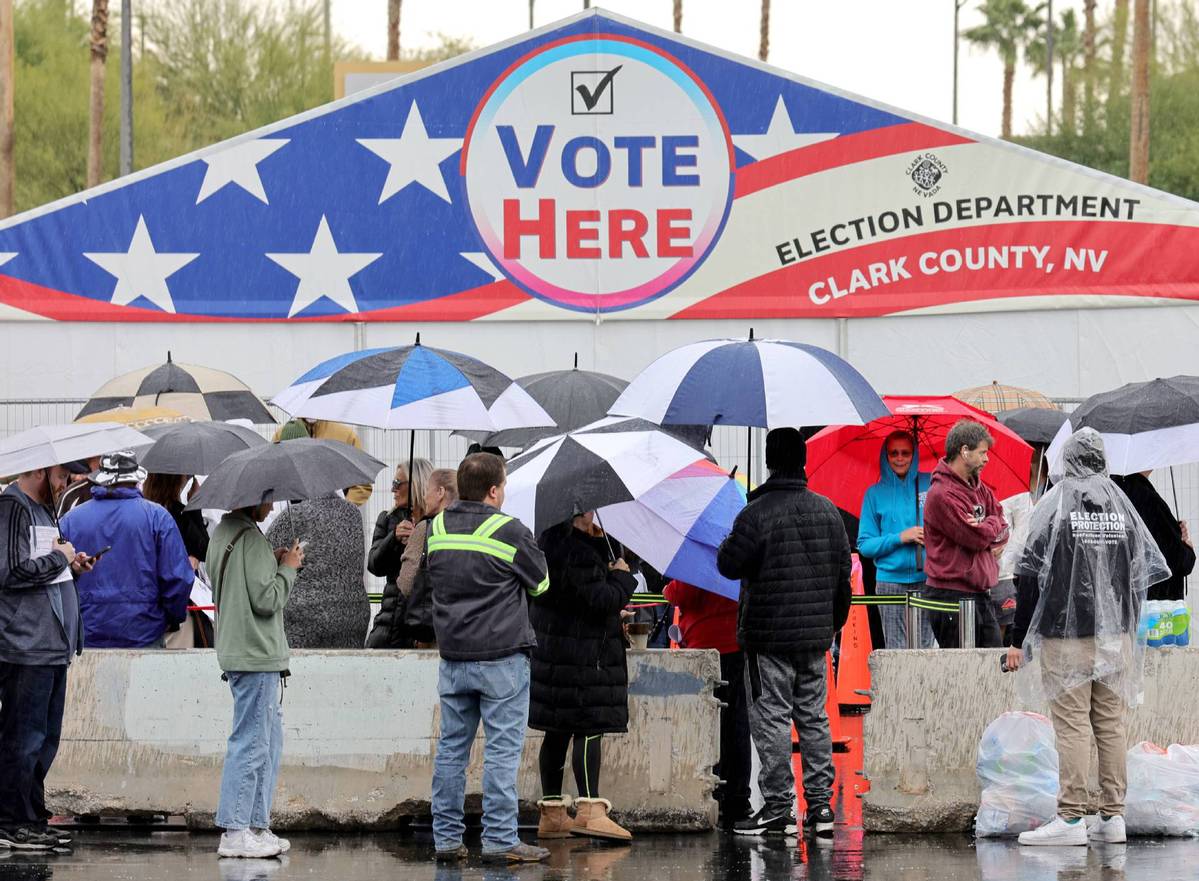
The Irish poet W. B. Yeats could have had the upcoming US midterm elections in mind when he wrote "Things fall apart, the center cannot hold".
In the Pre-Trump days, I remember reading the rollicking account published in 2008 by Joe Bageant, "Shooting Deer for Jesus - Dispatches from America's Class War". Bageant noted the potent alienation of much of the US white working class, left behind in the accelerating changes taking place in our world. While I appreciated, and chuckled, about his observations, I viewed them as a parody concerning a significant portion, though still a minority in the US citizenry.
The shock election of Donald Trump less than a decade later showed just how precise Bageant had been, and to what extent the views he enunciated had come to have powerful presence in the US. The upcoming US midterm elections are likely to confirm the strength of those views, while also showing how deeply divided the (dis) United States has become.
The Trump presidency, particularly its end in the January 6, 2021 storming of Congress, signified the culmination of a series of events and occurrences in the US which had brought the anger of a significant part of the populace to a "white hot" level. That intense resentment arose as a response to marginalization. Out of that powerlessness, and feeling their hope was vested in Donald Trump with his promise to take on "the elites", this indignant cohort believed that hope was being taken away from them by fraudulent means.
They had much to be angry about, though "a stolen election" was not the real issue. What had been stolen from them was the "American dream", the idea that the US represented the land of opportunity, where everyone's dreams could be relished and realized.
The steps to that dream have, however, been taken away, replaced by a wall making economic advancement increasingly difficult. Those trapped on the wrong side of the wall have seen their situation grow ever grimmer.
A few figures suffice to show how those not only at the bottom, but indeed the vast majority of US citizenry, are being left behind.
An Economic Policy Institute study shows US income inequality is worsening with earnings of the top 1% nearly doubling from 7.3% in 1979 to 13.2% in 2019.
The average income of the top 1 percent was 138 times that of the bottom 50 percent in 2010, up from 41 times higher in 1980.
Figures from the Congressional Budget Office in 2019 show that growing income differentiation is not only between the top and bottom but also between the top and middle. The income of those in the top 1% is at $1.8 million and is approximately 30 times the $59,300 income of the middle quintile of the populace.
The average pretax income of the top tenth has doubled since 1980, that of the top 1% more than tripled, while that of the top 0.001% has risen more than sevenfold, even as the average pretax income of the bottom half of Americans has stayed almost precisely the same.
Between 1979 and 2013, median hourly wages rose just 6%, less than 0.2 percent per year.
The US is the only major developed society where the average income of the bottom half has not just stagnated but also declined markedly.
The middle is being hollowed out.
Taxation policy does little, if anything, to ameliorate this inequality. A Washington Post article in 2019 quoted a study showing that the average effective tax rate paid by the richest 400 families in the country was 23%, a full percentage point lower than the 24.2% rate paid by the bottom half of US households.
The Social Progress Index released in September 2020 shows that of the 163 countries assessed, the US, Brazil and Hungary were the only three countries in which people had become worse off. The index collects several metrics of well-being, including nutrition, safety, freedom, the environment, health, education and others to measure the quality of life in a country. In each of those three nations lack of trust has led to extremist rulers.
That lack of trust with the government and its system has become endemic in the US. A nationwide online survey of 8,620 adults conducted by the Violence Prevention Program at the University of California in July 2022 found:
67.2% perceived there was a "serious threat to our democracy"
1% agreed that in the next several years, there will be civil war in the United States
42.4% agreed that "having a strong leader ismore important than having a democracy"
20.5% thought that political violence was at least occasionally justifiable "in general" while 18.7% agreed strongly or very strongly that violence or force was needed "to protect American democracy" when elected leaders would not.
Another study shows that the level of confidence that the US populace have in their key institutions isin sharp decline. That confidence placed in the US presidency has fallen from 52% in 1975 to 37% in 2018, while confidence in the US Congress has tumbled from 42% in 1973 to just 11% in 2018. The collapse of trust in Congress indicates that increasing numbers believe that its decisions are determined less by voters, than by funders. The make-up of the House serves to fuel such views. Politics in the US has become dominated by the rich, and the rich have a propensity to serve the interests of their own.
What makes this wide loss of trust more telling is the sharp contrast with the rising rival superpower, China.
In China, the bottom 50% of the population has seen massive improvements in their standard of living in recent decades. Indeed, the past 40 years of social and economic development that the Chinese people have enjoyed have been the best in thefour thousand years of Chinese history.
While there is both a loss of morale and growing anger in the US, in China there is unbounded optimism. The low faith held by US citizens in their government and the system can be distinguished from that of the Chinese populace who have a stratospheric trust, polled by a Harvard study, among others, at over 90%, in their government and system.
This only serves to cause more confusion in the US where much of the populace prefersto see things in binaries, as in "we" are right while "they" are wrong.
Confused and disillusioned, with no acceptable analytical tool at hand, the reaction of a significant segment of the US populace, particularly that segment identified by Bageant, has been to lash out. We can expect much of this in the midterms. Whether it is enough to give the Republicans, now completely sold to Trump, a majority in the Senate or House, we shall wait to see.
If it does, those who sought to assail Congress by violent means will have successfully claimed it by a more peaceful method.
John Queripel is a Newcastle-based author and historian and social commentator.
The opinions expressed here are those of the writer and do not necessarily represent the views of China Daily and China Daily website.
If you have a specific expertise, or would like to share your thought about our stories, then send us your writings at opinion@chinadaily.com.cn, and comment@chinadaily.com.cn.