



Help the poor to adapt to global warming







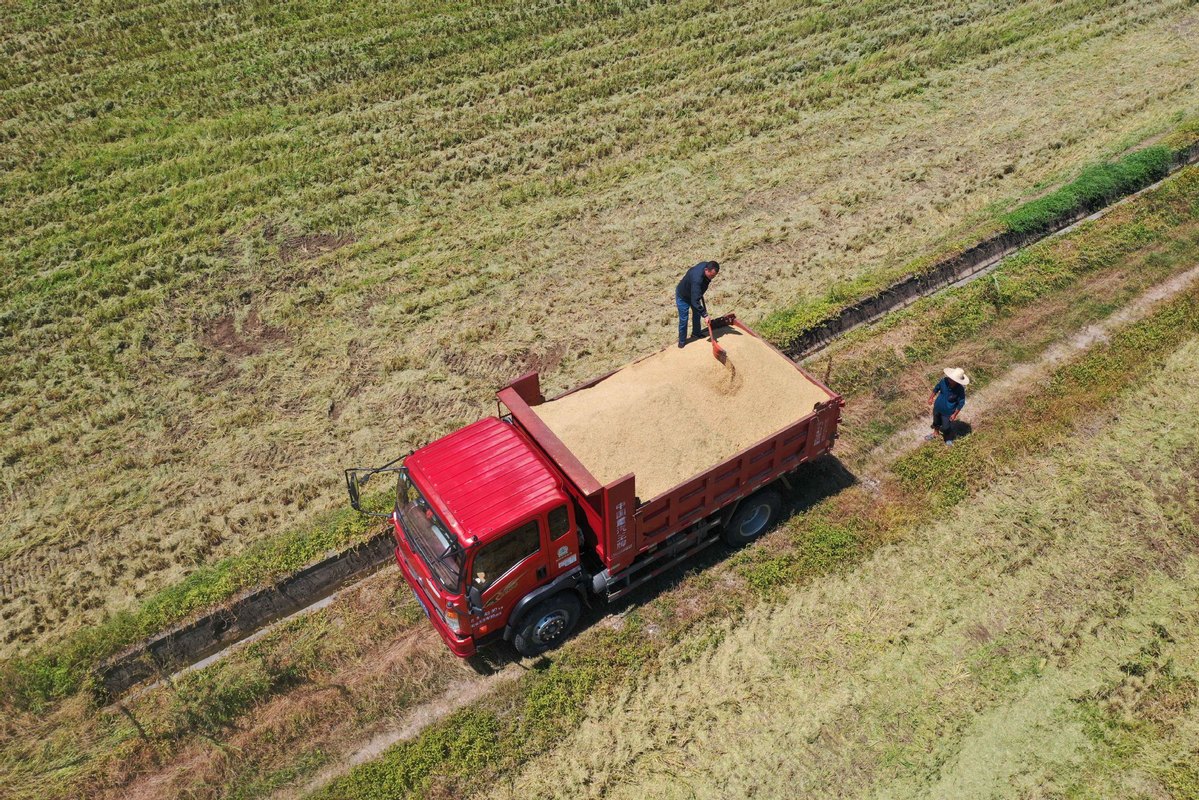
We are living in dangerous times of our own making. Unprecedented heat waves have been sweeping the globe-turbocharged by climate change-causing pain, loss and even deaths. This is a wake-up call to everyone.
In China, farmers are protecting their crops against heat waves. The poorest who have done the least to contribute to climate change are suffering the most. The major carbon-emitting countries, corporations and individuals should shoulder most of the responsibility for helping the poor to adapt to climate change, and they should do so now.
In Nepal, crops are wilting and animals falling victims to extreme heat. Entire herds are dying from thirst in Somalia. Rivers, lakes and aquifers are drying up. Rains are failing. Icecaps are melting. And wildfires are becoming more frequent.
Over the past decade, more people have been forced from their homes by extreme weather-related disasters than for any other single reason-20 million a year, or one person every two seconds. The number of climate-related disasters has tripled in the past 30 years. Since 2000, according to United Nations' estimates, about 1.23 million people have died and 4.2 billion have been affected by droughts, floods and wildfires.
So governments and corporations must reduce carbon emissions-and keep fossil fuels in the ground-if they are to limit the damage caused by climate change to people's lives and livelihoods. However, regardless of how quickly they do so, some warming is already baked-in from our past behavior. As vital as it is, it is too late now to focus almost exclusively on mitigation. Billions of people need early warning systems, access to renewable energy and improved crop production now, not after we bring emissions under control.
Many of the most heavily hit countries such as Fiji, Nepal and Timor-Leste have already published their national adaptation plans. China, which is also exposed to severe climate risks according to the UN, did so again earlier this year, setting out its adaptation priorities and a policy framework to achieve them. In particular, China has stressed the importance of monitoring, assessing and managing climate risks.
These adaptation plans are very important first steps toward helping climate victims. In order to be effective and genuinely transformational, these plans need to articulate goals that will be achieved at the national, sub-national and local levels. They should be implemented and measured in ways that are truly locally-led, gender-responsive and participatory.
The same is true for efforts at the international level. Cooperation and support across national boundaries are key to the success of the adaptation plans. Countries, donors and financial institutions must support the "Global Goal on Adaptation", which is an important part of the Paris Agreement that urges the international community to jointly enhance its adaptive capacity, and strengthen its resilience and reduce its vulnerability to climate change.
However, the world is falling scandalously short in paying for these adaptation plans and actions. Only a quarter of all climate finance to vulnerable countries is for adaptation. For instance, of the $292 billion of climate funds received by the East Asia and Pacific region in 2019-20, only 6.6 percent ($19.5 billion) went to adaptation.
The agreement at the 26th UN Climate Change Conference in Glasgow, Scotland, in October 2021 to double the amount of adaptation finance to $40 billion by 2025 will help. But it is nowhere enough, as a recent Organization for Economic Co-operation and Development report shows that the adaptation finance goal is failing. The UN estimates that developing countries' adaptation costs will likely be at the higher end, between $140 billion and $300 billion per year by 2030, and between $280 billion and $500 billion per year by 2050.
Overall, estimated adaptation costs in developing countries are five to 10 times higher than the money actually flowing in-and the gap is widening. This is very worrying.
Governments and climate finance providers should immediately ensure that adaptation constitutes at least half of their overall public climate finance contribution. And special financial support should be given to developing countries, in particular to those least-developed countries and small island developing states.
The terrible truth is that humankind has no choice but to adapt to the dangerously changing climate. And we must ensure that adaptation remains an option, as runaway global warming is unfortunately leading to events from which we cannot otherwise build back-deaths, submerged homes and cities, wastelands, and mass migrations of desperate people.
The author is director general at Oxfam Hong Kong. The views don't necessarily reflect those of China Daily.





