Is there a looming rice crisis?







The world seems to be staring at a food crisis. Even before the COVID-19 pandemic, world food prices were on the rise thanks to the impacts of climate change and regional conflicts/migration. The pandemic further disrupted food supply chains, and loss of income and employment reduced accessibility to, and affordability of, foods for many low-income populations.
The Ukraine-Russia conflict has further exacerbated the challenges.
Food prices, rising for the past two years, reached a historic high in March (almost 60 percent compared with 2020), although they declined slightly in April and May. Given that global wheat and corn prices have increased by 50 percent and 35 percent respectively, countries in Africa, South Asia and the Middle East that are mainly dependent on food imports will face considerable market pressure, which may lead to price inflation, supply shortages, and even hunger and malnutrition.
The United Nations has warned that due to the pandemic and the Russia-Ukraine conflict, the world could face the worst food crisis since World War II. In fact, the global hunger level is already at a new high, with as many as 1.7 billion people facing hunger. Countries such as Lebanon, Sri Lanka, Egypt, Sudan and Tunisia are facing serious food shortages, which have led to social unrest.
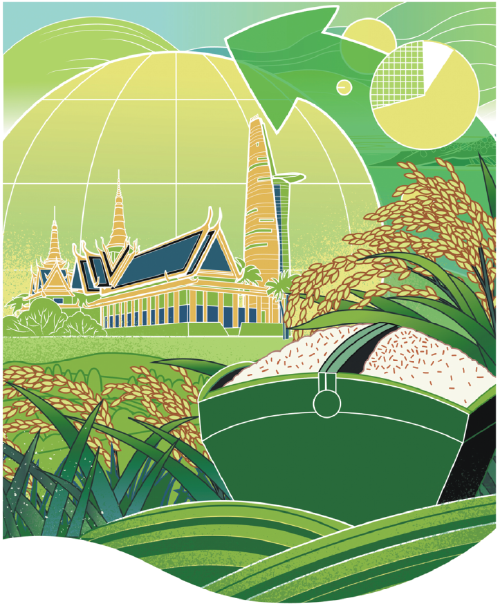
Amid all this, the joint plan of Thailand and Vietnam to raise rice prices may cause unnecessary panic in the global rice market.
The international rice market has been stable so far, with global rice prices increasing only slightly. But on May 27, the Thai and Vietnamese governments announced they are planning to raise rice prices in the domestic market. Thailand and Vietnam are the world's second- and third-largest rice exporters, accounting for nearly half of the global rice exports, enough to influence the global rice market.
So, will their joint plan cause a global rice crisis?
Even though Thailand and Vietnam plan to jointly raise rice prices, they are not planning to impose restrictions on rice exports. Compared with bans or restrictions on grain exports by other countries including Russia and India, the impact of a country or a couple of countries raising food prices in the domestic market is less significant. But that would depend on how other countries react to the Thai-Vietnamese policy.
The 2007-08 food crisis has taught us a lesson. In the first half of 2008, rice prices increased by over 100 percent, not because of shortage of rice supply (in fact, there was bumper rice production in 2007-08), but because many countries imposed export bans to ensure food security at home due to rising global prices of corn and wheat.
If other major rice exporters such as India and Cambodia follow the example of Thailand and Vietnam, let alone going further and restricting rice exports, we could see a repeat of the 2007-08 crisis, and many poor people for whom rice is a staple in rice-importing countries such as the Philippines, Indonesia and some Middle East states may face hunger.
What should international organizations and countries do?
We hope global rice prices remain stable as global supplies are plentiful, with global rice harvests expected to hit a record high in 2023. Despite a shift in demand for rice as animal feed, any surge in rice prices is unlikely. In addition, Thailand's rice exports benefited from a rebound in global demand, and coupled with the devaluation of the Thai baht, increased the country's export competitiveness.
According to China's Ministry of Commerce, Thailand is expected to export 8 million tons of rice this year, up from 6.1 million tons last year. Although Thailand and Vietnam are rice-exporting powerhouses, they might be swiftly replaced by India, China, the United States and Brazil in the fiercely competitive market if the two Southeast Asian countries ban or restrict exports. Due to the short growing period and fast market adjustment of rice in Southeast Asia, Thai and Vietnamese rice cannot monopolize the international market.
So the world, rice-importing countries in particular, should not panic, because panic buying by food-importing countries in 2007-08 was one of the main factors, along with the export bans, behind the surge in rice prices.
As for China, the impact of potential rice price hikes on its grain market would be controllable. Soybean is the main grain China imports for feed. On the whole, China is self-sufficient in major food grains such as rice and wheat, and has relatively abundant rice reserves. China's rice inventory is about 200 million tons, and the annual import is minimal. Therefore, the overall impact of rising grain prices on China will be limited.
To prevent a rice crisis, the UN organizations, other global organizations and the international community should appeal to countries to not restrict rice exports or engage in panic buying of rice.
The views don't necessarily represent those of China Daily.
The authors are professors at the Academy of Global Food Economics and Policy, China Agricultural University.