Why does biodiversity conservation need global cooperation?







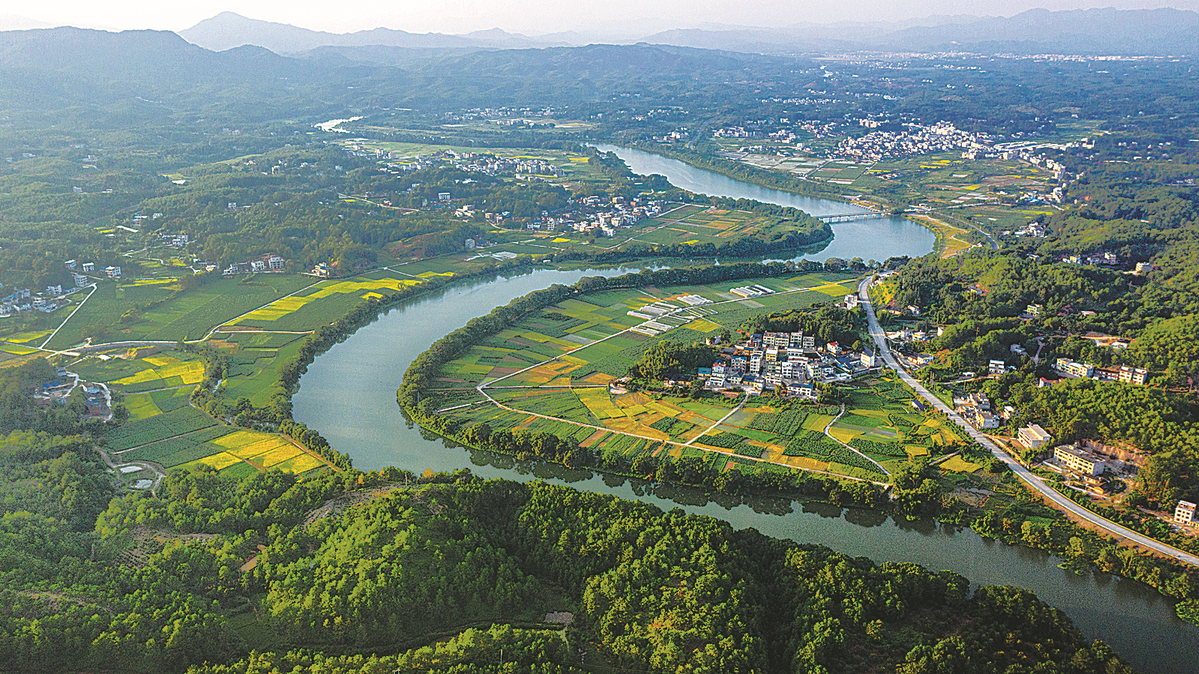
In 1992, the Convention on Biological Diversity (CBD) was signed at the United Nations Conference on Environment and Development (UNCED). Over the past three decades, the Convention has played an important role in biodiversity conservation, but the world is still facing challenges such as acceleration of species extinction. Yan Xie, Associate Research Professor of Institute of Zoology, Chinese Academy of Sciences, has carried out biodiversity research and conservation for more than 25 years. In an exclusive interview with China News Service's W.E.Talk recently, she said that all countries are communities in the same boat to protect the common home and find the "password" to meet the challenges.
Here's the excerpt of the dialogue.
CNS: CBD is an international convention of conservation on biological resources of the earth, which was signed at the UNCED on June 5th, 1992. What is the background and significance of this convention?
Yan Xie: In 1972, the UNCED was held. Participating countries signed the United Nations Declaration of Human Environment, and biological resources conservation was included in the 26 principles.
In 1973, representatives of 80 countries signed the Convention on International Trade in Endangered Species of Wild Fauna and Flora (CITES), which urged countries around the world to strengthen cooperation and prevent species extinction from overexploitation.
Thomas E. Lovejoy, the famous American conservation biologist put forward the term Biological Diversity in 1980 and later the term was changed into Biodiversity. The significance behind this is that the scientific community has changed from emphasizing conservation of single endangered species, to realizing more clearly that the earth's ecological environment needs biological diversity.
There are complex relationships among species, such as symbiosis and competition. It is precisely because of this complex relationship that our ecosystem can be kept healthy. More and more countries are beginning to realize the seriousness of this problem because of the accelerated disappearance of species.
In 1992, the CBD was signed at the UNCED held in Brazil. As stated at the beginning of the Convention: "The Contracting Parties, Conscious of the intrinsic value of biological diversity…… Affirming that the conservation of biological diversity is a common concern of humankind," The signing of this Convention has played a milestone in biodiversity conservation. That is, Contracting Parties have the same goal and direction.
CNS: Over the past three decades, Parties have made many positive contributions to the conservation of biological resources on the earth, but they are also constrained by unilateralism. What are the current challenges to biodiversity conservation? Why global cooperation is needed?
Yan Xie: In the 30 years since the signing of the CBD, although we have reached an agreement in concept, from the perspective of implementation effect, the global biodiversity conservation is not ideal. The report released by the United Nations Intergovernmental Science-Policy Platform for Biodiversity and Ecosystem Services (IPBES) in 2019 has some impressive views: species extinction is accelerating; about 1 million species of animals and plants are now threatened with extinction.
The biodiversity conservation requires global cooperation. From one dimension, the migration and activities of animals have no national boundaries. For example, Arctic terns breed in the Arctic, but they have to go to the Antarctic for wintering, and go back and forth between the poles once a year.
The second dimension, such as Madagascar, is characterized by a very prominent biodiversity, representing more than 100 species of lemurs. If one day a certain kind of lemur disappears in Madagascar, it means it disappears on the earth.
The third dimension, when faced with emergencies such as COVID-19's global outburst, the pressure of human activities is increasing. How can biodiversity conservation be accomplished by only one country? Only by working together can we meet the challenges.
CNS: CBD places great emphasis on the international obligations of all countries. From your experience in international organizations, how can biodiversity conservation mobilize the will of various countries?
Yan Xie: In 2005, I joined the world-famous Wildlife Conservation Society (WCS) to take charge of China Program. I had the opportunity to carry out research and conservation on Tibetan antelopes in Qiangtang, Chinese alligators in Anhui and Amur tigers in Northeast China... The working experience of international organizations made me deeply realize that the problem of biodiversity conservation is to address the problem of harmonious coexistence between man and nature.
Only when local people have stable and secure income and benefit from ecological and wildlife conservation can they join in protecting nearby species. The same is true for countries.
All countries need to realize that a healthy ecosystem is the basic needs of human survival and development, and maintaining a healthy ecosystem needs to be raised to the height of national strategy. Only when it is raised to the height of national strategy can it be possible to coordinate the "wisdom" of biodiversity conservation and economic development, and harmony with land resource planning under the background of "a big chess game".
CNS: What progress has China made in the development of protected area system and endangered species conservation?
Yan Xie: With a vast territory, China is one of the countries with the richest biodiversity in the world. From endangered species conservation to habitats conservation (protected areas), and then gradually realized that enhancing the service function of ecosystem to promote the sustainable development of green economy, China's concept of biodiversity conservation has been constantly innovated.
In addition to the concept, the white paper Biodiversity Conservation in China released in October 2021 reveals specific actions. Since the establishment of the first batch of nature reserves in 1956, China has established nearly 12000 protected areas at all levels, accounting for about 18% of the land area.
In recent years, China has actively promoted the establishment of a Protected Area System with national parks as the main body, nature reserves as the basis and various nature parks as supplements, so as to lay the foundation for protecting habitats, improving the quality of ecological environment and maintaining national ecological security. Since 2015, 10 national park pilots including Sanjiangyuan National Park have been launched successively, relevant protected areas have been integrated into the scope of national parks, and unified management, integrative conservation and systematic restoration have been implemented. Through the development of a scientific and reasonable protected area system, 90% of terrestrial ecosystem types and 71% of national key protected wildlife species have been effectively protected.
CNS: You once said that the successful experience accumulated by China in the process of biodiversity conservation should be used by more countries. What is the "China Plan" that can be used for reference?
Yan Xie: The international promotion of biodiversity mainstreaming is to coordinate the development of various industries with the needs of national ecological security. This is a difficulty faced by countries all over the world. By implementing the spatial planning strategy of "multi plan integration", China has fundamentally solved the contradictions among the various departments in the past and put the ecological conservation into the national social and economic development plan. Since 2011, 50.4% of the land space has been designated as National Key Ecological Function Areas, and the transfer of financial funds has been implemented. This is a huge long-term form of ecological compensation, and more than 800 counties got benefit from the policy.
The Ecological Redline is an important institutional innovation of China's land space planning and ecological environment management system and mechanism reform. China has innovated the conservation model of ecological space, classified extremely important areas with biodiversity maintenance and other ecological functions and ecologically fragile areas into Ecological Redlining, and strictly implemented conservation.
In addition, China is developing a "protected area system with national parks as the main body", which is the core component of the ecological redline. These ecological related plans can be mainstreamed into social and economic development through "drawing one blueprint to the end".
CNS: You once led the establishment of China's "Protected Area Friendly System" and promoted community of protected area to produce eco-friendly products, so as to alleviate the contradiction between nature conservation and economic development. In your opinion, what is the password to alleviate the contradiction between nature conservation and economic development? Under the covid-19 epidemic situation, how should East West unite and cooperate to overcome difficulties when facing the dual tasks of restoring economy and protect the environment?
Yan Xie: This can be answered by the story of planting wild goose rice in Hunchun City, Jilin Province. Hunchun Jingxin Wetland is a place where local villagers produce rice and a habitat for migratory birds. The contradiction between man and bird occurs from time to time in the migratory season. Hunchun Wild Goose Rice Planting Professional Cooperative has been established locally to support farmers to learn organic production methods and purchase organic fertilizers through cooperation with conservation organizations. The biggest challenge in this process is weeding. Due to the high cost of manual weeding, farmers "weeding" by raising ducks has achieved good results, and ducks can also be sold. At the same time, due to the improvement of the ecological environment, "bird watching tourism" also brings benefits to local farmers.
Such a model can be popularized in protected area system, so that local people can benefit from and invest in nature conservation.
Under the influence of the COVID-19 epidemic, we are really facing the dual pressure of restoring economy and protect environment. What we need to do is to build a sense of crisis, establish a sense of relevance between biodiversity and everyone and every country, and find ways to realize value of ecosystem services through the cooperation between East and West and through innovative mechanisms, so as to serve the local people.
Yan Xie, Associate Research Professor of Institute of Zoology, Chinese Academy of Sciences, Founder of Protected Area Friendly System, Executive Committee Member of Species Survival Commission of International Union for Conservation of Nature (SSC/IUCN), Former Secretary General of International Society of Zoological Sciences (ISZS), Former China Program Director, Wildlife Conservation Society (WCS).