Kal Raustiala: How can China and the US get back their original vision of breaking the ice?








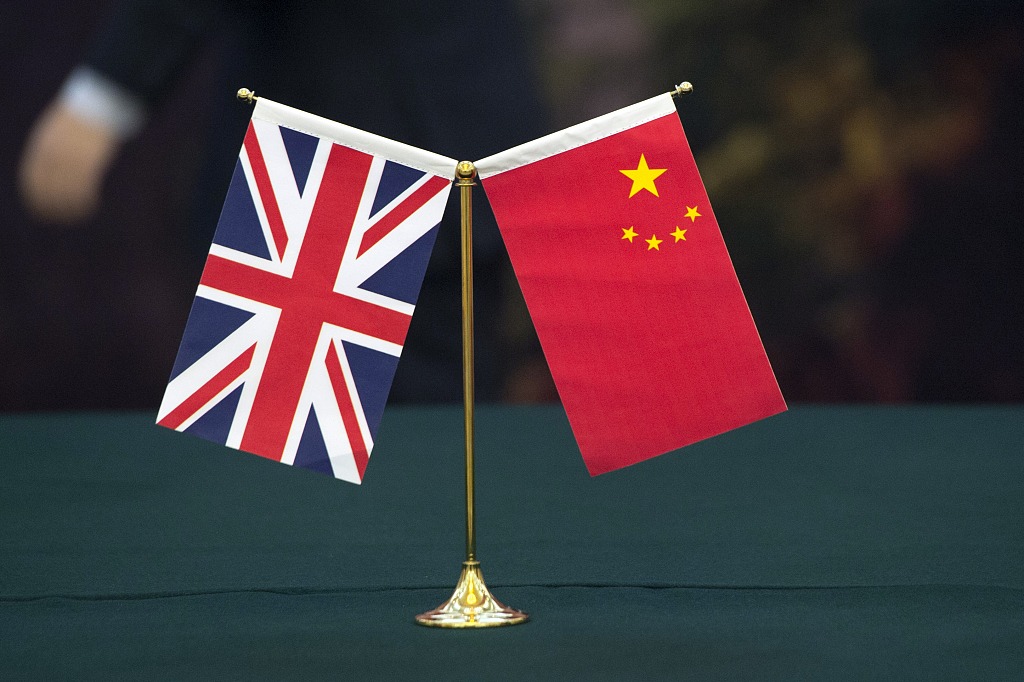
From February 21 to 28, 1972, the then US President Nixon paid a seven-day visit to China, which was called "the week that changed the world" by international public opinion, and became an "ice-breaking trip" in the history of China-US diplomacy. Fifty years later, at the opening ceremony of the Beijing Winter Olympics, the design of the "TheIce and Snow Olympic Rings" broke through the ice and also conveyed to the world the friendly and warm way of Chinese people in the world.
Recently, in an exclusive interview with China News Service "W.E Talk" column, Kal Raustiala, the director of UCLA Ronald W. Burkle Center for International Relations, explained on how China and the US should look to the future and rethink about the original intention of "breaking the ice" on today the 50th anniversary of President Nixon's visit to China. "It is still important to actively seek out areas where the two nations, working together, can combine forces to better manage existing problems," Raustiala said.
The following is the interview transcript:
CNS: You gave a speech at a UCLA panel on reflect on the 40th anniversary of Nixon's visit to China, and you mentioned that the visit "seized the moment, seized the hour, transformed history", then in your opinion, what was the special historical significance of Nixon's visit to China at that time?
Kal Raustiala: Richard Nixon's visit to China marked the strategic reengagement of two great powers, which with hindsight today we can see as the two most important states in the international system. What made the summit so significant was that the People's Republic had been shunned by the US largely for ideological reasons, and Nixon was able to frame the reengagement as in the US strategic interest. He saw that China's return to the center of world politics was inevitable, and managing that process made more sense than rejecting it.
CNS: Over the past 50 years, China-US economic and trade relations have developed rapidly, and cultural exchanges have also increased. From your perspective, what changes have taken place in China-US relations in the past 50 years?
Kal Raustiala: The US-China relationship 50 years ago was largely about geopolitical issues of security and shared antipathy toward the Soviet Union. Today, the US and China are in a much more complex relationship, marked by aspects of competition and rivalry but also cooperation and interdependence. Clearly, the biggest change has been in the economic sphere, but also there are today many thousands of Americans living in China and Chinese living in America. Our societies and not merely our governments have a relationship.
CNS: Looking back at the history of China-US relations today, what do you think the two countries can learn from it? How should the two countries understand this dynamic, which is both game and closely linked?
Kal Raustiala: A peaceful world order requires a close working relationship between the US and China. Of course, the two nations have many differences, but certain issues—from the global economy to climate change—can only be effectively addressed by joint action. A key part of the history of the two nations is that the US welcomed a rising China into the global order, and did not try to block its rise. Nixon's landmark visit was the start of this process, but it continued through subsequent administrations, even as the US has sometimes feared China's potential power and influence, and vice versa.
CNS: In your new book, Global Governance in a World of Change, published last year, you explored concerns about the lack of integration in global governance. How do you understand the role China and the US play in participating in global governance?
Kal Raustiala: The existing global order strongly reflects American preferences from the early postwar era. While China was always a part of the UN, for instance, the fundamental design of the UN was American and China tended to be more "quiet" on the Security Council. Today, China is rightly far more active and influential in what has long been a Western-dominated global order. China has strongly benefited from this order—which has brought peace and prosperity to much of the world—and the key going forward is for China to have a more active voice and role in that order while keeping that order's best qualities intact. A more hostile and fearful world is in the interest of no one, especially the strongest powers.
CNS: Some scholars say that the key to "mutual benefit" is whether China and the US can properly manage their important and complex relationship. In your opinion, how should the two countries get out of the current difficulties and rekindle their old friendship?
Kal Raustiala: That is a difficult question. The US and China have some major areas of tension, ranging from issues of values and rights to concrete disagreements over, for example, the South China Sea. The important thing is that both sides see lawful action as essential, and ensure that these areas of tension are actively managed not through threats but through diplomacy. There is too much to lose for both sides—and for the world—were conflict to arise. Even during the Cold War the US and the Soviet Union found ways to cooperate—and ways to ease tensions. China and the US have a very different relationship but it is still important to actively seek out areas where the two nations, working together, can combine forces to better manage existing problems.
Scholar Bio:
Kal Raustiala is the Promise Institute Professor of Comparative and International Law at UCLA Law School and Professor at the UCLA International Institute, where he teaches in the Program on Global Studies. Since 2007 he has served as Director of the UCLA Ronald W. Burkle Center for International Relations. From 2012-2015 he was UCLA’s Associate Vice Provost for International Studies and Faculty Director of the International Education Office. In 2016 Professor Raustiala was elected Vice President of the American Society of International Law.