Cooperation the only way to achieve long-term stability in S. China Sea








The United States has taken frequent actions concerning the South China Sea since the beginning of 2020. In July 2021, U.S. Secretary of State Antony Blinken issued a statement on the fifth anniversary of the so-called Award of the Arbitral Tribunal in the Matter of the South China Sea Arbitration. Defense Secretary Lloyd Austin successively visited three Southeast Asian countries. Vice President Kamala Harris visited Singapore and Vietnam in August 2021, and Blinken also continuously participated in five ASEAN-related ministerial video conferences.
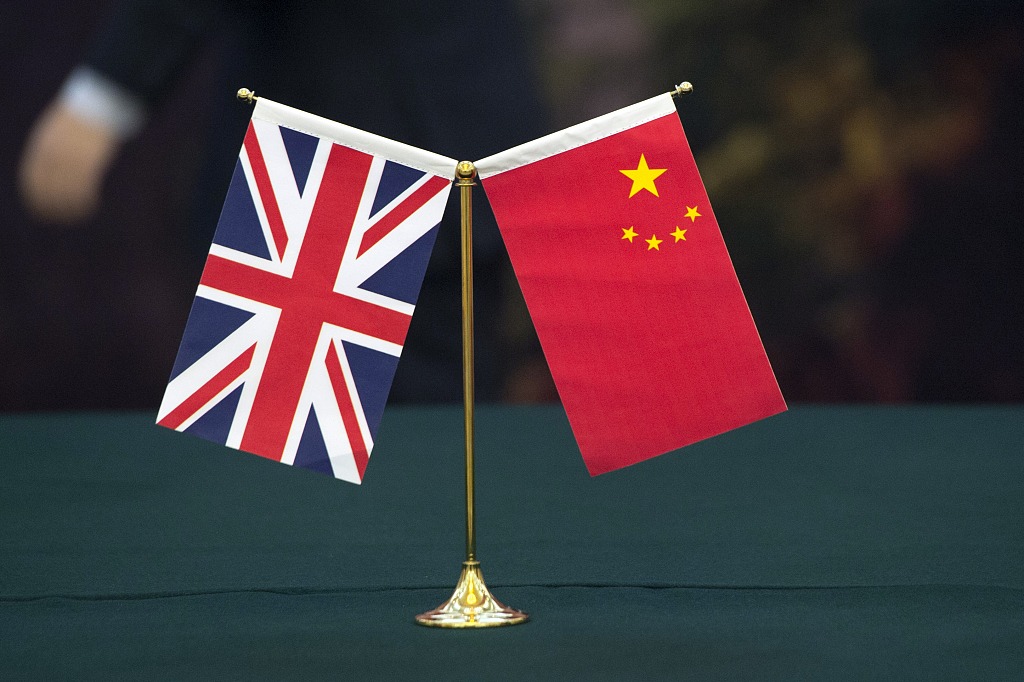
U.S. allies have also stepped up their military activities in the South China Sea. The British Queen Elizabeth' class aircraft carrier formation entered the South China Sea for the so-called Freedom of Navigation operation.
Wu Shicun, the founding president of National Institute for South China Sea Studies, said in an exclusive interview with China News Service's East-West Quest that U.S. policies and actions on the South China Sea, as well as its allies’ military actions there, will become a destabilizing factor that will cause the situation to deteriorate. The only way to achieve lasting peace and stability in the South China Sea is for neighboring countries to focus on functional cooperation, seeking common ground while shelving differences.
Here are excerpts from the interview.
China News Service: The British HMS Queen Elizabeth aircraft carrier fleet entered the South China Sea recently on the grounds of the so-called “freedom of navigation”. Why did the British warships go all the way to the South China Sea to craft a publicity stunt?
Wu Shicun: The British navigation is not simply the so-called “crossing the South China Sea in accordance with the International Law,” but with multiple purposes.
First, to show their “loyalty”to the U.S. by crossing the so-called “disputed waters” in the South China Sea. It is no secret that Britain has long been colluding with the United States on this issue, as can be drawn from the following events: the HMS Albion landing platform dock trespassing in the territorial waters of China's Xisha Islands in 2018; the joint military exercises with the U.S. military in the South China Sea in January 2019; the submission of a diplomatic note to the United Nations on the South China Sea issue in 2020; the acts during the fifth anniversary of the so-called “Award of South China Sea Arbitration”; the “China-Philippines Whitsun Reef incident”in March 2021,and this navigation. All of these demonstrate that the U.K.has been following the lead of the United States on the South China Sea issue.
From a geopolitical point of view, the U.K. needs to ride the U.S.'s coattails to avoid diplomatic isolation and at the same time to hitch a ride on the U.S. Indo-Pacific Strategy to return to the world stage. Thus,the South China Sea issue, which is considered by the United States as a key driver to contain China, has naturally become a bargaining chip of the U.K.
Second, to project British maritime power into the Asia-Pacific region. In March 2021, the U.K. released “Global Britain in a Competitive Age: The Integrated Review of Security, Defense, Development and Foreign Policy,” which is claimed to be the most comprehensive report since the end of the Cold War.It clearly defines British diplomatic and military strategic orientation toward the Indo-Pacific region, and it shows British claims to reshape its influence in the vast Indo-Pacific region, including the South China Sea.
Third, to challenge China's rights in the South China Sea while reliving its old colonial dreams. The South China Sea carries the old colonial dream of Britain, and to this day, Britain still constantly bears this “imperial glory” in mind. Today, Britain's ambitious vision of maintaining a regular military presence in the South China Sea and the Asia-Pacific region reveals its nostalgiafor a past that has long gone.
China News Service: You once analyzed that the prospects for the South China Sea situation was not optimistic because of the continuity of China-U.S. competition there and the suddenness of disputes over maritime interests between the countries involved in the South China Sea disputes. Senior U.S. officials visited Southeast Asia intensively some time ago, trying to form a larger encirclement net against China. How do you interpret the current situation in the South China Sea?
Wu: At the beginning of 2021, my judgment on the South China Sea situation was the shift from “stable performance towards a better situation” to “unstable.” Up to now, the situation has continued to evolve from “stable performance towards a better situation” to “unstable”affected by a series of factors. This situation shows no major changes and takes on some new characteristics.
First, the U.S.-led South China Sea security multilateralism is gradually taking shape. The U.S. intends to extend the Quadrilateral Security Dialogue, wooing the support of Britain, France, Germany and other countries to form an Indo-Pacific version of NATO. These countries have become the myrmidon of the United States in the South China Sea out of their own interests.
Second, America's new policy in the South China Seais on its' way. Judging from the current tension in the Sino-U.S. military game, the U.S. military will continue to deploy superior forces to the Indo-Pacific region, including new combat capabilities such as drones and intelligent systems. It is expected that the South China Sea region will be the focus of this military deployment adjustment.
Third, the unilateral actions of claimant countries that focus on oil and gas development activities in disputed areas will become more complicated. As the Philippine presidential election approaches, China-Philippine relations may encounter some twists and turns.
Fourth, maritime cooperation and joint development advocated by China will face unprecedented difficulties.In consideration of the maximization of resource development interests and maritime claims, some claimant countries have made unilateral claims on the grounds of "arbitration awards," showing little political will toward joint cooperation on multilateral maritime cooperation and joint development advocated by China. In addition, America's new deal in the South China Sea and other countries' activities that try to use military and diplomatic means to seek geopolitical and geo-economic interests in the South China Sea have increased the cost of cooperation between coastal countries and China, to a certain extent.
Fifth, a great clamor has arisen again about jurisprudential struggle. On the fifth anniversary of the so-called "adjudication," the U.S., Australia, Japan, Canada, the Philippines, Vietnam and other countries all issued statements opposing and denying China's claims in the South China Sea. Countries with ulterior motives may take the opportunity to adopt new measures to hype the so-called "adjudication."
Sixth, the Code of Conduct in the South China Sea negotiations may be hard to gain results. First, for Vietnam, the Philippines, Malaysia and other the countries involved in the South China Sea disputes, their political will to conduct negotiations has weakened. Second, the U.S. has speeded up strategic and tactical adjustments in the South China Sea in an attempt to block the negotiations. Third, China's soft power in the South China Sea hasn't increased accordingly with the rise of hard power there; countries around the South China Sea still have concerns about China.
China News Service:What is your judgment of the future situation?
Wu: First, the U.S. policies and actions in the South China Sea, as well as the military actions of American allies there, will become the main negative factors for the deterioration of the situation.
Second, driven by the instigation of the United States and its own interests, some claimant countries will consolidate and expand their vested interests with unilateral actionsat every possible opportunity.
Third, in the future, there will be continuing competition between China and the disputing countries, China and ASEAN, China and the United States, and foreign countries regarding the negotiation of standards.
Fourth, there is the jurisprudential struggle between China and some disputing countries. Under the coercion and inducement of the United States, some claimant countries will also use new tricks in the jurisprudential struggle in the South China Sea to maximize their own interests and take advantage of the favorable window period.
China News Service: At the South China Sea subforum of Boao Forum for Asia Annual Conference 2021, you said cooperation was the only choice to achieve long-term stability in the South China Sea. How should neighboring countries respond to the unstable factors emerging in the South China Sea?
Wu: The South China Sea dispute involves a large number of islands and reefs, a large number of countries and a wide area of disputed sea area, which is unique in the world. It is almost impossible to solve the South China Sea issue in a short time. Hence, we should have a long-term plan.
In the face of emerging unstable factors, the only way out for the South China Sea issue is cooperation. At present, such cooperation is still in its initial stage, with many problems at hand. All parties involved also have concerns about cooperation and lack sufficient mutual trust. For example, in terms of conserving fishery resources, China implements the annual summer fishing moratorium in the South China Sea, but because of the opposition and destruction of relevant countries, fishery conservation has not achieved the expected result. At the same time, the South China Sea is also an area prone to various marine disasters, but there is no maritime rescue mechanism between coastal countries and no corresponding rescue facilities. China and ASEAN countries should put regional maritime humanitarian rescue cooperation on their agenda as soon as possible, starting with mechanism construction and deployment and sharing of facilities. As the largest coastal country in the South China Sea, China has the ability to build island and reef infrastructure and provide public services, especially maritime rescue facilities, to the countries around the South China Sea.
In short, countries around the South China Sea should promote governance and cooperation on such issues as ecological environment, waterway safety and fishery resources protection in accordance with the principle of seeking common ground while reserving differences. In particular, in view of regional such challenges as resource depletion, biodiversity degradation and marine plastic waste, coastal countries can learn from the successful experience of marine governance in other regions of the world, then negotiate and sign the South China Sea Environmental Protection Convention to build "blue partnerships" to promote maritime cooperation and the sustainable regional development.