Power switch








China's investments are helping to drive the green and low-carbon development of Belt and Road countries
The era of coal is ending, but its impacts on energy markets remain. Solar and wind project developers in developing economies are facing difficulties left by coal. Standards for financing projects, for example, are tailored for massive coal projects, and are not flexible enough for smaller-sized renewable energy projects. And there are still doubts about renewable energy, despite solar and wind energy outperforming fossil fuel projects in most regions, both in terms of revenue and socioeconomic benefits.
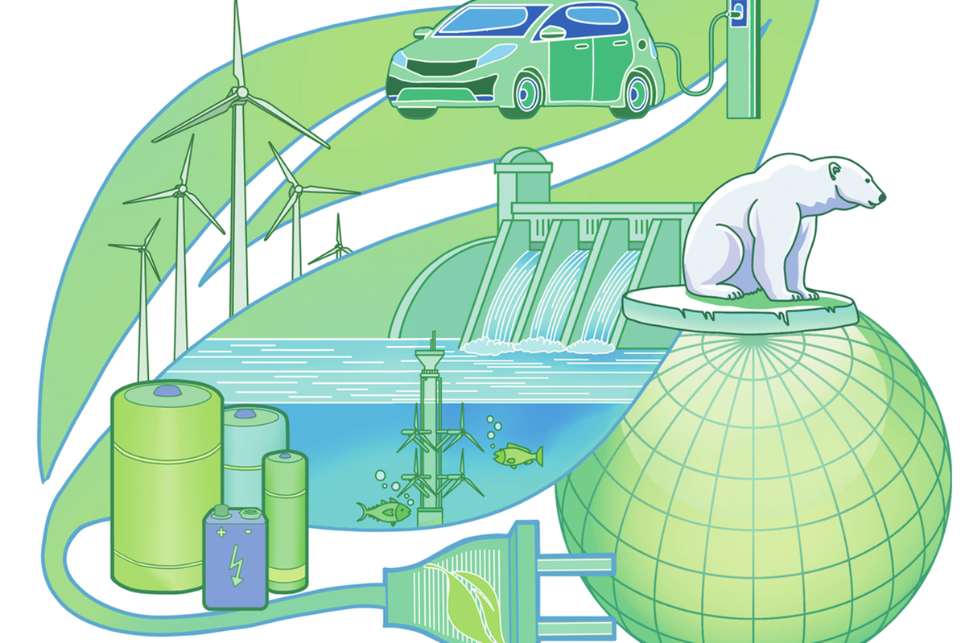
China's investment in renewable energy is expected to inject impetus into the green and low-carbon development of developing countries involved in the Belt and Road Initiative. Recent research from Greenpeace East Asia's Beijing office shows that by 2030 China has the potential to generate between 226.56 gigawatts and 679.69 GW of solar power and between 8.85 GW and 26.55 GW of wind power in those countries. A co-benefit analysis showed this potential investment will create between 150,000 and 310,000 new jobs.
China's leadership in renewable energy investment could lead to annual carbon emissions in the Belt and Road countries dropping by 1.8 billion metric tons, or 17 percent compared to 2018. In Pakistan, for example, the annual carbon emissions would be 4.12 million tons less-a 9.16 percent decrease. In Poland, it would drop by 26.16 million tons per year-a 17.44 percent decrease-and in South Africa, by as much as 13.68 million tons per year-also a 17.44 percent decrease.
The impact on upstream and downstream industries should be a major focus for energy investments. Research by Greenpeace suggests that these projects would cut emissions across the value chain by around 768 million tons of oil equivalent (or TOE, a standardized measure used to compare different energy sources).
But Chinese investors won't do it without a clear signal from the government. Clear targets for renewable energy investment, binding green finance policies and regulatory standards for Chinese financiers to follow are the necessary next steps. These are the lights that policymakers can turn on to guide the way for Chinese clean energy investments under the framework of the Belt and Road Initiative.
Developing economies need funds, technology and professionals to generate an energy transition. As public finance reflects policy guidance more directly and is not profit-driven, it is able to play a pioneering role in overseas renewable investment.
Although more and more State-owned enterprises are investing in renewable energy projects overseas since 2019, the total amount is still relatively small. And the renewable energy projects have a small proportion of funds established for Belt and Road Initiative development, such as the Silk Road Fund, the Central and Eastern European Fund and the China-Africa Fund. In promoting the process of global low-carbon energy transformation, the funds should play a more important role with the aim of expanding support for wind power and photovoltaic projects, accelerating cooperation on the development of renewable energy projects, and lead the green and low-carbon development in Belt and Road countries.
It is also crucial for investors and host country governments to understand that building infrastructure-including energy grids and the supply chains in upstream and downstream industries-is a key part of developing energy projects. Collaborations between China and countries involved in the Belt and Road Initiative should focus on more than the construction of power plants. They should include building infrastructure in the upstream and the downstream of the whole power system that may bring more benefits such as promoting economic development, accelerating energy transformation and enhancing social well-being in host countries.
In fact, the overseas development of China's renewable energy industry has started to involve more comprehensive production capacity cooperation, especially in Southeast Asia. Chinese renewable energy enterprises, such as Jinko and LONGi, have begun to deploy upstream investments, including power stations and service industry chains in their overseas markets, which can bring more jobs and investment to the host countries. China's technologies and experiences in developing renewable energy can also be shared through overseas investment, which can provide effective reference for the host countries to develop their own renewable energy policies, and energy industries, and accelerate the transformation of their energy structure to achieve their sustainable development goals.
The author is project lead for the overseas energy investment project at Greenpeace. The author contributed this article to China Watch, a think tank powered by China Daily. The views do not necessarily reflect those of China Daily.