US must drop zero-sum mentality about China







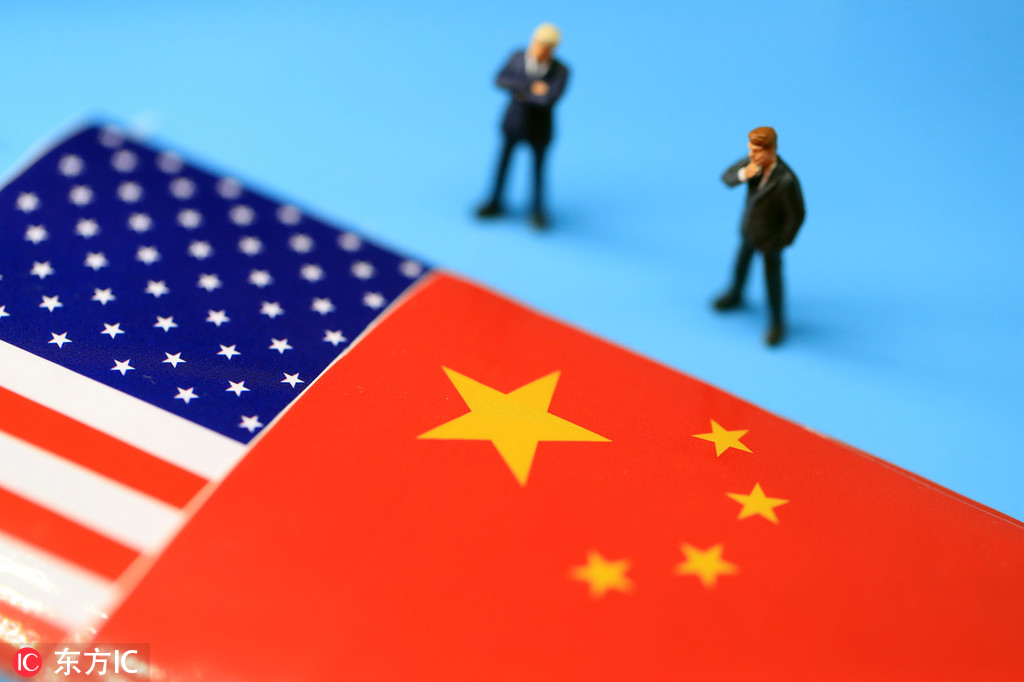
Last week, US trade representative Katherine Tai made a speech which set out the Biden administration's trade policy towards China. To the surprise of few, the speech inevitably abided by the rhythm of "America First," pushing protectionist themes while blaming China for the depletion of US jobs and industries. Tai went on to demand more preferential economic concessions.
However, the speech also sent signals that Washington is open to dialogue with Beijing, with Tai saying that the US would start excluding certain tariffs in accordance with its economic interests.
Overall, while being marketed to a domestic audience, the speech was a veiled message for the US and China to commence trade talks. The Biden administration aptly recognizes that the Trump strategy is failing, but can't admit it.
The US and China compose the single largest economic and trade relationship in the world. No matter how US politicians frame it, both countries are ultimately interdependent on the success of each other and therefore hold a set of common interests. However, the center ground of US political debate has moved away from this reality and incentivized a mythology that this relationship is fundamentally unequal and that the US is "losing" to China on trade. The Trump administration subsequently created a new political consensus of protectionism which saw him place enormous tariffs on Chinese imports under the misleading premise that it would bring back jobs.
However, the tariffs were not a game changer and manufacturing jobs didn't return. This was never the economic reality. In the global capitalist economic system, private companies inevitably seek out the cheapest and most sustainable options in order to avoid rising costs. Manufacturing in the US declined as the country became richer and more developed, shifting in a cycle to other countries, first Japan and then China. Many of China's exports to the US are in fact US products, from US companies, who invested in China to import back into America.
The caricature which Trump painted of Chinese businesses becoming wealthy at the zero-sum loss of America is economically illiterate and deliberately misleading. It's always been about cost effectiveness on the supply side, and that's why the tariffs did not change anything and instead US-China trade continues to boom, albeit with the cost of inflation surging with the levies having accumulated in price rises by companies.
But why did companies not leave China to avoid tariffs? The answer is that China's manufacturing, logistics, shipping and supply chain infrastructure are more developed, larger and thus affordable, which keeps costs down in the bigger picture. China's resilient supply chain has given the country a competitive advantage.
Irrespective of the political rhetoric, Tai's speech can be seen as a positive development. It signals a shift towards dialogue from confrontation, a shift towards pragmatism from the fantasy of so-called decoupling, and illustrates that economic compromise between the US and China may still be possible, despite everything going on. It is a very subtle form of de-escalation in this area.
The areas of difference between the US and China do not change the reality that a path of confrontation is not truly in the interests of both countries. In many respects Biden has his hands tied and this will make the pathway forwards difficult, but not impossible.
If the US really wants results though, it has to drop its zero-sum mentality, stop talking an arbitrary position and establish a dialogue which balances the realities between the two countries. It is not a weakness to accept that the US and China mutually complement each other, and interdependence is and will continue to be the reality.