The shift to a multipolar world: Is the US increasingly isolated?







Editor's note: Bobby M. Tuazon is the director for policy studies of a Philippine think tank, Center for People Empowerment in Governance and a professor at the University of the Philippines. He is also an editor and co-author of 15 books. The article reflects the author's opinions and not necessarily those of CGTN.
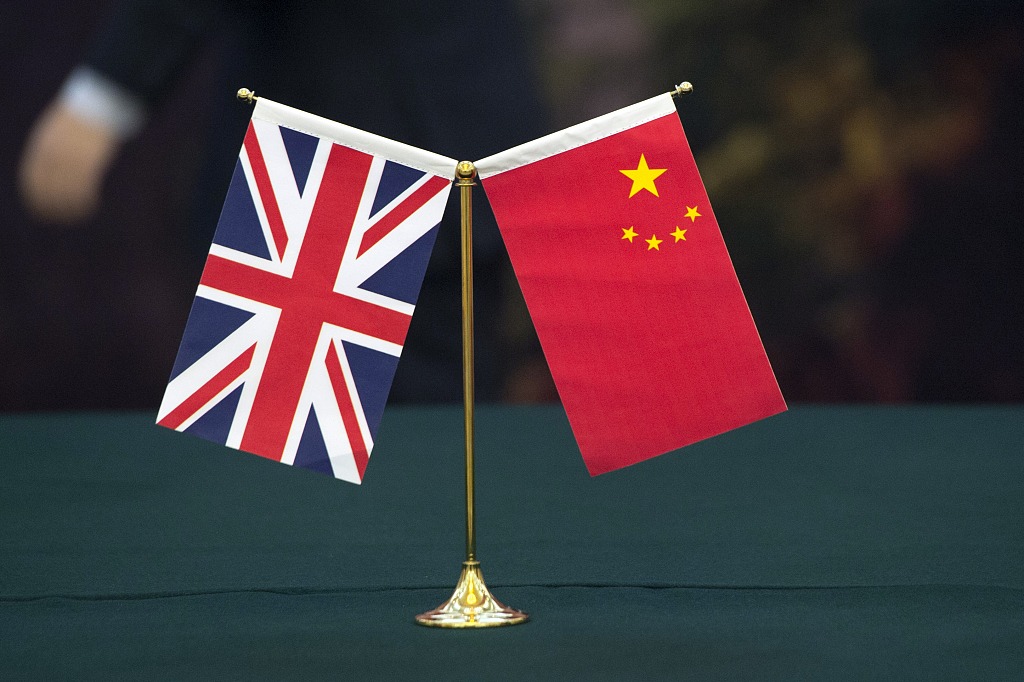
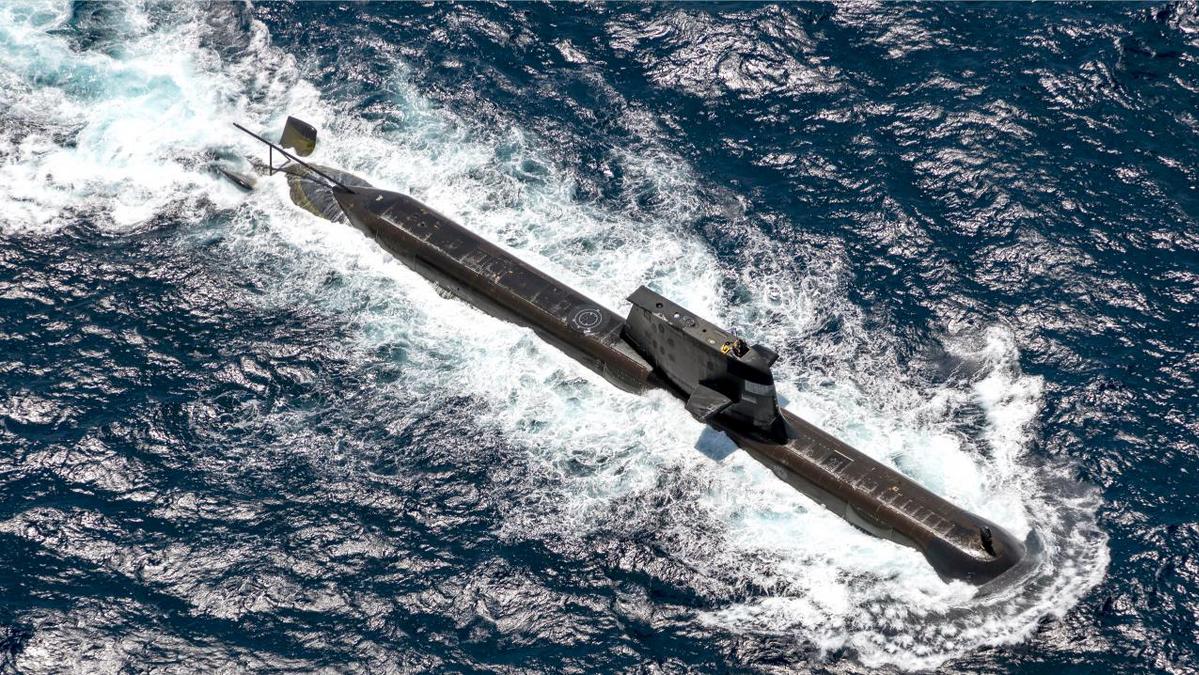
At no time is the contradiction between superpower unilateralism and multipolar world momentum been sharper than today. This is shown by the US's shove toward expanding its alliance system with greater emphasis on the military encirclement of China through the new Australia-UK-US (AUKUS) trilateral military alliance and the reactivation of the Quadrilateral Security Dialogue (QUAD) between the US, Australia, Japan and India. This new American offensive has aroused resistance from countries in the Asia-Pacific and elsewhere where the option of war has lost steam in favor of the peace and development paradigm.
Economics is uniting many parts of the world, but the US and its few allies try to put a brake to this movement. US policymakers, for instance, see the Belt and Road Initiative (BRI) as "Beijing's weapon" to push out American influence in the neighboring regions of China. Designed to link many countries through infrastructures, trade and new corridors of industries, the BRI joins 139 countries. Some 63 percent of the world's population lives within the borders of BRI countries.
In the Association of Southeast Asian Nations (ASEAN), whose major trading partner is China, six countries have joined the BRI. Although some countries in the region have military cooperation with the US, ASEAN steers clear of the growing tensions between Beijing and Washington. Such avoidance has deepened in light of ASEAN countries' economic engagement with China and in the midst of the US's resolve to bring them to its side on a belligerent policy against Beijing. ASEAN is developing as an important center of the new multipolar world.
Economic interdependence and collective action also resonate in Eurasia, where China's BRI engages the Eurasian Economic Union (EAEU) in complementary economic activities. A free trade agreement, EAEU comprises Russia, Armenia, Belarus, Kazakhstan, and Kyrgyzstan. The EAEU is in partnership with the BRI since the union covers the majority of territories traversed by the BRI's Silk Road Economic Belt from Central Asia to Europe.
The growing partnership in economic development and security cooperation between China and Russia through the BRI, the EAEU and the Brazil, Russia, India, China, and South Africa (BRICS) bloc and Shanghai Cooperation Organization (SCO) lays the foundation for the creation of a multipolar world. These economic initiatives and organizations, although not necessarily aligned, represent a significant number of countries, economies and populations encompassing the vast expanse of Eurasia and neighboring regions.
Reacting to the new multipolar formations, the US not only underrates them with malicious innuendoes as representing governments that are "authoritarian" and non-democratic. For years, the major country involved in some of these initiatives – China – has been viciously maligned as an aggressor, a country out to replace the US as a world power in its capacity as the new global hegemon.
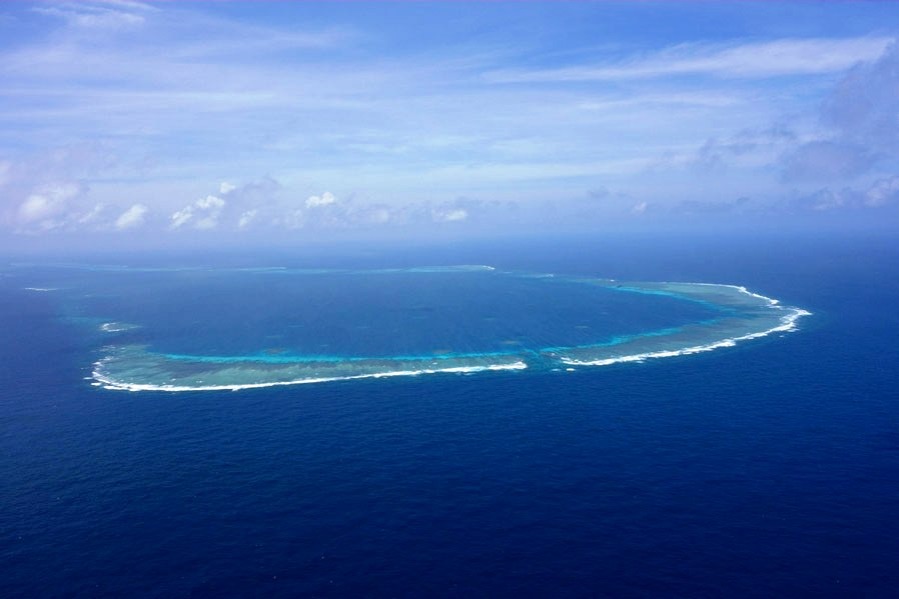
Thus, with the decline of its economy, the US's main arsenal in countering China's rise is military power by tightening its military encirclement of China and conducting provocative "freedom of navigation operations" in the South China Sea.
The US also continues to foment tensions in the Taiwan Straits by increasing military aid and arms trade with the separatist clique, thus emboldening the latter to move for independence from the Chinese mainland in violation of the one-China principle. On this note, the US is duplicitous. While it harps on supporting the one-China principle, this voice is easily drowned out by treating Taiwan as a "separate state and ally" with billions of dollars in military aid.
In recent years, the US has tried to push China against the wall through a trade war that sought to drastically reduce its exports to the US coupled with a technology war that has led to the decoupling of Huawei and other IT companies from their American counterparts.
It is not China alone or Russia that has been the target of US restrictions and other unilateral sanctions. As of March this year, tens of countries have been targeted for unilateral sanctions that included visa denials, trade embargoes and frozen assets, which were detrimental to their economies and resulted in medical and food shortages, often with the massive loss of human lives, especially children. The US has been unwavering in the face of international pressure to end its vicious practice of imposing sanctions. The UN resolutions to halt the 60-year trade embargo on socialist Cuba that remain unheeded are a case in point.
The more the US rolls out its hostile agenda of containing China and the rest of the developing countries, the more it finds itself isolated. From the perspective of the developing world, there is nothing to gain and everything to lose in supporting the US's self-centered zero-sum game. Economics unites the world, and war will divide it.