Future held in trust
Multilateralism is losing its appeal in a world where it is needed more than ever







MA XUEJING/CHINA DAILY
The growth of world trade has slowed considerably in recent years. Trade restrictions and trade wars have played a role in this.
In the advanced economies with their vibrant democracies, globalization is increasingly seen as a threat to employment. Deindustrialization has turned some regions into depressed areas where populists make political use of them. These domestic developments have geopolitical consequences as we have seen in recent years.
As a result, there is a tendency to be less dependent on each other economically. It is not a movement toward autarchy or isolationism but toward avoiding excessive dependence. Global actors want to become less dependent, especially in areas that are economically, medically, digitally or politically sensitive. Diversifying supply chains is one method.
The COVID-19 pandemic has given further impetus to this tendency. In the United States, even after the previous presidency, "buy American" is still a major policy initiative and a major theme in domestic politics, which makes it difficult to change it. In the European Union, the concept of "strategic autonomy" has become a central policy goal. It touches many domains such as trade, investment, strategic sectors, batteries and chips, industrial data, defence, digital technology, cyberspace, migration, climate and energy, medical equipment and pharmaceuticals, raw materials, and in the future, certainly, food.
The consequence of the evolution just described is that multilateralism is losing its appeal despite the continuing high level of interdependence.
With regard to trade, the World Trade Organization does not really work today as did before. The reform of the WTO to take greater account of e-commerce, subsidized exports, intellectual property, among other things, is not happening. However, it is time to reform the global governance institutions, especially the WTO.The less the time is ripe, the more we must do to make it ripe. The alternative to agreeing on market rules is brute force, the law of the jungle.
The EU has traditionally been the biggest defender of open, fair and rules-based trade, but it has of late become suspicious because it has the impression that some global actors pay too much lip service to this concept or even ignore it. The EU naturally wants to protect itself from unfair competition and therefore to secure a level playing field. It also wants its internal market-which has the highest purchasing power in the world-not to be dominated by companies that have a quasi-monopoly or by enterprises that operate on subsidies.
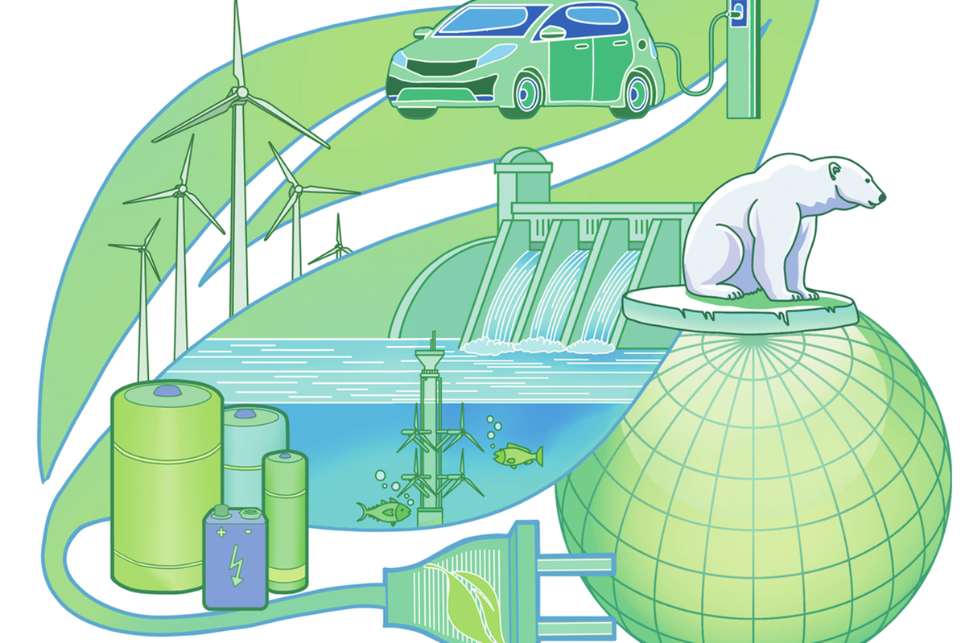
Where multilateralism has made progress is in combating climate change. The EU has given a legal basis to the goal of net zero emissions by 2050. So it is much more than merely political rhetoric. It is a huge transformation of the economy and of society. It is urgently needed because global warming is happening much faster than we thought in Paris. I am glad that the US and China are willing to cooperate on climate issues. The importance to humanity is so great that we cannot play the game of geopolitical rivalry over this. By the way, it also shows that it is not only possible to cooperate with countries that are ideologically like-minded. There are also common values alongside the differences.
That said, the restoration and modernization of the WTO is a top priority along with implementing the Paris Agreement on climate change. And countries must also work together to avoid new pandemics because the risk of a repeat of what has happened since the outbreak of the novel coronavirus is real. And besides, the current crisis is not over.
The novel coronavirus outbreak has also increased inequalities within countries and between them. Extreme poverty has increased again for 100 to 200 million people, after it had declined for decades. We are in the same storm but we are not all in the same boat. The poorer countries must be able to count on us for vaccines, for debt relief, for infrastructure, for cooperation in their human development, for the fight against climate change.
More than ever, it is time for dialogue among leaders and among peoples. Concrete agreements must be reached on concrete ways to improve the international climate. Concrete implementation of past agreements contributes to more detente and above all to the solution of problems such as climate change where it is a matter of general human interest.
The world order must be based on trust, of which there is too little today. Until trust is restored, multilateralism based on rules respected by all will not really be restored either. We must learn to live with differences between countries. It is the basis of harmony, solidarity and peace.
That is our experience in the EU with its 27 countries and 24 official languages. One can be competitors and rivals of different kinds but that does not make one an enemy of each other. Even if the countries are not like-minded and even if they say so publicly, they can still be strategic partners in well-defined fields or projects.
Trust is based on predictability of behavior. It must also be based on respect for international law and on the integrity of each country's territory. Building trust is a process, and so is restoring it. Where I come from there is an expression that says: Trust goes away on horseback and returns on foot.
The author is former president of the European Council and former prime minister of Belgium. The author contributed this article to China Watch, a think tank powered by China Daily. The views do not necessarily reflect those of China Daily.