Out with the old, in with the new







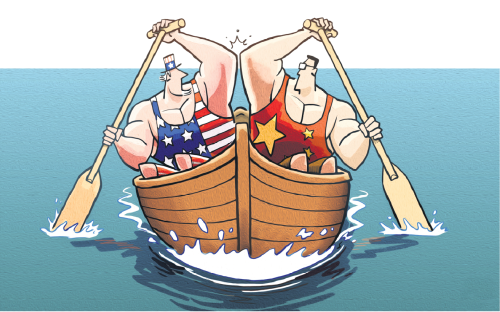
The decline of traditional alliances and the future of new-type partnerships
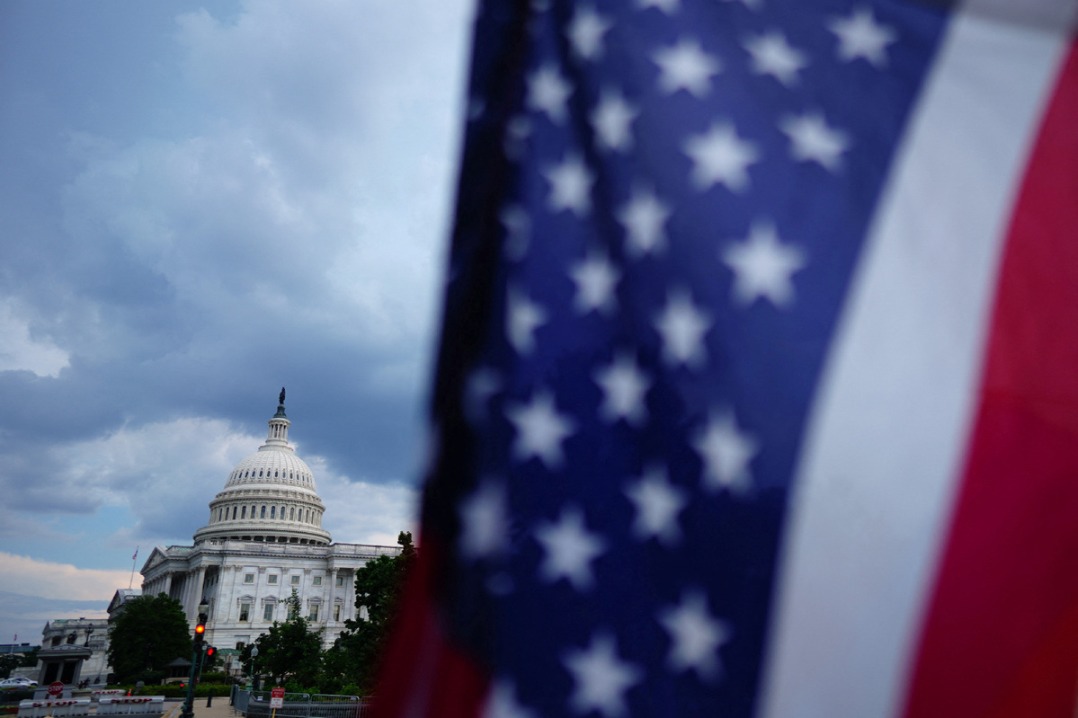
To curb China's rise, the Joe Biden administration is trying to rally the traditional allies of the United States to form an anti-China alliance. However, this has not received a warm response from its allies in Europe. The European Union, despite its own hardening line against China, is counting on China's broad market and great development momentum to drive its own recovery.
The US has been hyping up the "China threat" in a bid to build a consensus among its allies. However, in a survey conducted by the European Council on foreign relations of over 15,000 Europeans, nearly 60 percent of the respondents preferred the EU to adopt a neutral stance between China and the US. Thus, the US cannot regard the EU as a natural ally in its anti-China campaign. The US surveillance over its EU allies, which was recently exposed again, and its withdrawal from the Iran nuclear deal have dampened its credibility among the European countries. The alliance is becoming looser.
In the face of the current complex and ever-changing international situation, China has proposed countries forge a new type of international partnership that does not target any third parties as enemies or oppose normal relations between countries. It is imperative to build such partnerships among nations to jointly respond to global challenges.
This is fundamentally different from the traditional alliance system of the US. In terms of the international order, the new type of partnerships will safeguard the international system with the United Nations at the core, and defend the norms of international relations based on the UN Charter. In terms of values, the US advocates the US-style "universal values" and excludes other values. Instead of drawing lines between different civilizations or nations with different ideologies, the new type of partnerships advocated by China aim to build a community with a shared future for mankind, and respect the cultural traditions and ethnic characteristics of all countries. The traditional alliance system revolves around the US, while the new type of partnerships feature equal and mutual beneficial relations among countries.
The US-led alliance system is characterized by confrontation, competition, and containment, while the new type of partnerships reject the law of jungle in traditional international relations, advocate relationships featuring "dialogue rather than confrontation, friendship rather than alignment". It has its roots in the ancient Chinese civilization which pursued common welfare and harmonious coexistence of all people "under heaven".
At the Central Conference on Work Relating to Foreign Affairs on Nov 29, 2014, President Xi Jinping proposed to "make friends based on the principle of non-alliance, and form a network of partnerships all over the world". China has developed new-type partnerships with five regional blocs, namely the EU, the Association of Southeast Asian Nations, the African Union, the Arab League, and the Community of Latin American and Caribbean States, including various nations, civilizations, and religions. Currently, China has established a new type of partnership with 112 countries and international organizations, forming a new trend in global relationships that has become a driving force in safeguarding global peace and development.
The new-type partnerships enable the pooling of efforts in response to global challenges. In the face of the COVID-19 pandemic, China has donated $50 million to the World Health Organization, sent 34 medical aid teams to 32 countries, and provided 283 batches of anti-pandemic materials to 150 countries and four international organizations. As Lydia Samarbakhsh, a member of the National Executive Committee of the French Communist Party, pointed out, China has opened a new window in forging a new type of global partnership and promoting international exchanges by providing anti-pandemic aid to other countries.
The new-type partnerships promoted by China reflect the global community's expectations for common development. In advancing globalization, China is actively forging new-type partnerships featuring interconnectedness within multi-layer cooperation frameworks. The Belt and Road Initiative has become the largest international platform for collaboration. According to the Trade and Development Report 2020 released by the United Nations Conference on Trade and Development, China has replaced the US as the largest trading partner of the EU for the first time in history, regained the status as the largest trading partner of the US and India, and it has remained the No. 1 trade partner of Japan for 14 years in a row. Its vast consumer market, complete industrial and supply chains as well as open business environment are continuously benefiting the world.
The new-type partnerships safeguard world peace. As President Xi pointed out, peace is hardly noticed when people are benefiting from it, but like air and sunshine none of us can live without it. The new-type partnerships are aimed at securing peace and development and win-win cooperation, and cultivating trust and understanding among countries through dialogue, in order to build a world with lasting peace, universal security, common prosperity, openness, inclusiveness as well as cleanness and beauty. They are injecting positive energy into global security and safety.
With the global economy now highly integrated, the world has long become an interconnected and interdependent whole. The US endeavor to form an anti-China alliance not only goes against this trend, but also harms the interests of its allies. The new-type partnerships are instrumental in addressing the problems related to development in different countries, and help build a new type of global governance mechanism, which can safeguard the global order with a more efficient system.
Major General Xu Hui is commandant of the International College of Defense Studies at National Defense University of the People's Liberation Army of China. Major Meng Hua is a PhD student in strategy at the National Defense University of the People's Liberation Army of China. The authors contributed this article to China Watch, a think tank powered by China Daily. The views do not necessarily reflect those of China Daily.