History answers why CPC succeeds in China








China held the Communist Party of China and World Political Parties Summit on Tuesday with the aim of strengthening mutual understanding and learning, so as to promote national and international development for the well-being of the people across the world.
The CPC has covered a journey of 100 years, making many remarkable achievements on the way, and earned its rightful place in the global scheme of things. To fully understand the role of the CPC in China's social and political development, one has to evaluate it from a broader historical perspective.
In the first half of the 20th century, China experimented with different political and social systems and ideologies. Why did it eventually choose Marxism and the socialist system?
After the New Culture Movement, which started in 1915, spread Marxism in China, the more and more Chinese people were drawn toward socialism. Socialism accords with the traditional Chinese concept of all people under heaven being of one family and equality between the rich and the poor. So the CPC's proposal of building a moderately prosperous society in all respects gained overwhelming public support-not least because the Chinese people desperately wanted to eradicate extreme poverty. Marxism also accords with the Chinese secular culture of seeking truth from facts.
The Party's leadership adheres to the principle of wholeheartedly serving the people, which is closely linked with the traditional humanistic ideal of "people are more important than a monarch". As such, the CPC's governing philosophy is in line with traditional Chinese values.
Moreover, the CPC has carried forward the Chinese culture of people-centered policies. For example, Jiao Yulu, a civil servant, sacrificed his life in 1964 while trying to alleviate poverty, and became a role model for other Party members.
Why was Chiang Kai-shek, the leader of the then ruling Kuomintang and at the peak of his popularity after the country's victory in the Chinese People's War of Resistance Against Japanese Aggression (1931-45), defeated by the CPC-led People's Liberation Army in four years?
The CPC's policy of seeking happiness for all and realizing the rejuvenation of the Chinese nation helped it unite and mobilize the Chinese people. And the PLA is an army of and for the people. So during the War of Liberation (1946-49), the Chinese people fully backed the PLA in its fight against Kuomintang. For instance, millions of people supported the CPC front line during the crucial Huaihai Campaign and used wheelbarrows to supply ammunition and food to the PLA, and remove the wounded from the battle front. It was the power of the people that defeated Kuomintang.
Chinese culture is open and inclusive, enriched by Buddhism, Confucianism and Taoism. The CPC also learned from other cultures how to develop Marxism and adapt it to China's national conditions, creating a new path of human emancipation and economic development. The CPC has excelled in the role of both a revolutionary party and a governing party. During the fight against the COVID-19 pandemic, the CPC has also proved it can effectively deal with domestic affairs while providing public goods for other countries to help them address their problems.
China has transformed from an agricultural country to an industrial society. It has built a complete industrial system, and become the world's largest manufacturing and a major digital country. It has eradicated absolute poverty, meeting one of the most important goals of the UN 2030 Agenda for Sustainable Development 10 years ahead of schedule.
The Renaissance and the Age of Discovery helped the West to expand its reach and portray Western thoughts as modernity. And neoliberal globalization made the United States and its ideas popular around the world, but within itself it also carried the seeds of populism, in which many parts of the West are mired today.
By contrast, traditional Chinese culture advocates harmony and coexistence. Accordingly, the CPC's principles are aimed at seeking benefits for all, and exercising power in the interests of the people. Today, the ties between the CPC and the Chinese people are stronger than ever before.
Besides, to better understand the CPC, one has to go beyond the ancient and Western concepts of a political party.
The CPC combined traditional Chinese culture, revolutionary culture and modern culture to put forward proposals including building a community with a shared future for mankind, increasing mutual respect, boosting interactions between the traditional cultures of different countries, and strengthening the UN-centered modern international system. Furthermore, seeking common ground in the values of humans will help eliminate the confrontation between Western and Chinese values, and promote understanding about the CPC.
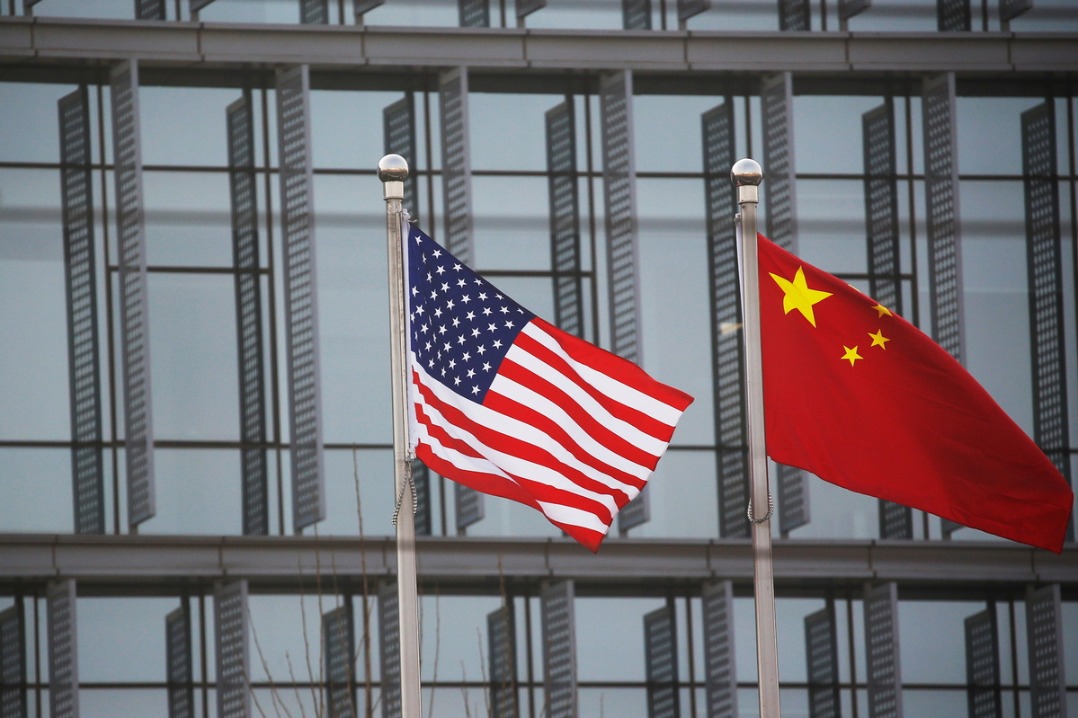
Therefore, China-US and China-European Union dialogue should focus on domestic governance and improving global governance. And by exploring the CPC's governance philosophy on issues such as climate change, public health and digitalization, the international community will realize it works for the benefit of all the people.
The author is Jean Monnet chair professor and vice president of the Academy of Xi Jinping Thought on Socialism with Chinese Characteristics for a New Era, Renmin University of China.
The views don't necessarily represent those of China Daily.