Acceleration of China's electric vehicles in Europe: opportunities and challenges







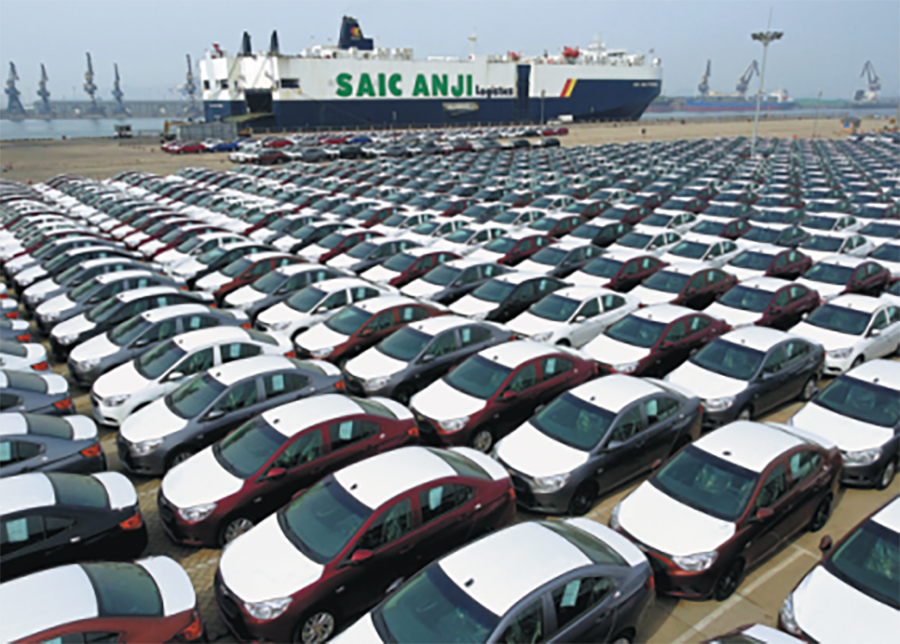
It has always been the goal of China's auto companies to tap European and US markets for more profits. However, traditional Chinese automobiles could only enter developing markets such as Southeast Asia and Africa due to product strength, compliance and other reasons. Nowadays China's new energy auto companies have started another attempt to march into the overseas market.
According to figures, new energy vehicles recorded export of around 70,000 in 2020, with a year-on-year increase of 89 percent, accounting for 7 percent of the total export volume of vehicles. Among them, 44,000 pure electric vehicles and 26,000 plug-in hybrid vehicles were exported.
Norway as the springboard for further development in Europe
In this trend of China's new energy auto companies going overseas, Weilai, Xpeng, BYD and other auto enterprises all consider Norway as their first choice. Norway has become the country with the highest proportion of electric vehicle sales in the past few years. In order to promote the sales of electric vehicles, Norway has provided lots of incentive policies such as exempting high import tax, registration tax and sales tax to stimulate the sales of electric vehicles. In addition, electric car owners are exempt from toll, and they can also use the bus lane. Thus, Norwegian market provides an excellent opportunity for China's new electric car companies.
Europe is definitely a big market. European new energy vehicle market is supposed to return to high growth trend in the next more than a quarter. Electrification of vehicles is equivalent to the realization of numerical control and control of vehicle motion program, which is the physical basis of intelligent driving. With the maturity of some intelligent applications, the necessity of electrification will be highlighted accordingly. At present, the advantages of electric vehicles are mainly in some small functions such as energy saving, environmental protection and acceleration. Even so, the economy of electric vehicles is improving rapidly.
According to data, the sales volume of new energy passenger vehicles in European market is 1.36 million, which has surpassed China (1.24 million), becoming the largest new energy passenger vehicle market in the world in 2020. Similar to Norway, the current substantial growth of new energy market in Europe is driven by strong new energy subsidy policy. Compared with direct cash subsidy or bonus policy, setting a specific spot time to ban traditional fuel vehicles is similar to the mandatory requirement for automobile manufacturers to make changes with seat belts or airbags, it helps consumers change their preferences and actively choose to buy electric vehicles. Together with increasingly tightening emission regulations, the pressure of industrial investment and the change of consumers' car buying preferences, the electrification of cars in Europe is accelerated.
Fundamentally, the reason for acceleration of electrification in Europe is the increasingly tightening emission regulatory network. This network aims to solve problems of carbon dioxide emissions from automobile exhaust and fine particulate emissions from diesel vehicles, and even requires enterprises and large investors to contribute to slowing global warming. Part of the pressure on auto companies to reduce emissions also comes from institutional investors such as fund management companies and banks. These investors hold a large number of shares in auto companies and have a strong voice, and they are constantly emphasizing the social responsibility of car companies to make efforts in emission reduction.
Challenges in European market
Chery, SAIC, Geely and BYD have been actively expanding overseas markets in the last 20 years, but have not been able to make a firm foothold in European market. The reasons are multi-level, among which product force is an important factor. Chinese auto companies mainly took the middle- and low-end routes overseas, relying on the cost-effective way as their main competitiveness.
Besides, Chinese new energy auto companies have invested a lot in design, technical performance and intelligence, but they are relatively weak in their own brand construction. In particular, Chinese car companies are still in the initial stage in foreign markets, and local consumers are unfamiliar with these new brands, meaning less psychological acceptance and trust for the cars.
However, brand building needs long-term systematic effort. At present, most of the overseas car companies choose to cooperate with local dealers, such as the in-depth cooperation between Xpeng automobile and Norway dealer zero emission mobility, and they carry out market sales and after-sales service for local consumers. Although this method can avoid some risks and promote local sales quickly, the control of automobile manufacturers will be affected in terms of brand image, recognition, sales standards and after-sales service.
Meanwhile, local operation is also the key to sustainable development. In addition to tax rates, policies, regulations and standards, many other details must also be considered by companies going abroad. China's overseas car companies have already faced many problems. For example, their after-sales service only provides spare parts and solves quality problems for overseas customers while without any service; they can only maintain short-term profits but cannot invest in new products, customer service and corresponding network expansion as setting price only based on cost; and also lack of in-depth understanding of the local market.
Yuexiao Liu is a Brive Consulting Market analyst.
The opinions expressed here are those of the writer and do not necessarily represent the views of China Daily and China Daily website.
If you have a specific expertise and would like to contribute to China Daily, please contact us at opinion@chinadaily.com.cn, and comment@chinadaily.com.cn.