



Building climate resilient agriculture







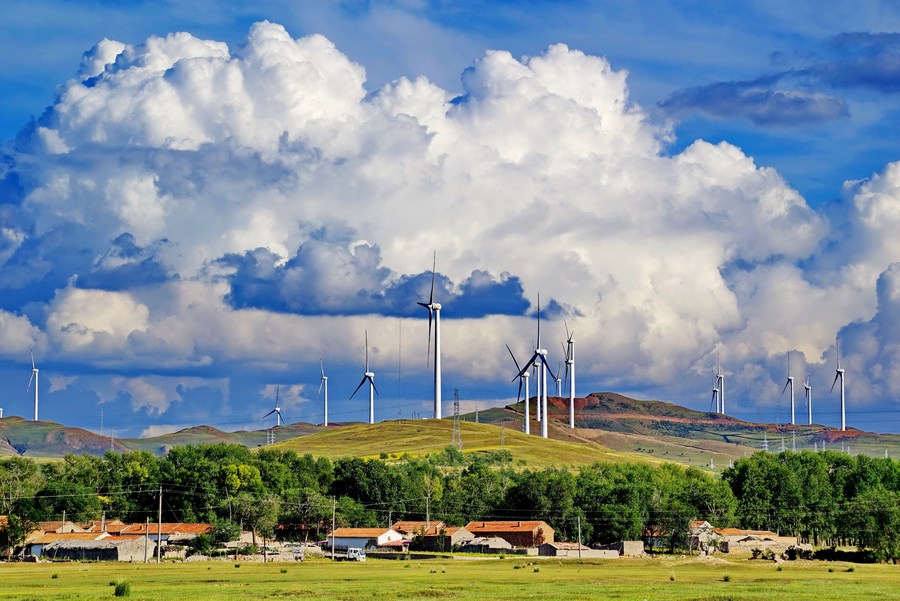
There has been renewed interest and firm international commitment to address the devastating impacts of climate change. The virtual Leaders Summit on Climate hosted by US President Joe Biden last week captured the world's attention with 40 global leaders participating and Chinese President Xi Jinping and others agreeing to take stronger collective action to address the climate crisis. And as UN Secretary-General Antonio Guterres said, 2021 is a critical year to address the climate emergency.
It is widely recognized that those who have the most to lose as a consequence of climate change are poor rural people, especially smallholders who rely on agriculture for survival. Small-scale farming produces half of the world's food calories, but it is often entirely reliant on natural resources, including rain. Global warming, extreme weather events (including droughts and floods), and rising sea levels are threatening the ecosystems these farmers depend on.
To illustrate, a 1.5 degrees Celsius increase in global temperatures will likely have a disastrous effect on many of the world's most important crops. The fight against poverty requires building resilience against climate change, too. Even in countries that have succeeded or will soon succeed in eradicating rural poverty, such as China, a part of the population remains vulnerable. Climate change is one of the main factors that increase the risk of people lifted out of poverty slipping back into poverty.
Moreover, agriculture is also often considered a contributing factor to climate change, as it accounts for about one-fourth of all greenhouse gas emissions.
There is a need to urgently build green and climate resilient agriculture but, unfortunately, the stark reality is that only 1.7 percent of global climate finance goes to adaptation, that is, to actions to prepare for and adjust to the impacts of climate change. The International Fund for Agricultural Development (as both a UN specialized agency and development finance institution) was an early mover on climate adaptation when development organizations were focusing mainly on climate mitigation.
Over the past decade, the IFAD has accumulated a wealth of practical knowledge and techniques to better serve small-scale producers in building climate resilience. About $500 million has been mobilized to invest in climate-smart solutions in 62 countries. This has made the IFAD one of the largest actors in smallholder agriculture adaptation resources.
In China, almost half of the total IFAD financing in the IFAD-supported Yunnan Rural Revitalization Demonstration Project and the Hunan Rural Revitalization Demonstration Project ($74.78 and $60.2 million respectively) are in activities that directly contribute to improving the capacity of farmers to cope with the current and future effects of climate change.
The project in Yunnan province will help bring 1,800 hectares of land under climate-resilient practices, while the one in Hunan province will improve climate information and adaptation guidance, providing 14,700 people with climate information services.
Much of the IFAD's climate financing has been through the Adaptation for Smallholder Agriculture Programme launched in 2012, or with the Global Environment Facility, the Least Developed Countries Fund, the Special Climate Change Fund, or the Adaptation Fund. The Adaptation for Smallholder Agriculture Programme is a direct conduit of climate and environmental finance to smallholder farmers, helping them to reduce poverty, enhance biodiversity, increase yields and lower greenhouse gas emissions.
The Adaptation for Smallholder Agriculture Programme delivers more systematic climate risk and vulnerability analyses, and boosts the capabilities of farmer-based organizations to manage climate risks. For example, the IFAD-funded programs include the development of a flash flood early warning system in Bangladesh, a salinity monitoring system in Vietnam, a stronger weather station network in Mozambique, and more robust building codes for post-harvest processing and storage facilities in Rwanda.
Green and climate resilient agriculture is also a key focus of the IFAD's South-South and Triangular Cooperation. And a lot is being done through the China-IFAD South-South and Triangular Cooperation Facility-for instance, Vietnam, Cambodia, China and Laos are benefiting from a grant to help identify and develop climate-resilient value chains between farmers groups, processing units and enterprises in the context of the IFAD-supported projects in these countries.
While these are important investments, we need to do more. For this reason, the IFAD's efforts to address environmental and climate issues, and to facilitate social inclusion will be expanded. The IFAD is committed to increasing climate finance for small-scale agriculture to 40 percent of its investments during the 2022-24 period, and 90 percent of the IFAD-funded projects will aim to include activities that build climate-related adaptive capacity across multiple dimensions, in order to increase the resilience of 28 million people.
In leading up to the UN Food System Summit in September and COP26(UN Climate Change Conference) in November this year, the global community needs to build on the strong momentum and raise multilateral collaboration to a higher level. Much can be learned from the IFAD's experience, which is uniquely placed to ensure rural communities receive the support and financing they need to adapt to the threats posed by climate change.
This will help to better target climate finance and ensure it reaches the most vulnerable people and groups, as well as to address the complex and interrelated challenges of food security and nutrition, rural development and climate change. To that end, enhanced partnerships among governments, multilateral organizations and the private sector are critical.
The author is associate vice-president of the International Fund for Agricultural Development.





