Suga's US visit challenges Japan-China ties







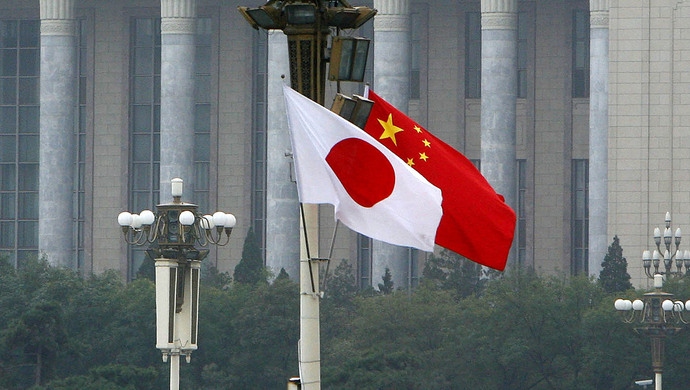
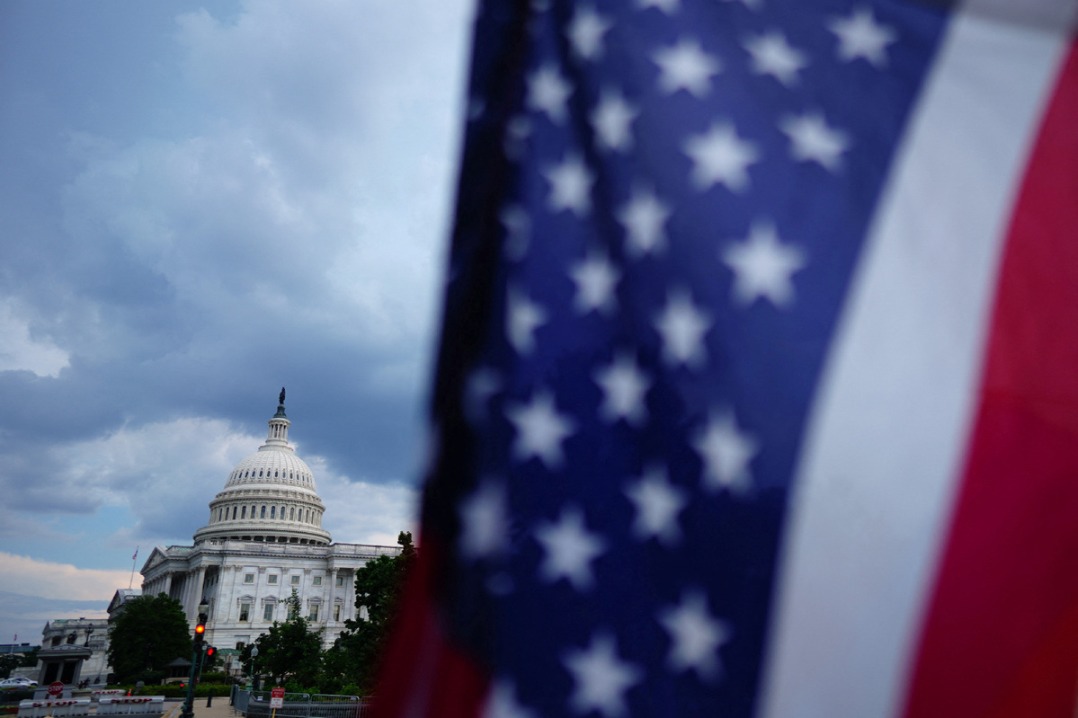
Japanese Prime Minister Yoshihide Suga's scheduled meeting with US President Joe Biden in Washington on Friday, the US leader's first face-to-face talks with another country's leader since taking office in January, is aimed at rebuilding the US-Japan alliance which was strained due to previous US president Donald Trump's "America first" policy.
Since Biden has sought to rebuild the United States' ties with its allies that suffered a setback during Trump's presidency, he may seek to use strengthened US-Japan ties to inject new vitality into Washington's alliances with other countries. But the strengthening of US-Japan alliance and the Japanese government's decision on Tuesday to dump radioactive water from the disabled Fukushima Daiichi nuclear power plant in two years, which is a direct threat to the marine environment and public health in Japan and neighboring countries including China, may make it more difficult for China-Japan relations to return to normal.
In the US, on the other hand, the novel coronavirus pandemic had claimed more than 560,000 lives by the end of March due mainly to the government's reckless response. The US' coronavirus death toll is higher than its combined toll in World War II, Vietnam War and the Iraq War. Yet the Biden administration has chosen to strengthen the US' alliances, with an eye on China, instead of intensifying the domestic fight against the virus.
Japan was already mired in economic recession, thanks to the impact of the pandemic, when Suga assumed power in September. Known as a "shadow" prime minister and the right-hand man of predecessor Shinzo Abe, Suga said he would strive to complete Abe's unfinished work.
Last year, when the Chinese government and people thanked the Japanese government and the country's private sector for the help in fight against the pandemic, the Abe administration, instead making efforts to further improve bilateral ties, said Japan should develop the ability to strike at foreign missile-launch sites to deter potential attacks against the country.
As for the Suga administration, it has been helping the US to contain China's rise, by interfering in the South China Sea issue and the Taiwan question. Perhaps the US is strengthening its alliance with Japan so it can use it as a pawn in its strategic maneuvers that include containing China. And by allowing the US to use it as a pawn, Japan has become a "troublemaker" in Asia.
As part of its pivot to Asia strategy, which former US president Barack Obama launched, the US is resorting to long-arm jurisdiction to drive a wedge between other Asian countries and China, and as one of the US' allies in the region, Japan has been trying to balance its relations with its suzerain, the US, and its largest neighbor and trade partner, China.
The US-Japan alliance has its roots in Japan's surrender in 1945 which ended World War II. Japan was under US military occupation for seven years. The two allies have close security cooperation under the framework of the US-Japan Mutual Security Treaty, which was signed in 1951 and upgraded subsequently.
Under the treaty, the two countries are obliged to "individually and in cooperation with each other... maintain and develop... their capacities to resist armed attack", and assist each other in case of "an armed attack against either party in territories" under the Japanese administration. But Japan cannot come to the defense of the US because its Constitution forbids it to send armed forces overseas.
During the Cold War, the US shifted its strategic focus on East Asia, and Japan became one of its closest allies in the world, which has been a hurdle in the smooth development of Sino-Japanese ties. Japan further strengthened its alliance with the US at the turn of this century and illegally "nationalized" China's Diaoyu Islands in 2012. Also, the US and Japan are in discussion to include a statement on China's Taiwan island in a joint statement likely to be released after the Biden-Suga summit on Friday.
This is not the first time that Japan has publicly supported the US on the Taiwan question. In a joint statement issued after the recent meeting between the US secretaries of state and defense and the Japanese foreign and defense ministers, the two countries "underscored the importance of peace and stability in the Taiwan Strait".
The US is aware that it can hardly check China's rise on its own, so it wants its allies, including Japan, to gang up with it against China. The US has pledged to defend Japan, while Japan has coordinated with the US to bolster the latter's strategies. Japan has collaborated with the US to further its Asia-Pacific strategy since the Abe era, and the Suga administration's cooperation with the US is a continuation of that practice.
Besides, Suga's term as the prime minister ends in September, and to win the next election, he needs to lean to the US to seek more security guarantees.
It is due to the above factors that Sino-Japan relations are facing daunting challenges.
The biggest change in international relations has been brought about by the rise and revitalization of East Asia and the Western powers' need to adapt to this change. The cultural integration of the two can give rise to a global "symphony orchestra". And whether the West likes it or not, China will be an increasingly important player in that orchestra.
The rise of East Asia will contribute to the building of a new world order, challenging the Japan-US alliance and the US' strategies in this region. Asia is first and foremost for Asian people, and the time for outside forces to bully Asian countries and people is over.
The author is a researcher in Japanese studies at the Chinese Academy of Social Sciences. The views don't necessarily represent those of China Daily.
If you have a specific expertise and would like to contribute to China Daily, please contact us at opinion@chinadaily.com.cn, and comment@chinadaily.com.cn.