Reducing poverty to build inclusive future for all







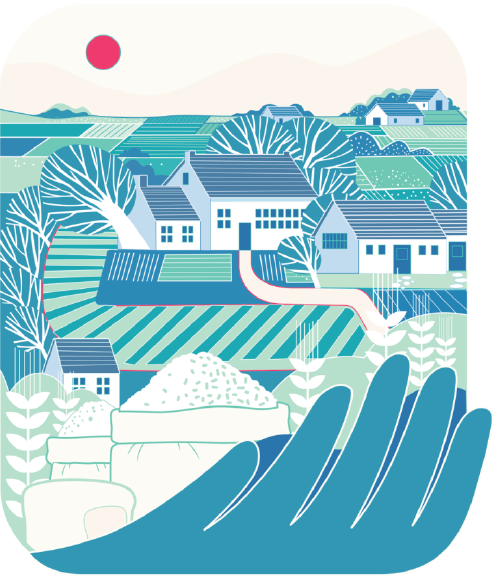
Jiang Shouliang is 59 years old and has paralysis of his lower limbs due to an accident. He lives in Jiebei village, Miao autonomous county in Hunan province, and his livelihood is beekeeping. For years, he lived in poverty, struggling to support his family with the limited income he earned from selling honey.
In 2009, a joint project between the China International Center for Economic and Technical Exchanges and the United Nations Development Programme established honey processing plants in the county, offered training in honey farming technology, and helped the village to establish a rural cooperative. As a result, the quality of Jiang's honey improved, and new sales channels opened up for him. By the end of 2019, Jiang's family had risen out of poverty.
Contribution to the cause of global poverty reduction
Jiang is just one of more than 750 million people lifted out of poverty in China over the last 40 years, who account for about three-fourths of the global total during that period.
Last month, President Xi Jinping announced that after decades of government efforts at all levels, extreme rural poverty in China had been eradicated.
The UNDP congratulates China on this remarkable accomplishment. We are especially proud to have worked side by side with the government and acknowledge the major contribution China has made toward global efforts to advance progress on Sustainable Development Goal 1, to end all forms of poverty everywhere.
However, we also recognize that the work to fight poverty is never really done. As the COVID-19 pandemic has demonstrated, those living just above the national poverty line (the standard was 3,218 yuan a year in 2019) remain vulnerable, especially to the socioeconomic consequences of sudden shocks and crises. However, more than 600 million people in China still live on less than 1,000 yuan per month.
The mission now is to make sure the significant progress already made is further built upon and that people who have risen out of poverty do not slide back. Indeed, with the 14th Five-Year Plan (2021-25) having been officially endorsed, China is entering a new period. As it transitions from years of fast, quantitative growth to higher-quality growth and a sustainable development trajectory, it is not only important to protect the progress that has been made, but to ensure the understanding of poverty evolves with this new economic reality as well.
Broader yardsticks to assess poverty needed
To begin with, income is only one dimension of poverty. While China's poverty alleviation efforts have specifically emphasized the areas of education, health and housing, and the provision of the basic necessities such as food and clothing, this has mostly happened at the micro level. To have a more comprehensive perspective at the macro level, China could consider adopting broader metrics such as the multidimensional poverty index, so as to systematically track and measure the different facets in the continued fight against poverty.
In addition, as with many countries, China's rapid growth has also led to widening inequalities. In 2020, urban per capita disposable income was more than 2.6 times higher than the rural level. The rural agricultural labor population is older (33.6 percent above age 55) and less educated (43.4 percent of rural residents have only received primary education or are illiterate) than the overall Chinese population.
At the same time, Chinese cities have their own vulnerable populations. For example, while more than 60 percent of citizens live in cities, many are migrant workers who don't have equitable access to public services in the urban areas where they work owing to the household registration, or hukou, system.
This is gradually changing as new policies granting more services such as access to schools to migrant workers' children in cities are enacted. But China will need to continue examining the differing contexts for these groups to ensure that continued progress in poverty alleviation is not impeded as the country continues to urbanize.
Workers deserve better social welfare systems
Another group that deserves attention is informal workers as well as workers with formal employment contracts, but whose contracts exclude social protection and insurance coverage. As new technologies have continued to evolve, this group includes China's rapidly growing gig economy and many working in new digital sectors. Social welfare systems must become more flexible, in order to cover all workers, an issue that was highlighted during the height of the pandemic both in China and globally.
With the changes that artificial intelligence and automation are already bringing, policymakers must also be forward-looking. This calls for investments in education to ensure people have the right skills needed for the new world of work. It is critical that technologies-and skills to use them-are available to everyone, to avoid new divides opening up.
Given the nature of these challenges, moving forward, there needs to be a shift from focusing on absolute poverty, to addressing relative poverty, which emphasizes inequality and describes circumstances in which people cannot benefit or have access to activities, services, or experiences that most others can.
It is encouraging to see that, through its rural revitalization strategy, the government is focusing on narrowing divides. As part of the program, the eradication of extreme poverty will be followed by a five-year transitional period to help consolidate all the achievements, during which policies and support will still be kept in place for counties that have just been taken off the absolute poverty list. This is vital to ensure vulnerable communities do not slide back into poverty.
Environmental protection to determine success
Finally, maintaining and expanding on the great progress China has made in poverty alleviation will also depend on the ability to protect the environment and combat climate change. Forty percent of all jobs on Earth depend on a healthy, stable environment including many jobs in the agricultural sector, which still accounts for 25 percent of employment in China.
In Jiebei village, Jiang has big plans for his bee farm this year. He wants to expand from 40 to 80 bee colonies and reach an annual income of 100,000 yuan. While his goal may be ambitious, his confidence is based on how far his family has already come.
In the same way, for poverty alleviation in the country as a whole, despite the many issues still to be addressed, if the last four decades of progress are any indication, there is much reason for optimism. The lifting of hundreds of millions of people out of extreme poverty did not happen by accident. It was the result of sustained political will and targeted measures and policies.
If this same approach and level of resolve is applied in the next phase of poverty alleviation, the eradication of extreme poverty in China will only be the first-pivotal-step in creating a sustainable and inclusive future for all.
The author is resident representative of the United Nations Development Programme in China. The views don't necessarily reflect those of China Daily.