20 years of FOCAC has borne fruit







Since the establishment of the Forum on China-Africa Cooperation 20 years ago and the recent initiation of the Belt and Road Forum for International Cooperation, China has become Africa's biggest economic partner. There is no other country with such depth and breadth of engagement across trade, investment and infrastructure financing in Africa.
In this context, Chinese State Councilor and Foreign Minister Wang Yi underscored, on the occasion of the 20th anniversary of FOCAC on Nov 12, that trade between China and Africa had grown 20-fold and hit $208.9 billion in 2019. In addition, compared with 20 years ago, total Chinese foreign direct investment in Africa reached $49.1 billion in 2019, which was 100-fold growth. Furthermore, more than $200 billion in Chinese financial support was generated by 2019.
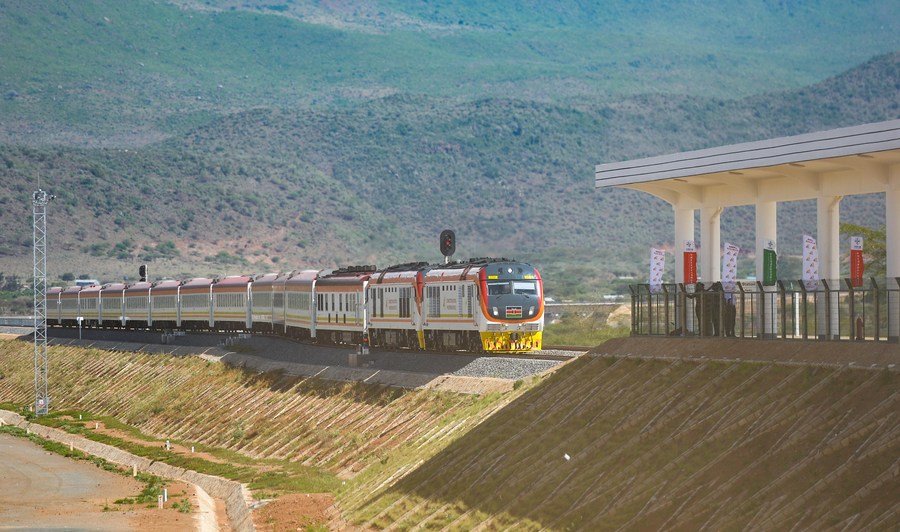
China's expanding investments were supported by the forums through promoting infrastructure development, encouraging Chinese enterprises to invest, and facilitating the development of small and medium-sized enterprises in Africa. The inflows of FDI from government and private enterprises facilitated the associated Chinese financial flows and enhanced the inclusive development potential of many African countries.
China has already become a big financial source for Africa's development endeavors. In September 2018, a total of $60 billion in financing was pledged for Africa at the seventh FOCAC summit. This comprised $15 billion in grants, interest-free and concessional loans; $20 billion in credit lines; $10 billion for development finance; $5 billion for financing imports from Africa; and incentives for Chinese companies to invest at least $10 billion over three years.
Undoubtedly, Chinese investments and external financing were indispensable to sustained economic growth in many African countries in the FOCAC period. Such investments have contributed to providing world-class economic infrastructure, injected much-needed capital, introduced new technologies and modern management know-how, and strengthened management of project implementation in these economies.
The views of African policymakers and academics demonstrate that countries significantly benefited from China during two decades of FOCAC. China's economic and foreign relations approach is generally perceived positively in African countries. Most observers emphasize China's diplomacy of noninterference, mutual respect and friendship with Africa as being fully appreciated by key decision-makers.
Current achievements are broad-based but tell only part of the story, since China-Africa cooperation extends to other key sectors, as declared at the 2018 FOCAC Beijing summit. The deepening relationship is beyond economic cooperation and extends to crucial social sectors as demonstrated by efforts to provide support for health and educational institutions and governance in African countries, and for peace and security missions in some states.
More specifically, there is much to commend regarding China's efforts to assist Africa under the difficult circumstances of the COVID-19 pandemic. The health and economic impacts of the pandemic are creating huge economic and social challenges globally. China's efforts to support Africa in surmounting these challenges and achieving post-pandemic recovery are vital to ensuring that economic achievements in recent years are sustained, and poverty reduction in recent decades is not reversed.
At such a critical moment in the global fight against the COVID-19 pandemic, commitments made at the virtual Extraordinary China-Africa Summit on Solidarity against COVID-19 on June 17 promised to build a China-Africa community of health for all. These commitments made at the summit in the words of President Xi Jinping included that African countries will be among the first to benefit from the COVID-19 vaccine once its development and deployment are completed in China.
The gains achieved under FOCAC and Belt and Road Initiative cooperation have evidently built a shared community and substantial collaboration in socioeconomic fields. The remaining matters are how to strengthen and enhance cooperation within FOCAC and the BRI on high-priority issues that improve people's livelihoods and well-being.
There are core areas of vital importance for the transformation of Africa that should be covered urgently, including poverty reduction in fragile economies, expanded efforts to develop Africa's industrialization, and efforts to address the adverse impacts of climate change, which are an existential threat to some African regions and countries.
The achievements of China's transformation to lift 800 million people out of poverty within a few decades are much aspired to globally. In addition, in view of China's success in addressing climate change, food security and agricultural productivity, the ways and means of collaborating in these critical areas should be set as priorities in extending the achievements under FOCAC and the BRI.
The Chinese leadership has declared readiness to work with Africa on a framework of strategic cooperation on climate change to jointly tackle this challenge, as well as willingness to explore broader cooperation on clean energy.
Over the past 20 years, FOCAC has considerably enhanced the cooperation and friendship of China and Africa, and the BRI will further strengthen this relationship. Current practices and China-Africa strategic relations should be enhanced and expanded to critical areas that are vital for improving people's lives and promoting sustainable development.
The author is managing director of the Horn Economic and Social Policy Institute, an Ethiopia-based think tank. A version of this article previously appeared in the newspaper Capital Ethiopia. The views do not necessarily reflect those of China Daily.