



Judicial safety: Condign punishment for threatening judges







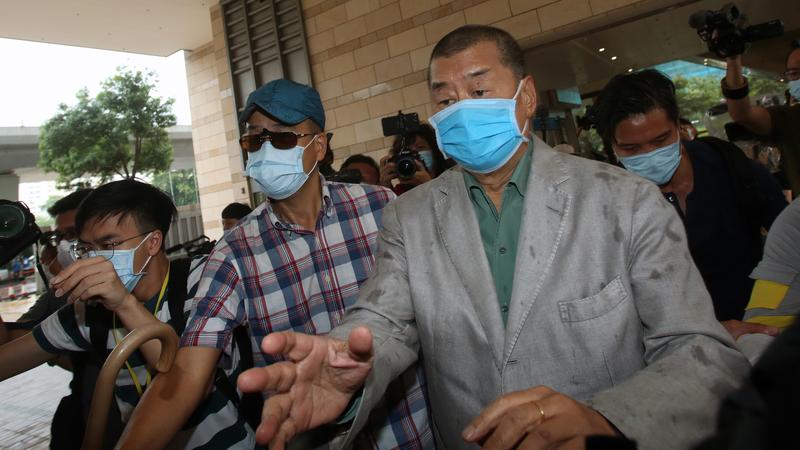
On December 3, the Next Media founder, Jimmy Lai Chee-ying, and two of its directors, Royston Chow Tat-kuen and Wong Wai-kuen, appeared at West Kowloon Court on a fraud charge, involving the use of Next Digital's headquarters in Tseung Kwan O. When they applied for bail, the Chief Magistrate, Victor So Wai-tak, refused to grant it to Lai, because he was a flight risk and might re-offend. Both Chow and Wong, however, were granted bail, as there was not the same concern. They will all appear in court again on April 16.
Although accused persons enjoy a presumption of bail, there is no absolute right. But before a court can deny somebody bail, the Criminal Procedure Ordinance requires it to identify "substantial grounds" for believing that there will be adverse consequences if it does so. These include a failure "to surrender to custody as the court may appoint", as well as the likelihood of the commission of "an offense while on bail" (Sect.9G). Given his experience, So, who has been designated as one of the six magistrates to handle national security cases under the National Security Law (Art.44), would have been well aware of these criteria, and must have had strong grounds for denying it to Lai.
Shortly after the hearing, So's office received a telephone call, which was taken by his secretary. A man ("the caller") shouted "I will bomb you, your wife and your son to death". Apart from seeking to threaten So, the caller must also have intended to influence any other judicial officers handling Lai's case in future. A police investigation is now underway into what is obviously a very serious offense, designed to affect the way judges administer justice. The caller, moreover, has also violated the Basic Law, which stipulates that the courts "shall exercise judicial power independently, free from any interference" (Art.85).
The threat to So has attracted wide condemnation. The Department of Justice said it would not tolerate intimidation of a judge appointed to handle national security cases, while the CPG's Liaison Office "strongly condemned" what had happened, and pledged its "full support" for judges discharging their duties. Whereas the Law Society denounced "an abhorrent threat to judicial independence and the rule of law", the Bar Association condemned "this most serious assault on judicial independence".
The caller's threat, moreover, also violated the High Court injunction issued previously to protect judicial officers and their families from doxxing. It contains a ban on "intimidating, molesting, harassing, threatening, pestering, or interfering" with any judicial officers or their families. Anyone who, like the caller, violates the injunction, will face imprisonment or a fine, although some of the sentences imposed of late on those who have doxxed police officers have been derisory.
If, however, the police can arrest the caller, doxxing will be the least of his worries. Reports indicate that the police are treating the case as one of criminal intimidation, and the ingredients of this offense clearly exist. Under the Crimes Ordinance, the offense arises when somebody threatens a person with injury either to himself or another person, with intent to cause alarm (Sect.24). Where the intimidation is directed at anyone involved in upholding criminal justice, it is treated particularly seriously.
Indeed, in the Court of Appeal, Acting Chief Justice Noel Power once said "Attempts to side-step due process by endeavoring to intimidate those involved in the administration of the law are gravely serious offenses" (CACC 376/1996), and this remains the position. Criminal intimidation is punishable with a maximum sentence of 5 years' imprisonment, and, if the caller is eventually convicted, he must expect a sentence at, or close to, the top of the sentencing bracket.
The caller, moreover, may also be prosecutable for subversion under the National Security Law for Hong Kong, which is far more serious. This offense is committed if somebody, by using the threat of force, organizes, plans, commits or participates in serious acts which interfere with or undermine the performance of duties and functions of "a body of power", which includes the judiciary (Art.22). If convicted of subversion, the caller could, if his offence is classified as being of "a grave nature", be sentenced to "life imprisonment or fixed-term imprisonment of not less than ten years".
If, therefore, the police can arrest the culprit, the Department of Justice will need to evaluate the evidence and, if possible, charge him with subversion, as well as with breaching the doxxing injunction. He could also be charged with criminal intimidation, but as an alternative to the subversion charge, as they cover the same ground. Whichever offense he is ultimately convicted of, he must expect, in the interests of deterrence, to receive condign punishment.
In Hong Kong, cases of intimidation of judges are, fortunately, rare. They are, however, certainly not unknown, particularly since the protest movement got underway. During the social unrest, its armed wing even firebombed the Court of Final Appeal, the High Court, and the Shatin Magistrates Court, in a brazen attempt to intimidate judicial officers and undermine the rule of law.
In January, moreover, the protesters, having already vilified her online, targeted Justice Anthea Pang Po-kam, when they daubed insulting graffiti on the walls of the High Court. They were unhappy with the sentences she had imposed on their fellow rioters, and they stigmatized her as "a judge with a red background", a smear levelled at judges who punish offenders with ties to the protest movement. Pang, however, has refused to be intimidated, and has faithfully stood by her judicial oath, which requires a judge to "safeguard the law and administer justice without fear or favor". Her example, therefore, will undoubtedly inspire So, as well as any other judicial officers who find themselves in the firing line for simply doing their duty.
In other jurisdictions, it is by no means uncommon for judges to be threatened in this way. In the United Kingdom, for example, the Ministry of Justice revealed that threats connected to cases they presided over were received by 100 judges and magistrates in 2016. In the United States, moreover, Frank Caporusso was charged in a New York court in October with threatening to assassinate the judge overseeing the prosecution of President Donald Trump's former National Security Adviser, Michael Flynn.
Anybody convicted of threatening a judge inevitably faces a tough sentence. In 2012, for example, after Australian Darren Linney was convicted of sending three emails to a judge in New South Wales threatening to kill him, he was sentenced to 2 years 5 months' imprisonment. In February, in Virginia, USA, Mitchell Nicholas was sentenced to 6 years' imprisonment for writing letters to two federal judges in which he threatened to kill them.
Irrespective of whether the caller is ultimately convicted of subversion or criminal intimidation, his sentence will have to be one which makes it abundantly clear that anybody who threatens a judge has declared war on society and must be punished accordingly. It is an act so heinous that it threatens the rule of law, the rock on which Hong Kong is built. As the police try to track the caller down, let everybody unite to wish them "Godspeed".
The author is a senior counsel, law professor and criminal justice analyst, and was previously the Director of Public Prosecutions of the Hong Kong SAR.
The views do not necessarily reflect those of China Daily.





