



Why Hong Kong should ease travel measures for mainland students







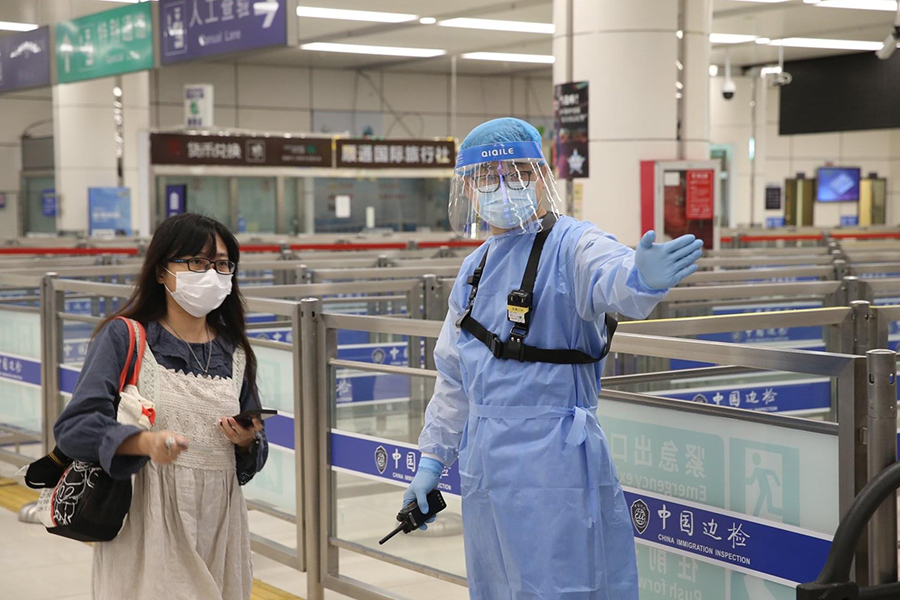
The special administrative region government’s quarantine rules and border-control measures have stopped many Chinese mainland students admitted to Hong Kong universities from coming to the city. The current measures appear to be unwelcoming for students, as many students chose to attend school this semester through online classes. They are devoid of campus facilities, much-needed classroom interactions, and their teachers’ direct supervision. If the strict measures continue to obstruct students, many aspirants might avoid Hong Kong universities in the next academic year. Considering the copious revenue that mainland students bring in, such a trend would be a massive blow to educational institutions in Hong Kong. Since mainland students play an important role in the city’s economy, culture, and innovation, the SAR government needs to lift the invisible barrier and make it easier for them to come to the city.
Students from the mainland make up the largest percentage of Hong Kong’s non-local student community. In 2016, more than 50 percent of student visas issued by the local Immigrant Department were for mainland students, and the number climbed to 67 percent in 2018. Meanwhile, a survey by Lingnan University (Hong Kong) revealed that the metropolis is the second-most popular study destination among 2,739 respondents from the mainland.
Mainland students’ contribution to Hong Kong’s overall prosperity is remarkable. The payments from them develop and sustain the city’s higher-education institutions, including all premium universities. In the last decade, most universities have raised tuition fees multiple times for mainland students while local students’ fees have remained almost the same. Apart from the millions of dollars they contribute to the universities, the students pay a large amount of rent in the world’s least-affordable housing market. A huge number of landlords depend solely on students for their rental income. Without them, rents in some areas have already dropped by a third this year.
Moreover, mainland students bring much more than money. Many of the brightest youngsters among them, after graduating, innovate and build new businesses by launching startups in the Guangdong-Hong Kong-Macao Greater Bay Area. Attracted by the reputation as a global financial hub, many earned their degrees in business administration and finance, and now are enriching the fintech ecosystem in the city. Those graduates with innovative ideas and an entrepreneurial spirit are already becoming a major force behind the central government’s Bay Area initiative. As President Xi Jinping emphasized during the 40th anniversary of the country’s reform and opening-up, the nation will prosper “only when its young people thrive”. A host of vibrant young minds from the mainland can become a catalyst for countless entrepreneurial opportunities to transform Hong Kong into the world’s leading fintech hub.
From my personal experience as one of the former students, mainland students can also help to heal the partisan divide that was deepened because of last year’s anti-government protests. Growing up under a distinct sociopolitical system, mainland students bring their unique perspective to the city and share it with the young generation here. It is the most creative way to relieve the recent tension between the two places. Besides, the broad guidelines released as part of the 14th Five-Year Plan (2021-25) support the further integration of Hong Kong into the development of the country based on “one country, two systems”. Cultural exchange among youngsters of the mainland and Hong Kong is the constructive approach to such integration.
Among other strict measures, Hong Kong has imposed a mandatory quarantine on every person, including student-visa holders, intending to enter the pandemic-battered city since February. Six months ago, the Legislative Council proposed the implementation of health codes — an online system mutually recognized by authorities of both sides for users to prove their health status — to improve the efficiency of the free movement of people between the mainland and Hong Kong. Nevertheless, the proposal wasn’t implemented as some opposition lawmakers at the time perpetuated conspiracy theories portraying such moves as “a tool to collect personal data”. This has created a huge inconvenience for mainland students arriving in the city.
The United States’ Department of Homeland Security exempted foreign travelers “whose entry would be in the national interest” from mandatory quarantines. Such measures by the US can also be replicated in Hong Kong for the benefit of the students as the mainland has already brought the pandemic under control, with only 26 new locally transmitted cases in the past 10 days. The Hong Kong government has relaxed border restrictions only for Hong Kong residents returning to the city from Guangdong province and Macao. As of Nov 23, up to 5,000 residents have been able to skip the two-week quarantine as long as they tested negative for COVID-19. Mainland students can also be considered for inclusion in this program once the infection-control system allows.
The author is a Hong Kong-based journalist.
The views do not necessarily reflect those of China Daily.





