US-China relations on a slippery slope







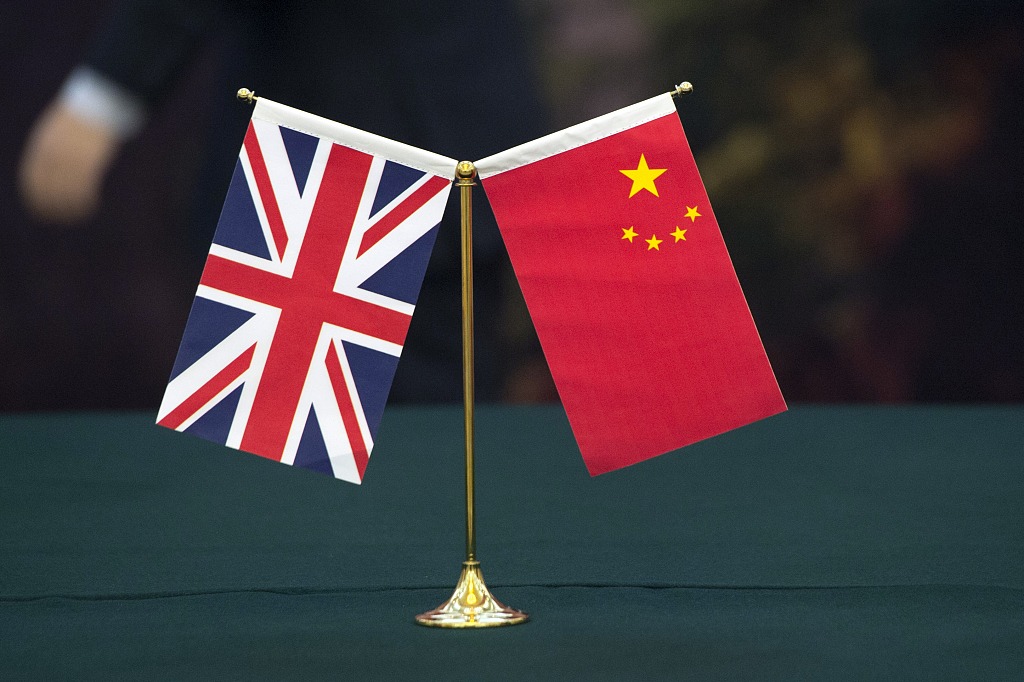
During the entire history of US-China relations since the Nixon visit in 1972, US-China relations have never been as bad as they are today. On this most people are in agreement.
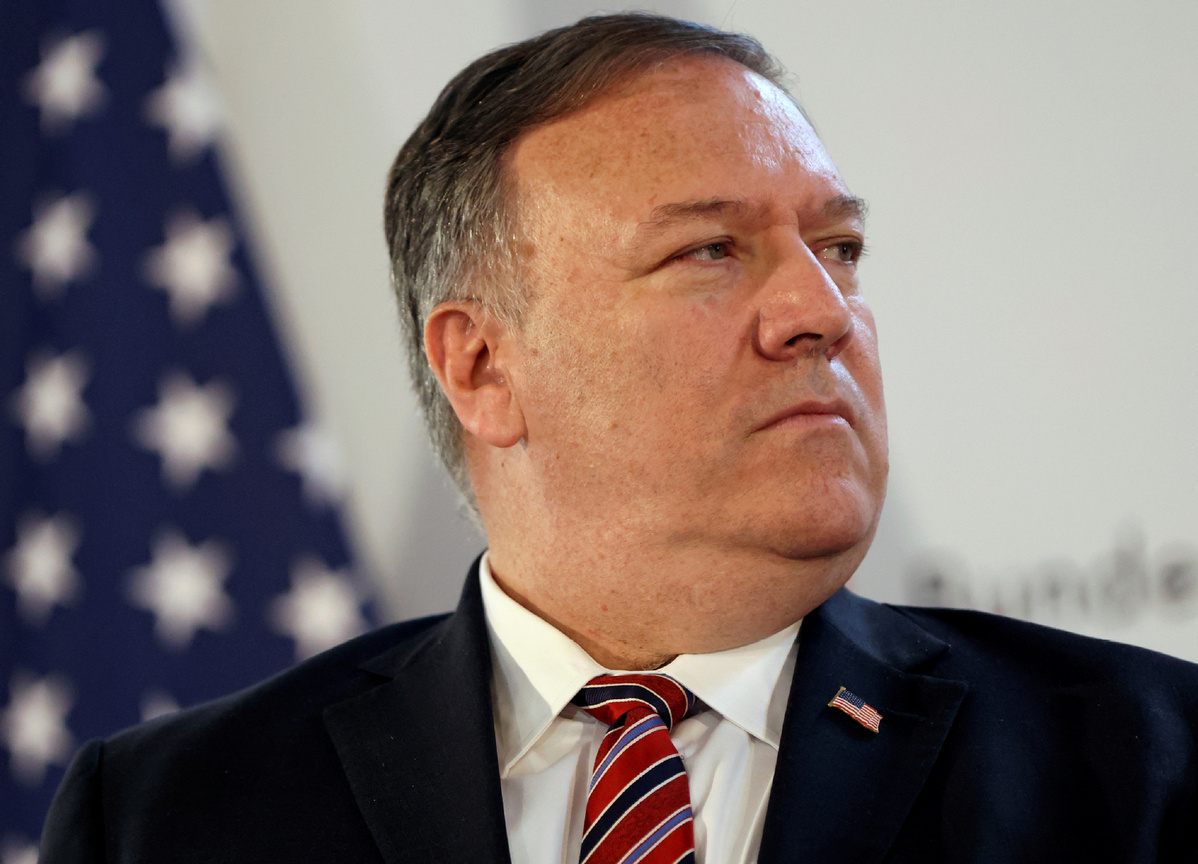
And it has come to this state largely due to an offensive launched most aggressively by the Secretary of State, Mike Pompeo. He's targeting the Communist Party of China, and thereby, the Chinese nation. Each day brings new measures taken by the US government to hamstring China's development and to penalize its citizens. Pompeo even went so far in his speech at the Nixon Library on July 23 to declare that the Nixon policy of "engagement" was at an end, presaging what has become an insidious and dangerous debate about "decoupling," which even President Trump has started to echo.
Pompeo and the other "China hawks" make the bogus argument that engagement with China has been premised on the idea that China would become a Jeffersonian democracy like the United States. But this in fact was not the case. The engagement policy had a number of significant advantages for the United States with regard to US competition with the Soviet Union and as an aid in resolving the quagmire that was Vietnam. It also helped bring down tensions in the Asia-Pacific as a whole.
But more importantly, a country with (then) over half a billion people could not be kept in veritable isolation from a large section of the world community. John Holdridge, who assisted in the negotiations on the Nixon China trip as a National Security Council representative, gives a fair description of the purpose of the engagement policy in his, "Crossing the Divide. An Insider's Account of the Normalization of US-China Relations". Holdridge writes, the "Shanghai Communique helped to turn China away from its preoccupation with internal problems and encourage it to become a much more positive and outward-looking contributor to the world community of nations – a US objective from the very beginning of our negotiations."
And, in this respect, "engagement" has succeeded quite well. China is very much engaged in the world community of nations as attested by its role in the UN, in peace-keeping throughout the world, and in its beneficial Belt and Road Initiative investment in developing countries throughout the world. But "China engagement" was not unique to Nixon. Even Kennedy in 1963 was already considering recognition of the PRC as a goal for his second administration.
The real reason for the "decoupling" debate is not disillusionment with the road China has not taken, but rather, the implications for America of the road it has taken, now becoming a major engine of economic growth in the world. And of course a major country of nearly 1.4 billion people is also interested in having some say in how the world will be governed moving forward, particularly with regard to the role of developing countries. And not every nation has considered the post-Bretton Woods regime of the last 40 years "the best of all possible worlds".
The world's "obsession" with the neo-liberal model of largely "non-development" has lost most of its luster for the developing countries, as well as for the citizenry of the developed world, who are in various stages of revolt against that system. For many of these countries the Belt and Road Initiative has presented a new model of development, and which excludes no one.
Even the US has been invited to take part, but our political elites have simply deigned to refuse to participate in a project of development that is not "Made in the USA." Consequently China has been labeled a "rival" rather than a "friend."
People are anxiously awaiting the outcome of the US elections in November, even though the contested results may not be known until much later. And whichever candidate may win, the road forward still presents major obstacles to be overcome.
But the situation is so critical now, with the danger of "close encounters" at sea and in the air that we may not be able to wait until the election before some incident provokes a serious conflict that is impossible to "walk back". One opportunity that remains is if the UN Permanent Five, which includes the leaders of the US, Russia, and China, can somehow sit down and talk, even virtually, in order to bring down the growing tensions, as Russian President Vladimir Putin has proposed.
The US response to Putin proposal has been hitherto non-committal, but an incident at sea or in the air, that portends more serious developments, might quickly change that calculus. It is indeed hoped that more serious considerations will prevail among US policy elites before a more serious and more permanent rupture occurs in the dwindling trust between these two most important nations.
William Jones is the Washington Correspondent for Executive Intelligence Review. The views don't necessarily reflect those of China Daily.
If you have a specific expertise and would like to contribute to China Daily, please contact us at opinion@chinadaily.com.cn , and comment@chinadaily.com.cn