



Weakening dollar cause of rising gold prices







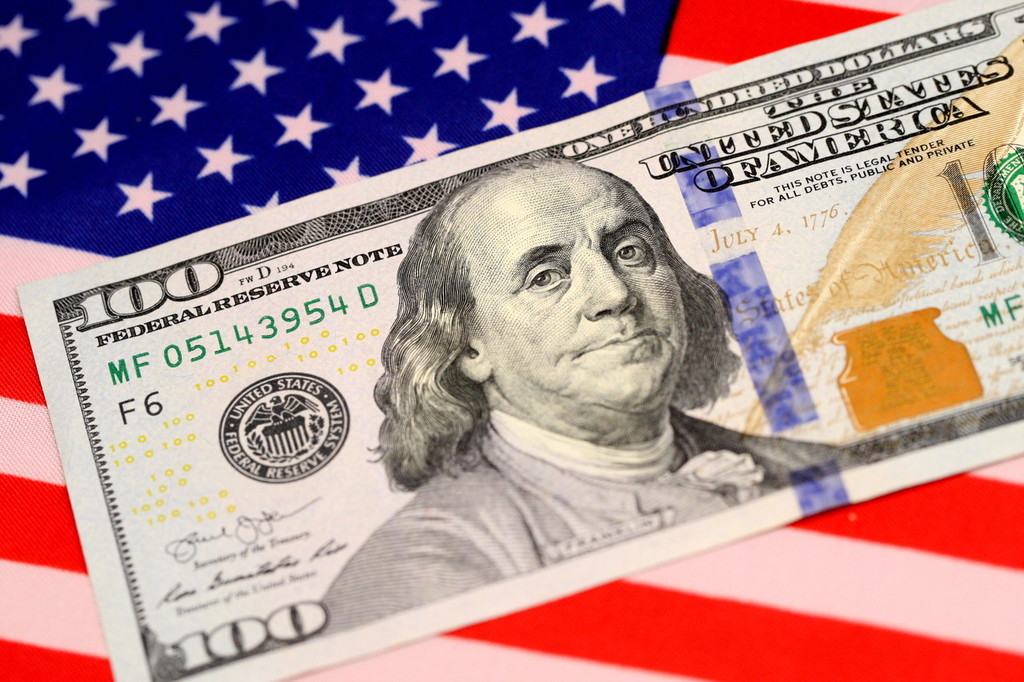
Amid growing concerns about the global economic outlook, geopolitical risks and the sporadic resurgence of the novel coronavirus epidemic, gold prices have been rising as safe haven asset buying continues to spur the price of the precious metal.
Despite the price of gold tumbling 4.7 percent to $1,932.28 on Tuesday after a multi-week rally and crossing the record high of $2,000 per ounce, the price of gold may still be in the early stage of a variable cycle.
The key to gold pricing is the change in the US dollar's credit outlook and the state of the global economy. Before the Bretton Woods agreement of 1944, most countries followed the gold standard, that is, each country guaranteed that it would redeem its currency for its value in gold. Under the Bretton Woods agreement, however, countries promised that their central banks would maintain fixed exchange rates between their currencies and the US dollar-which was pegged to the price of gold-and therefore redeem their currencies for US dollars, making the US the world's dominant economy.
But when the United States faced massive stagflation in 1971 and a dangerous dip in the dollar's value caused by too much currency in circulation, US president Richard Nixon started deflating the dollar's value in gold. However, the devaluation policy backfired, as people started redeeming their fast devaluing dollars for gold, which caused a run on US gold reserves. To stem tide, Nixon totally de-pegged the dollar from the price of gold, ending the Bretton Woods system.
After the US dollar ceased to be pegged to gold, it became the global monetary standard with other countries pegging their currencies to it-and continued to influence the price of gold.
The global credit system is centered on the dollar, yet, as the world currency, the dollar has not been stable, which allows gold to still play the role of credit currency. In general, when the US dollar's credit outlook dips, gold gains in value.
There are two core indicators to determine the dollar's credit outlook. First, the change in the dollar's exchange rate is inversely proportional to the price of gold, which means the higher the dollar's exchange rate vis-à-vis other currencies, the lower the gold price. For example, when the US economy appears to be stronger than those of other countries, the dollar's credit outlook is strong, which is evident in the appreciation of the US currency and decline in gold prices, and vice-versa. There are exceptions, though. For instance, when the dollar and gold both are regarded as safe haven assets, the values of both could increase simultaneously.
Second, the change in the dollar's actual interest rate is also inversely proportional to the price of gold, meaning the higher the dollar's nominal interest rate, the lower the gold price; and the higher the inflation, the higher the gold price. The dollar's actual interest rate is nominal interest rate minus inflationary factors.
History tells us that any serious regional or global political disturbance will cause gold prices to fluctuate, though such fluctuations are mostly short-term. And although commodity gold prices are also influenced by factors such as supply and season, the most important factor determining gold prices is still the dollar's credit outlook.
True, gold doesn't directly influence the real economy, but the recent spike in gold prices suggests the market expects some key factors to affect the global economic trend. To begin with, one apprehension is a weakening dollar. Since the beginning of this year, there has been remarkable increase either in the total asset of the Federal Reserve or M2 (broad money), making the dollar less attractive.
Also, this round of appreciation of the dollar has lasted for years, which means the dollar index is expected to reach a historical peak. As such, gold prices could have jumped in anticipation of the dollar weakening in the future.
In the short term, a weak dollar is conducive to capital flowing back into emerging markets, especially in Asia. In general, Asian economies have done a much better job of preventing and controlling the spread of the novel coronavirus. Actually, China has largely contained the virus, resumed economic activities and even registered 3.2 percent GDP in the second quarter of the year-and the flow of more capital into the Asian market will boost the recovery of China's economy as well as other Asian economies.
And in the long run, a weak dollar is conducive to global credit expansion. Global financing is mainly priced in the US dollar, so is international credit which emerging economies rely on for financing. Yet despite promoting international credit expansion and economic growth, devaluation of the dollar could undermine emerging markets' competitive edge in exports.
The main reason the Fed considered cutting the interest rate was the low inflation rate last year. But since the beginning of this year, the market has been expecting high inflation, mainly because the US has adopted extremely loose monetary and fiscal policies to cope with the impact of the pandemic that have remarkably increased M2. And if inflation continues in the future, the nominal interest rate is sure to increase even if the dollar's actual interest rate remains unchanged-meaning gold prices could rise further.
The author is a researcher at the International Monetary Institute, Renmin University of China.
The views don't necessarily represent those of China Daily.





