



With Afghan peace in sight, BRI presents a rebuilding opportunity







The Afghan government's recent decision to release the last group of Taliban prisoners has been one of its hardest.
After the US struck a prisoner exchange deal with the Taliban as a precondition to bringing them to the table, Kabul has acquiesced to give peace another chance.
The US invasion is about to complete its 20 years. In the first decade, the Americans and the Taliban hardly showed any inclination for talks. In later years, weariness has affected a great deal of flexibility on both sides. They have been negotiating with each other for quite some time but it is only now that the Taliban are willing to sit together with the Afghan government.
This is a significant headway in a conflict that has been festering since the 1970s. Two generations of Afghans have grown up seeing nothing but war. Some of them even take pride in exhausting and defeating their enemies. What they have not been able to defeat, however, is war itself.
With all belligerents now abhorring the fighting, this may be a turning point as reconciliation finally seems like a possibility. The move has been welcomed around the world, including in China, since it embodies an Afghan-led and Afghan-owned peace process.
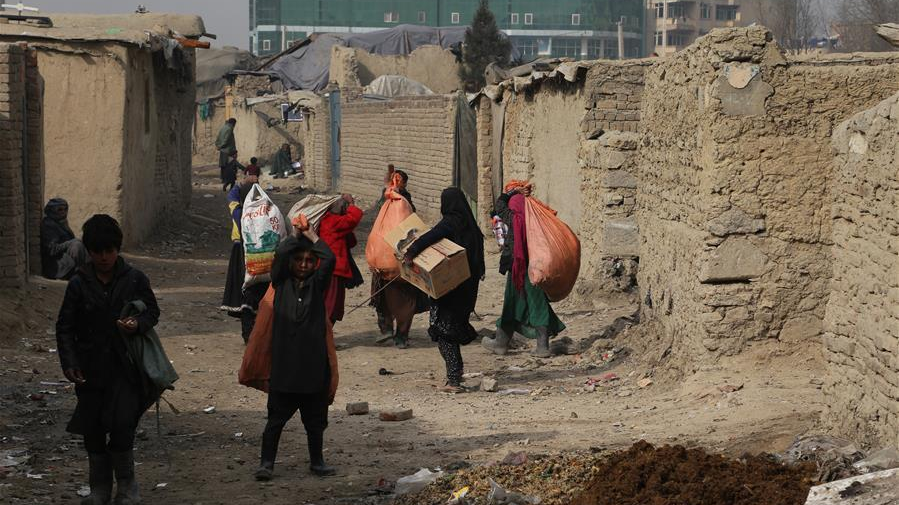
When stability fully returns to Afghanistan, the next concern for its leaders would naturally be of reviving the economy. As an impoverished country, its public services remain devastated from the war and its brightest minds have sought refuge abroad.
Repatriating the educated diaspora and kick-starting the national growth engine is a challenge in the absence of any supportive infrastructure. The China-launched Belt and Road Initiative (BRI) here presents an opportunity.
Southern prong of the mega-project passes through Pakistan in the shape of the China-Pakistan Economic Corridor (CPEC) – originating from the resource-rich Xinjiang Uygur Autonomous Region and culminating at the strategic deep seaport of Gwadar. Along with a network of roads and bridges, just last week a 6.8-billion-US-dollar rail track was finalized to run through the corridor.
Afghanistan is a landlocked country that carries out most of its foreign trade through Pakistan. As the latter's transportation grid gets a world-class uplift under the CPEC, northward linkage will offer a new and more viable gateway into Central Asia. Whereas southwards, the Gwadar port will connect Afghanistan's products and produce to the markets in the Middle East.
In principle, Afghanistan, China and Pakistan all have an agreement on Afghanistan's joining of the BRI. Afghan President Ashraf Ghani, while talking to President Xi Jinping last year, stated in clear terms that Afghanistan stands ready to align its plan of reconstruction and development with the BRI.
At the same time, Pakistan is much enthusiastic about the early inclusion of Afghanistan in the CPEC. On one hand, this will increase the amount of trade flow through Pakistan's supply chains, while on the other, it will improve the economic conditions of people in border areas.
China has exemplified the effect of enhanced connectivity for impoverished and remote regions. Long before the launch of the BRI, it laid out an extensive inland north-south and east-west web of rails and roads. Local industries were plugged into the national stream and the villages deep in the mainland proved convenient for production with their low wages and low living costs.
This is exactly what is expected in Afghanistan when it joins the CPEC. BRI or CPEC is not merely infrastructure projects; they also encompass participating countries' energy and industrial needs. For instance, in Pakistan, CPEC is poised to meet a large portion of its electricity shortfall and a myriad of facilities are lifting its production capabilities on modern lines.
Meanwhile, the US is carrying out reconstruction activities in Afghanistan that appear desultory, to say the least. US-funded programs have been repairing and restoring the Ring Road, a prime artery that connects major Afghan cities, but to this day it remains in shambles. Besides, pockets of stability, enforced through US supported actions, remain limited to parts of a handful of cities.
The BRI, in contrast, brings a wholesome concept to Afghanistan's rebuilding. The premise behind the venture is that improvement in the economic conditions of the people, through increased access, will engender an intrinsic improvement in the governance and security situation of a country.
There was a time when Xinjiang, too, was suffering from problems like extremism and violence. As soon as the region was integrated with international trade, people found a utility of their energies and expertise. Today, Xinjiang has become the main logistics hub of the BRI.
Likewise, thousands of villages and small towns along the CPEC route in Pakistan are gradually transforming into commercial centers. A special focus from BRI planners on this developmental aspect is because of an all-weather relationship between China and Pakistan, a relationship that the Afghan ambassador to China takes as an example for furthering Kabul's ties with Beijing.
With all stakeholders in Afghanistan on board, the stage is set for a new era of progress. China has played its part in the peace process, and now it's time to take China-Afghanistan relations to the next level for the benefit of the entire region.





