



Weak dollar a challenge for US







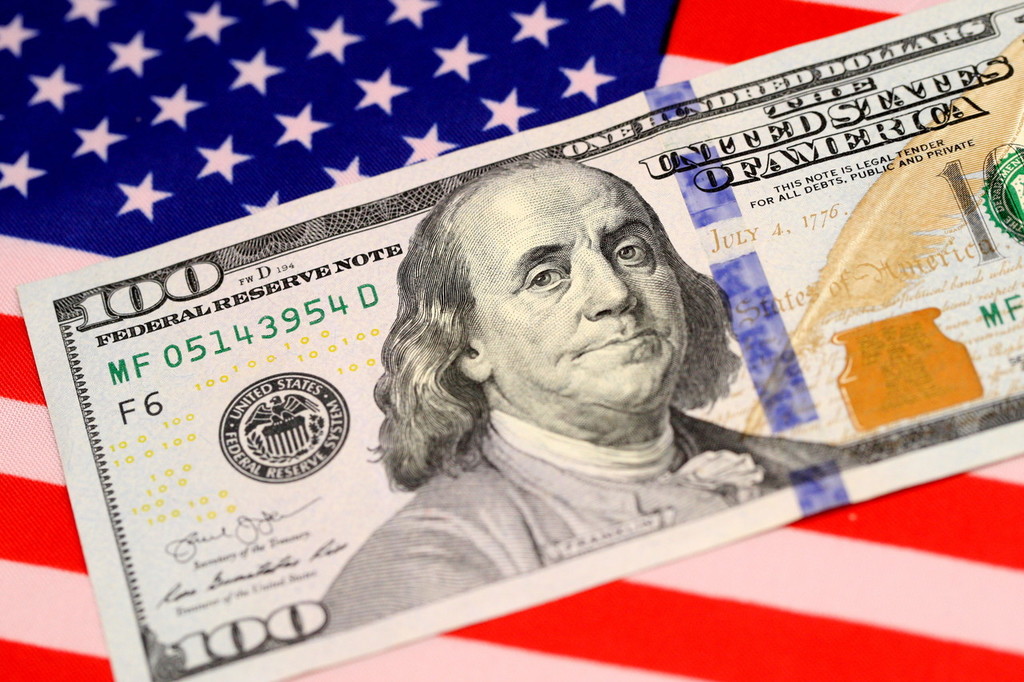
The US faces a multitude of challenges including the COVID-19 pandemic, with a significant number of businesses either facing closure or having closed, and unemployment being at an all-time high.
To turn the tide and stimulate the economy, the Federal Reserve has lowered the interest rate to zero, and more aggressively promoted quantitative easing. Which have increased the Fed's asset liabilities from a steady $4 trillion since 2014 to $7 trillion in July in just three months.
US asset liabilities increase sharply
By the end of this year, the asset liabilities are expected to further increase to $8.5 trillion, which would be a jump of $4.5 trillion since the beginning of 2020. Such a strategic monetary move is akin to a modern version of alchemy. So long as the US dollar's exchange rate remains sufficiently strong, and the interest rates and prices remain stable, the world would accept unlimited quantitative easing by the US.
Using the above as preamble, the US can print more currency notes, and keep borrowing to finance its debt. And when the debt expires, it can simply "print more US dollar bills" to pay its "debtors". In this way, the US can avoid repaying the principals and interests of old debts. This means the US can "raise funds" to stimulate its economy almost without any constraints.
While QE policies may have proven successful in the past, this time around the US administration has failed in its endeavor. Many countries' central banks and institutional investors, including the People's Bank of China, are no longer willing to purchase US bonds in bulk. They are reluctant because the impact of the pandemic on the global economy is no longer as serious as it was a couple of months ago. In fact, some economies have started to rebound, which has decreased the demand for more US dollars or US debt as a hedge-and a number of countries have been losing confidence in dollar assets.
For most of the second half of the 20th century, US dollars were printed with the words "Gold Coin", meaning the greenback was backed by gold. But since 1971, when the US terminated the guarantee of exchanging dollars for an equivalent amount of gold, "Gold Coin" has been replaced by "Federal Reserve Note" on dollar bills, making the dollar "only" an IOU. Since the dollar is no longer backed by gold, the phrase "In God We Trust" has replaced "In Gold We Trust". So now if a person wants dollar bills redeemed, he or she has to approach the Almighty.
Of course, if the US government continues to issue new bonds to repay old debts, it would further increase its fiscal deficit. The risk of the US economy facing a mid-to long-term recession has increased and, as its collateral effect, any country holding US debt in bulk also faces high risks. In a sense, the US has planted a powerful financial time bomb that threatens all countries, China included.
Fed actions aimed at rescuing 'Main Street'
In the past, the Fed's large-scale monetary easing policy was primarily aimed at rescuing the financial system (read Wall Street). Now, it is directly aimed at rescuing "Main Street", that is, American people's basic livelihoods.
The Fed's action, therefore, bypasses, directly or indirectly, the role of commercial banks as intermediaries, because credits are now given to large and small businesses, as well as consumers in dire need of life-saving finance. Effectively, the government has become the "lender of last resort to the main street".
Fed's move to put pressure on other countries
Since these companies and individuals are staring at bankruptcy and the Fed has made it its mission to protect US companies, the unemployed and the soon-to-be unemployed, its heavy-handed financial measures are understandable. It is also understandable that the Fed wants to ensure the US economy can rebound and achieve a V-shaped recovery after the virus is contained.
Still, the Fed's moves will put enormous pressure on other countries, including China, and its unlimited QE policy will encourage US companies and individuals to acquire large amounts of public or private loans, which will increase "consumption by the rich in the United States and production by the global poor".
In the current global economic situation, the excessive supply of the dollar is de facto punishment of countries whose currency exchange rates fluctuate during unexpected external disturbances.
Many central banks, including the PBOC, don't want to repeat the mistakes they made during previous economic crises by following the US administration in stimulating their own economies through unduly easing their monetary policies, because that could cause serious long-term consequences. Also, if China adopts the US' stimulus measures in the backdrop of the pandemic-induced economic crisis, the PBOC will be compelled to issue large amounts of renminbi bills to stimulate the domestic economy.
Since foreign exchange (dollars and US bonds) is the most important asset on the PBOC's balance sheet, it would need to buy more dollar assets as collateral to print more renminbi notes, which means China owning even more US debts-something that it should avoid.
Unlike in the past, China now has a robust and flexible monetary policy, and a super-large market which can drive sustainable economic growth. As such, it doesn't need to invest huge amounts in dollar assets.
Besides, printing an unlimited amount of dollar bills does not necessarily mean the US can pass its debts to other countries, because they may simply refuse to buy them. Indeed, US Treasury Department data show US debt held by international investors dropped from $7.08 trillion in February to $6.86 trillion in May, meaning the vast amount of US debt can now only be consumed domestically.
Sharp decline in dollar index
The weakening demand for the dollar and dollar assets, coupled with the pandemic's impact and the US economy's slow recovery, remains one of the major challenges for the US. As a matter of fact, the dollar's index has declined from nearly 103 points in March to a two-year low of 92.77 points-and if the downward trend continues, it will increase concerns about the dollar's structural devaluation.
For most of the 20th century-and a better part of this century-the dollar formed the core of the US' interests. So the US administration was expected to act to prevent the dollar from weakening further. Yet the incumbent administration did not implement measures to restrict the printing of excessive amounts of dollars, issue less US debt, contain the pandemic and boost the economy, and instead used extreme methodologies to stabilize the economy that have intensified China-US tensions.
Why? First, possibly because the US thought its moves would compel China to change its policy and purchase US debt in bulk, and thus play the role of the proverbial pied piper whom other countries would follow. And second, perhaps it wanted to raise tensions worldwide, so global investors would be forced to buy more dollar assets to avoid risks.
Yet thanks to China's huge domestic market and Chinese people's support for the country's central leadership-which is at a record high today-the Chinese government and economy both have the capacity and capability to resist the US administration's pressure to buy US debts. We therefore hope Beijing and Washington can find an outside-the-box solution to work together for the benefit of humanity.
Da Hsuan Feng is chief adviser to the China Silk Road iValley Research Institute and Haiming Liang is chairman of the institute. The views don't necessarily represent those of China Daily.





