



US war on Chinese tech a global protection racket







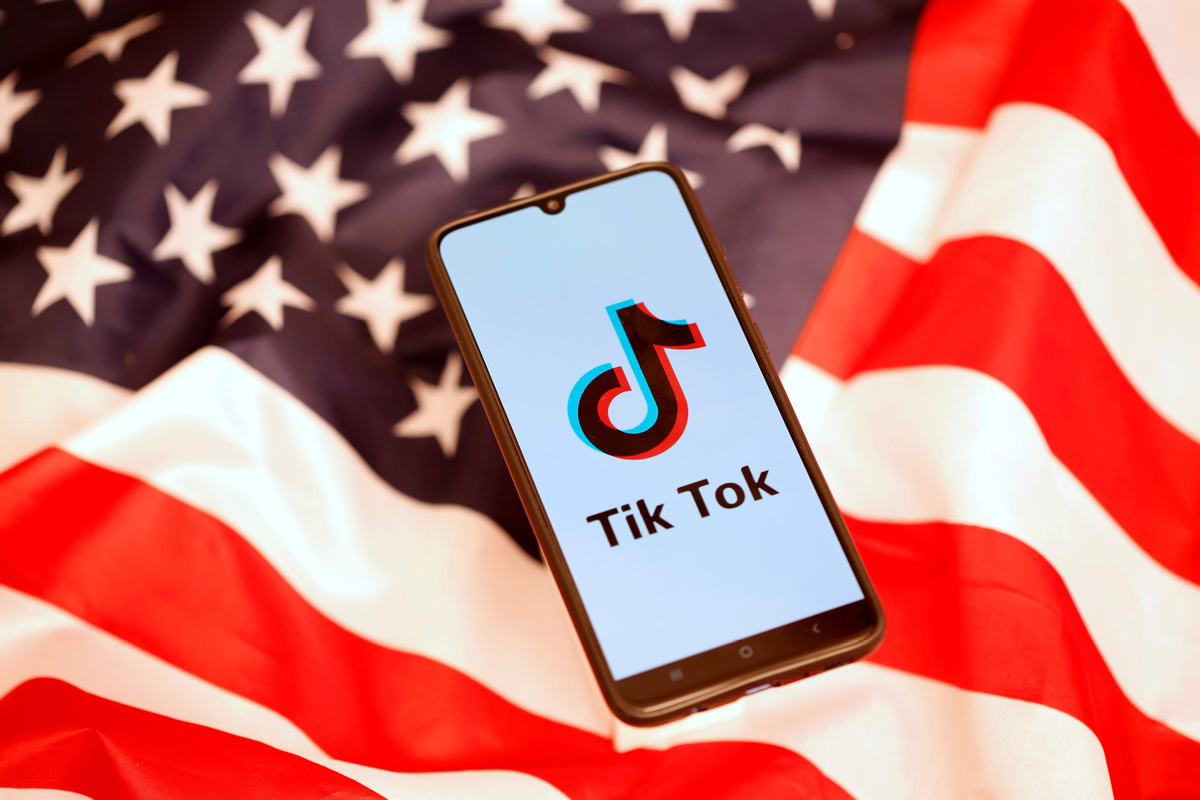
I can't say I expected a teen viral dance app to be the latest flashpoint in the US' war on all things China. But that's 2020 for you.
TikTok, the wildly popular short video platform owned by Chinese company ByteDance, is in the US' crosshairs due to alleged national security risks. Trump has threatened to ban the app completely, but there's been a last-minute reprieve thanks to a potential deal with Microsoft for all TikTok's business in the US. This aggression comes despite TikTok taking many steps to preemptively assuage concerns, including putting all its servers in the US to ensure data doesn't leave the country. Evidently that's not enough when there's political points to be scored.
In the absence of credible evidence for a threat — which no one in the US administration seems able to provide, oddly enough — we must assume the entire US case against TikTok rests on the app's Chinese origin. It's reminiscent of the campaign to discredit Huawei, where baseless rumblings over "national security" fueled nonstop smears against the tech company. No proof was provided, as usual. Yet some countries still pulled out of 5G development deals with Huawei, due to what was essentially a global game of Telephone.
The US administration, sadly, has some high-profile allies in this crusade, including leading Democrats like New York Senator Chuck Schumer. He has echoed Trump's call for a ban, uncritically accepting the White House's allegations without a second thought. So much for an opposition party. China-bashing has been a bipartisan endeavor since 1949, but it's gotten particularly bad in recent months.
That's no accident. Through a media-industrial complex in complete lockstep with its agenda, the US has conjured up a narrative that no Chinese entity can be trusted. And with the US' monopoly power in key industries and labor sectors, as well as the dollar's place as the world's reserve currency, other countries have no choice but to go along. This is a longstanding practice, and isn't limited to China or tech — just ask French energy and transport company Alstom, which was partially bought by the US' General Electric in 2015 amid a relentless investigation by the Department of Justice.
With that track record, it's no surprise Trump feels confident in making TikTok an "offer it can't refuse." Declaring the app will be banned if it isn't sold to a US company forces everyone's hand, and likely shrinks the price to a fraction of TikTok's actual value. So Microsoft or some other oligarch gets one of the world's top social media sites for peanuts, and a Chinese competitor gets choked out of the US entirely. It's a protection racket on an international scale.
In the abstract, I couldn't care less about TikTok. I don't have an account, and only see videos from the platform when they're shared elsewhere. The same goes for Vine, a similar US-based short video app which shuttered in 2017. But if we're really going down this road, where the US can ban apps whenever it wants over bogus "national security" concerns, then it's absolutely necessary to defend TikTok against this multi-pronged assault — whether you use it or not.
And since we're already having this conversation, why don't we examine the behavior of the US' own tech multinationals? Their coziness with US intelligence organs deserves renewed scrutiny now that TikTok has been made out to be a uniquely pernicious threat. How quickly we forget the role of Google, Apple, Amazon, Facebook and yes, Microsoft, in the National Security Agency's PRISM data-gathering program. Or Amazon's $600 million cloud computing deal with the Central Intelligence Agency. Or Google's early funding through CIA and FBI research grants. Or Microsoft regularly surrendering user data for "foreign intelligence" investigations.
Strange, isn't it, that TikTok receives such ire over wholly unproven claims while far more powerful US companies face no consequences for very real, very disturbing practices. Americans should be wondering why their government has yet to go after any of these tech leviathans the way it has a simple video app. But they probably know the answer: Professional courtesy.
For decades, the US peddled a utopian fantasy of the internet as the Wild West, a new frontier where information and speech was totally free. But that was always a lie, tainted with hypocrisy. It painted other countries' internet policies as cruel and Orwellian while running its own highly sophisticated surveillance regime. And it used the immense resources and influence of its multinationals to create an economic behemoth, boasting unprecedented reach. With that absolute power these corporations crushed foreign competitors and swallowed up the world's data, selling it to other companies and feeding it to spy agencies.
But now China, which rejected the US' tech swindle to develop its own industry, is a rising player on the scene. Companies like Apple, Google, Facebook and Microsoft, with their material advantages and a multi-decade head start, can't compete on a level playing field — or are afraid to. And we know a fracturing of any US monopoly, even in a field as seemingly harmless as social media, would weaken the country's global grip. This is, naturally, unacceptable for the capitalists who really run the show. So for TikTok, as with Huawei and ZTE, "Mr. Big" has to step in.
That name might be unfamiliar, sorry. You probably know him better as Uncle Sam.
The author is a US writer with China Daily.
The opinions expressed here are those of the writer and do not represent the views of China Daily and China Daily website.





