



Maintaining stability in Northeast Asia







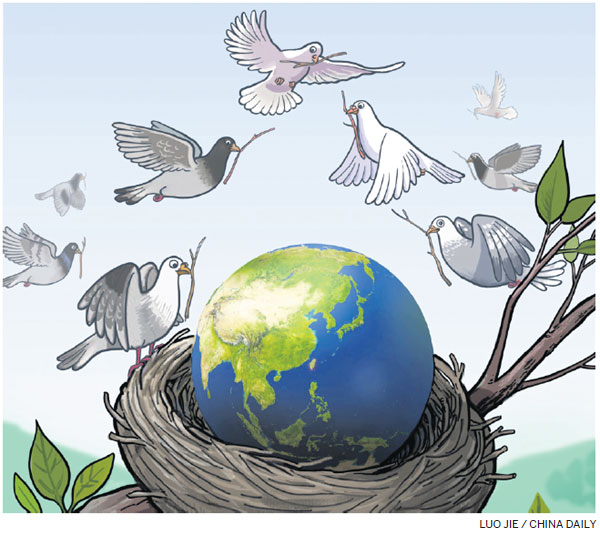
Since the end of the Cold War, many destabilizing factors have continued to plague Northeast Asia, including fluctuating relations between major powers, serious friction between the United States and the two Koreas, nuclear proliferation on the Korean Peninsula, disputes over territorial or maritime rights and interests, the development of pro-independence forces in Taiwan and the consequent turmoil it engenders, and uneven regional economic development. However, Northeast Asia has, in general, maintained a trend of peaceful development and is playing an increasingly important role in world economic development.
Over the past two years, the reemergence of major power competition has significantly added to the destabilizing factors in the region, posing serious challenges and risks to peaceful development in the following areas:
1. China-US and Russia-US relations have deteriorated sharply, leading to a serious undermining of coordination and cooperation on global and regional issues. The weakened cooperation on the denuclearization of the Korean Peninsula and the lack of coordination on the COVID-19 response are manifest examples in this regard.
2. The trade war and the technology war launched by the US against China have not only seriously damaged economic, trade, scientific and technological cooperation between the two countries, but also severely harmed the industrial, supply and value chains of Northeast Asia.
3. To suppress Beijing, the US administration has been playing the Taiwan card at will; and the Democratic Progressive Party in Taiwan, with its vision for "Taiwan independence", has seized the opportunity to counter the Chinese mainland through an alliance with the US. In this connection, the Taiwan Straits has once again become the biggest security hot spot in Northeast Asia.
4. Regional military competition is moving rapidly toward a regional arms race.
5. Small and medium-sized countries in the region may face the difficult situation of having to choose sides, making it even more challenging to develop multilateral security cooperation mechanisms in the region.
Efforts must be made to oppose new cold war
In view of the serious negative effects of major power competition, and in order to maintain regional stability, all countries in the region will have to make greater efforts together.
First, they should reach a common understanding as soon as possible on opposing and preventing a new cold war. China and the US bear the greatest responsibility in this regard, but other countries should also play important roles.
Second, at present and for a fairly long time to come, countries should first cooperate on fighting the COVID-19 pandemic and the accompanying regional and global economic recession and financial crisis. Since the outbreak, China, Japan, the Republic of Korea and other countries have cooperated well. Hopefully in the future, the US will also join and play its due role as a major country.
Third, in addition to cooperation on the pandemic response, countries should also carry out cooperation on other nontraditional security issues, including dealing with climate change, protecting the ecological environment, combating terrorism and transnational crimes, maintaining nuclear security, conducting maritime search and rescue and humanitarian relief and carrying out international disaster relief operations. Rising nontraditional security threats confront all countries in the region, and strengthening nontraditional security cooperation will play an important role in easing major power competition and stabilizing the region.
Fourth, joint efforts to denuclearize the Korean Peninsula and develop a peninsular peace mechanism should continue. On this issue, countries have far more common interests than differences. To break the current deadlock in the dialogue between the US and the Democratic People's Republic of Korea, countries should consider restarting the Six-Party Talks at an appropriate time and strive to gradually develop it into a regional, multilateral security cooperation mechanism. This will be of great significance to mutual accommodation and inclusive development between major powers.
Fifth, China, Japan and the ROK should continue their efforts to establish a free trade area as soon as possible. This is not only in the common interest of the three countries but also conducive to regional economic development. It will also play a buffering role with respect to China-US trade frictions.
Countries should continue to embrace multilateralism
Sixth, all countries in the region should adhere to the general direction of trade liberalization and jointly promote deepening globalization. In this connection, efforts must be made to improve and overcome the negative aspects of globalization. Countries should adhere to multilateralism and actively promote World Trade Organization reforms so that the globalization process becomes more open, inclusive, mutually beneficial and balanced. Joint efforts in this area will play an important role in steering regional competition, especially between China and the US, toward a healthier future.
Seventh, countries should work together to prevent an arms race in Northeast Asia. If the US and its allies continue to promulgate and strengthen regional missile defense installations, or if the US deploys land-based intermediate-range missiles in Japan and the ROK, China will have to respond strongly. Such moves will lead to an arms race in the region and bring about a more serious security dilemma. To avoid this development, the countries involved should hold bilateral dialogues (since it is currently not realistic to have multilateral ones) on arms control issues.
Finally, in the event that the novel coronavirus is not contained for a long time, in addition to dialogue on the pandemic response, countries should resume bilateral economic, diplomatic, security and military dialogues as soon as possible. These may first start out in the form of videoconferences and then gradually move to combine online and offline exchanges. For countries that have the pandemic under control, diplomatic fast tracks should be feasible.
In addition to the above-mentioned joint efforts, China should take action in the following three aspects to prevent regional competition or escalation of conflict.
First, China should try its utmost to stabilize relations with the US and prevent things from moving toward vicious competition, confrontation or a new cold war.
Actions needed to prevent escalation of disputes
At the news conference held during the recent National People's Congress in Beijing, Foreign Minister Wang Yi stressed again that China remains prepared to work with the US in the spirit of non-conflict, non-confrontation, mutual respect and win-win cooperation, as well as to build a relationship based on coordination, cooperation and stability. This is encouraging. The Cold War was the product of US-Soviet confrontations, a pattern that should not be repeated. Choices made by China will have an important influence on future China-US relations. China should have full confidence in this.
At present, it must prioritize the prevention of maritime and cyber emergencies with the US and the strengthening of crisis prevention and management. Even though it is hardly possible for China to initiate anything during the US presidential election, it should strive to resume strategic dialogue with the US to manage serious differences and stimulate some new, positive interactions afterward.
Second, China should maintain the momentum for improvement of its relations with the ROK and Japan.
In recent years, these countries have overcome serious difficulties and brought both sets of bilateral relations back to the normal track. That's a very positive and significant change in the regional situation. At present, China is cooperating with the ROK and Japan on pandemic control and resuming economic cooperation. It attaches great importance to managing differences with its two neighbors to prevent the COVID-19 pandemic from reversing the progress already made to improve relations. The sustained and stable development of these two bilateral relations will not only benefit regional stability but also be conducive to the stability of China-US relations.
Third, on the basis of the "one China" principle, China will do its best to maintain peace and stability across the Taiwan Straits and strive for peaceful reunification, which will serve the common interests of all countries in the region.
To this end, the Chinese mainland will continue to promote economic and trade exchanges and cooperation with Taiwan and to seek further integration. At the same time, it will remain resolute against "Taiwan independence" and manifest a strong military deterrence so that the pro-independence forces will not dare to provoke a military crisis.
In short, Northeast Asia is at a crossroad. Will it enjoy more peaceful development or move toward a new cold war? I argue for strengthened cooperation to overcome difficulties and to remove the shadow of a new cold war, which will allow the region to take steps forward along the path of peaceful development. This should be our only answer and commitment.
The author is chairman of the Academic Committee and director of Foreign Policy Center, China International and Strategic Studies.This article is an excerpt from the author's remarks at the recent Quadrangle Dialogue Webinar held by the National Council on American Foreign Policy. The views don't necessarily represent those of China Daily.
Courtesy: chinausfocus.com





