



Is 'total lockdown' beneficial or unbearable for the poor in India?







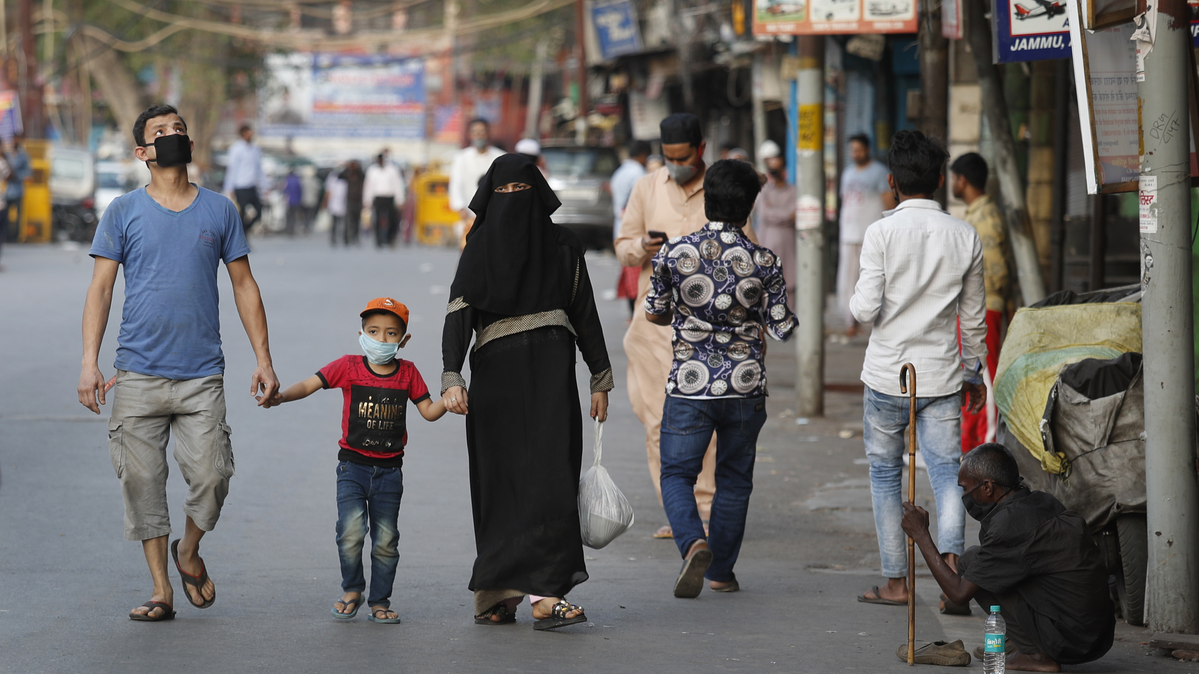
Over the past four months, COVID-19 has posed a serious public health challenge throughout the world, forcing many countries to implement lockdowns in a bid to stem the spread of the virus.
Following several other countries, India under Prime Minister Narendra Modi introduced a 40-day lockdown in two phases from March 25 to May 3 to avert the possible catastrophe caused by the pandemic in the world's second-most populous country. So far, the full-blown lockdown is the prime stuff of India's response to the contagious virus.
But whether you admit it or not, the sudden notice for the pan-India lockdown with zero preparation by Modi hit on the poorest of the poor, the migrant workers and daily wage laborers in India, hard.
Truly speaking, the nationwide lockdown has, on the one hand, unmasked India's ailing healthcare system, while on the other hand, exposing the plight of its poor.
As per a Brookings India report, based on data from the Union government's National Health Profile-2019, published on March 24, India has just 0.55 beds per 1,000 citizens and one doctor for every 1,445 citizens, far below what is prescribed by the World Health Organization.
Sad but true, the goal of protecting everyone's health has not been achieved even 72 years after independence. As the number of COVID-19 cases and fatalities increases amid the lockdown, affecting everyone from health experts to ordinary Indians, all are questioning the direction of the government's response to the COVID-19 measures as well as its health policy.
Health workers do not have adequate safety equipment, such as personal protective equipment (PPE), N-95 or even three-ply masks. Meanwhile, ventilators, too, are inadequate, and rapid disease testings kits are not enough. Without addressing these problems, India will never be able to tackle the ongoing health crisis or prevent future ones.
The pandemic has given a strong signal that if the Indian government wants to provide medical treatment to all confirmed, suspected and asymptomatic patients, the public health system will not keep unprotected, impaired.
COVID-19 has also made visible India's center and state governments' crass callousness toward its own people living below the poverty line – 22 percent of the population. The Modi government's so-called ameliorative economic assistance of 500 rupees (less than 7 US dollars) for some selective low-wage earners amid the crisis does not adequately meet the needs of many. It can be said that the lockdown has put the most vulnerable communities struggle to survive.
It seems both the Union government and most of the state governments are now engaged in "political war" rather than addressing the "life and livelihood" crisis caused by the virus-induced lockdown.
The heart-wrenching images of the country's impoverished and migrant laborers on various national highways and footpaths across India have raised a critical question: Is the coronavirus lockdown really bearable or beneficial for the poor in India?
So far, the poorly-planned lockdown has made the lives of many poor people and migrant workers miserable. Many desperate day laborers have met their deaths on the highway while trying to return their villages on foot during the lockdown.
What is particularly worrying is that during the first 25 days of the lockdown, the unemployment rate had soared to three times to 20.34 percent on April 18, up from 7.55 percent on March 25, as the Center for Monitoring Indian Economy reported on April 20. On the other hand, the International Labor Organization in its report titled "ILO Monitor 2nd edition: COVID-19 and the world of work" noted that "About 400 million people working in the informal economy in India are at risk of falling deeper into poverty due to the coronavirus crisis."
It's unfortunate that India's political leadership is now using the pandemic as a weapon for polishing their images keeping eyes on vote banks. The tragic deaths of workers vividly indicate that their hardships and welfare were not considered at the time of the hasty lockdown announcement. Surely, more and more workers without incomes and, of course, their families will die from hunger.
It is the government's responsibility, both central and states government, to control the spread of the contagion by enforcing the lockdown while ensuring the supply of basic necessities to the downtrodden. The prolonged lockdown has increased the plight of poor people and penniless migrant workers who have been starving in many states across India.
There is an urgent need to make the homeless, hungry people understand that the government is concerned about their relief. Otherwise, demonstrations against the lockdown will continue on a massive scale, as seen at Bandra Station in Mumbai or on the streets of Surat. At this troubled time, the Narendra Modi government needs to hand out rice, wheat and other amenities, and of course, hard cash to the poor for at least six months.
The pandemic crisis has now become a survival crisis for the poor of India. In the face of this great danger, the people of India do not want politics from the Union government or the state governments.
Both ruling and opposition parties should work hand in hand in containing the virus while addressing the loopholes of the lockdown to protect citizens better. It is hoped that Indian politicians put their petty political interests under "total lockdown," not the larger interests of 1.3 billion Indians.





