CPEC's biggest impact will be on education sector







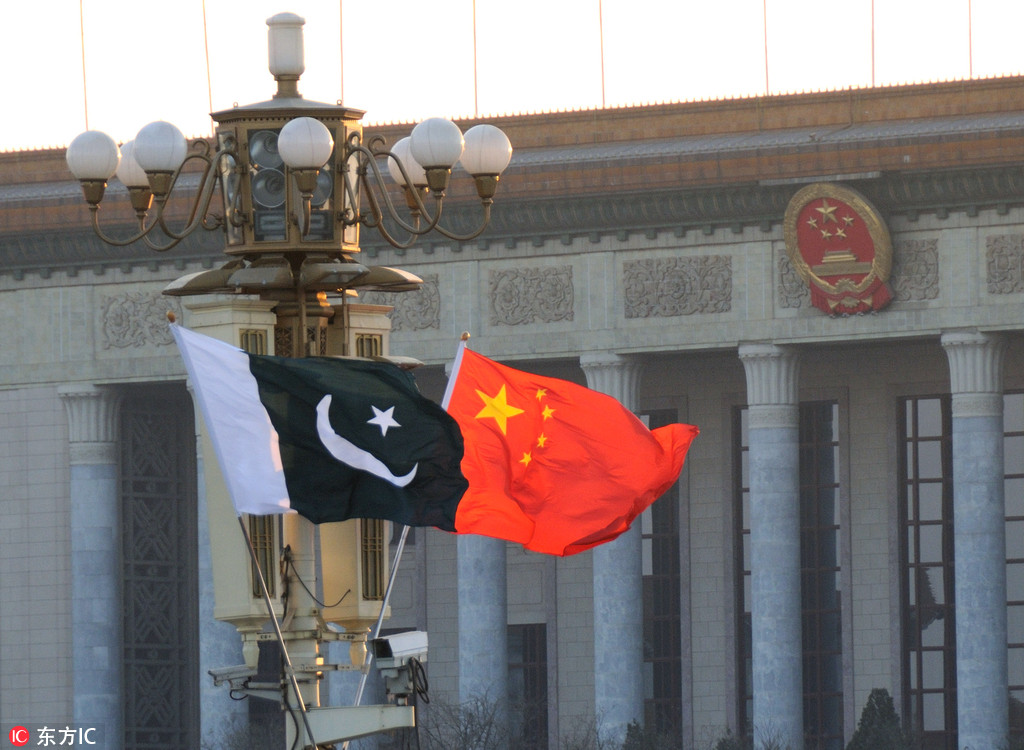
China-Pakistan Economic Corridor (CPEC) is a catalyst for Pakistan's developments. It covers all essential sectors of development such as infrastructure, power generation, energy, agriculture, industry, health, social and education sectors, etc. After completion of 22 projects under CPEC, a visible impact is clear in the power and transportation sectors. Where once 10-hour power cuts due to the shortfall in production and demand of electricity were normal, there's hardly any power cuts now. The transportation sector has boosted as a network of motorways and highways across the length and breadth of the country.
Under the current situation of the pandemic, the importance of CPEC has become more crucial. While the virus may not be lethal as the previous pandemics, it is more contagious in nature and spreading exponentially. There is no cure, medicine, or vaccine yet. The only solution is to keep social distance. China opted for the complete lockdown policy and implemented it strictly in its fight. Other nations are also following the Chinese approach gradually. Pakistan is in close coordination with China and following expert advice from China.
Lockdown has harmed the national economy and disturbed the routine life, and it has especially hurt the students. While younger children can study at home the options for university are fewer.
There are 211 recognized universities in Pakistan, of which 128 are public sector. Around half a million students are enrolled in the universities. Due to the shutdown, the universities are closed, and students are losing precious time.
Online classes have been introduced, but due to lack of infrastructure and lack of digital technology, they are not sufficient enough, especially in the far-flung areas of Pakistan, where there is lack of electricity and internet.
Fortunately, under the CPEC framework to promote economic and social development in Pakistan, $200,000 in grant aid was provided to build smart classrooms in Pakistan's public sector universities to complete the smart university transformation project. Higher Education Commission (HEC), approved the plan in 2015, aimed at equipping universities with "blanket Wi-Fi coverage". The project is expected to be completed by 2024. According to the agreement signed by the two countries, the project will cover a total of 128 public universities. For the purpose, some 400 smart classrooms will be prepared, including 200 in the first phase of the pilot. Initially, the first pilot project includes 50 public universities. The project aims to create a more attractive university environment by introducing advanced digital technologies into universities. The project will also aim at developing distance education and promoting cultural progress, thus expanding the influence of university education.
After the implementation of the project, Pakistani universities will enhance the capacity of distance learning. This capability may also be utilized after the pandemic is over, too. It will bring a revolution in the educations sector of Pakistan in the short to medium term. There exists a considerable thirst and demand for distance learning among the young and middle-aged people of Pakistan.
As a matter of fact, China is assisting Pakistan in various sectors, but the most significant is education. About 32,000 Pakistan students are studying in China. After graduation, they will be involved in the reconstruction and development of the country. China graduates are our front line soldiers in the workforce required under CPEC. China graduates are serving the role of ambassador of friendship between China and Pakistan, too. China graduates are the real guarantor of the success of CPEC.
Zamir Ahmed Awan is a non-resident fellow at the Center for China and Globalization.
The opinions expressed here are those of the writer and do not represent the views of China Daily and China Daily website.