



Therapy key to ease outbreak-induced stress







People across the country have responded positively to measures such as quarantine to prevent the spread of the novel coronavirus epidemic. As a result, the epidemic is effectively under control in China, with the World Health Organization praising China's contributions to the global fight against the virus. China is still fighting to win the battle against the epidemic, though, but in doing so it has contributed a lot to global fight against the virus.
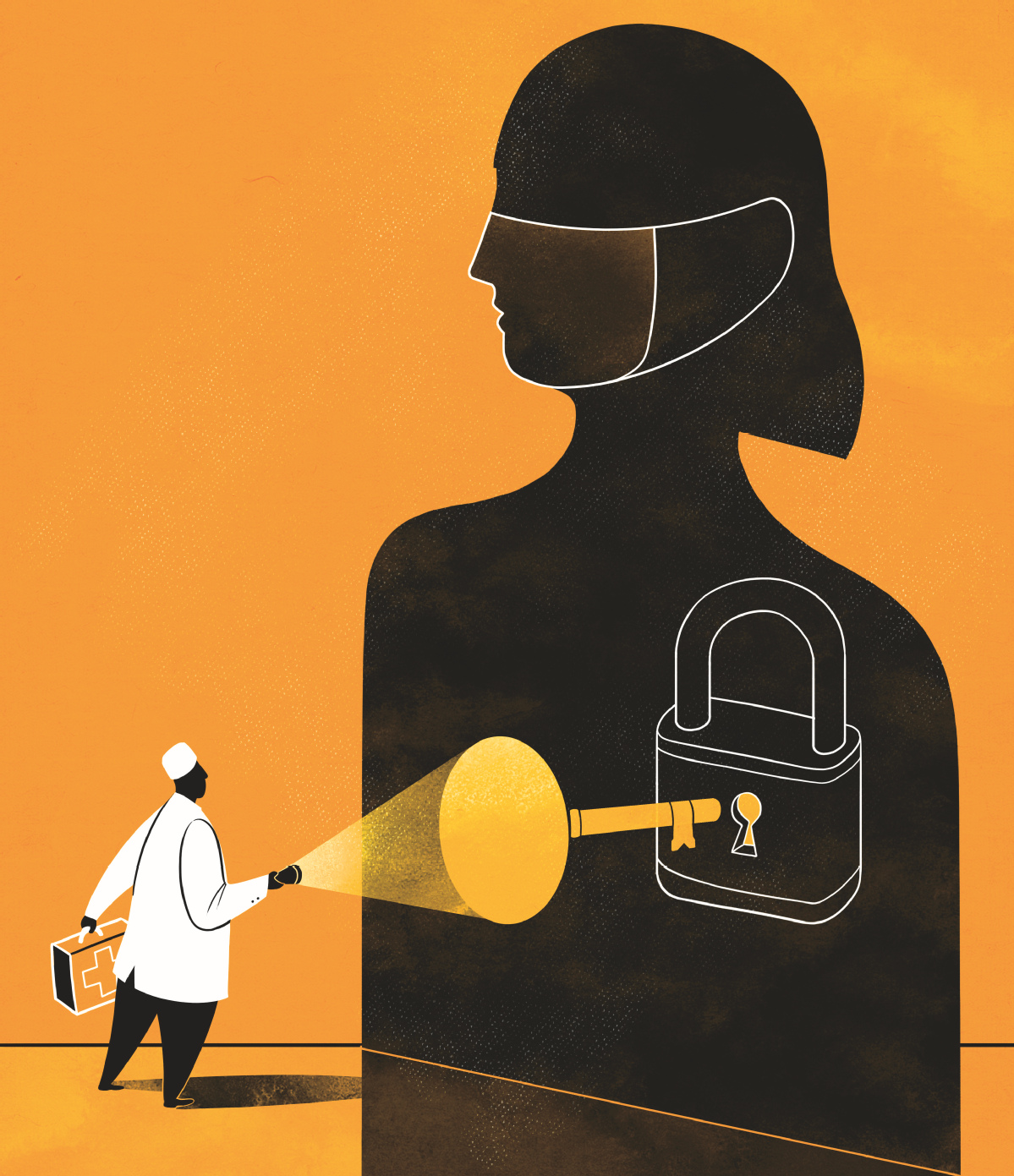
Yet to strike a balance between prevention and resumption of manufacturing, the fight against the epidemic should be extended from hospitals, medical treatment and preventive measures to psychotherapy including counseling in order to ease people's stress and trauma, as the epidemic has triggered fear, anxiety and depression, and loss, guilt, exhaustion and different levels of insecurity among the people.
According to American psychologist Abraham Maslow's theory of "hierarchy of needs", there are different levels of human needs, which from bottom to top are physiological (breathing, food, water, sleep, sex), safety (security, order, stability), love/belonging (friendship, family, sexual intimacy), esteem (self-esteem, confidence, respect of and by others) and self-actualization (morality, creativity, problem solving, lack of prejudice, acceptance of facts). The high-level needs emerge after the low-level needs are satisfied to a certain extent, and the satisfaction of multiple levels of needs forms a relatively stable pyramid in our daily life.
But the epidemic has disrupted the stable pyramid of the hierarchy of needs. As the novel coronavirus is highly contagious, more and more people are seeking security, safety and order. Quarantine and masks have disrupted social networking, undermining many people's sense of belonging. As the epidemic poses a threat to people, most residents staying at or working from home find it hard to maintain their self-esteem.
The failure to meet multi-level needs gives rise to panic and anxiety among people. Surveys show that despite the different rates of infection, residents in Wuhan, the epicenter of the outbreak in Hubei province, and Chengdu, capital of Sichuan province, show a similar rate (as high as 20 percent) of moderate and severe "acute stress response" because of the outbreak.
To prevent acute stress response from turning into chronic post-traumatic stress disorder, intervention should be taken as soon as possible, because it is extremely important to instantly reduce the number of people with negative emotions and the degree of their acute stress response.
Since the epidemic outbreak, hundreds of hotlines across the country have been opened for residents to seek psychological support services, which offer many kinds of psychotherapy such as lecture series, online counseling and self-help manuals.
Yet the services being offered have some last-mile problems such as simple repetition, differences in the quality of counseling and a lack of sustainable mechanism. For instance, "Psychology Teacher", a nonprofit organization in Sichuan, has been providing psychological support services for people since the Wenchuan earthquake in 2008. But despite therapists being on hotline duty every day, the number of phones being answered is less than 10 on average, which could undermine voluntary work.
According to a conservative estimate, 80 percent of the hotlines nationwide have a relatively small number of people to answer phone calls, yet they consume a huge amount of manpower and materials.
The epidemic has created a huge demand for psychotherapy, as according to a survey, more than 40 percent of the residents said they needed counseling to change their mood. Notwithstanding the high demand for psychotherapy, however, more than two-thirds of the residents may not voluntarily seek such help. Yet, if approached by counselors, more than half of them will accept counseling or other forms of psychotherapy.
Normally, Chinese psychologists wait for patients to approach them or visit them in their office. By contrast, there are door-to-door services for diagnosis and treatment of ailments in the traditional Chinese medical system, which "barefoot doctors" used as their working model in the 1970s and 1980s.
Thus to overcome the last-mile problem without compromising the principles and ethics of psychotherapy, it is necessary to use innovative methods and directly offer psychological support services to those who need them. And bridging the gap between supply and demand will help make the psychological support services more effective.
In addition to psychotherapists, it is also necessary that different parties including the health and education departments, media outlets and NGOs properly coordinate the services in order to fulfill the multi-level psychological needs of the people.
Wang Bin is executive director of the Psychosocial Services and Mental Crisis Intervention Research Center jointly established by the Institute of Psychology at Chinese Academy of Sciences and the Southwest University of Science and Technology. And Fu Haojie is a lecturer at the psychological counseling center at the same university.
The views don't necessarily reflect those of China Daily.








