



Afghan peace process moves forward







The United States and the Taliban are set to hammer out a peace deal after 10 rounds of backdoor talks in the Qatari capital of Doha. The peace deal between the two sides will be conducive to intra-Afghan talks, but there is concern at both the national and international levels that it may affect regional security.
The deal is likely to include four main issues: a cease fire, withdrawal of US troops from Afghanistan, intra-Afghan talks, and a pledge by the Taliban to not allow the al-Qaida to use Afghan territory as a launch pad for their attacks on the US.
Despite public doubts over the Taliban fulfilling the promises they make at the peace table, two factors reflect their seriousness. First, the Taliban leadership has declared a weeklong "reduction in violence". And second, the Taliban have agreed to negotiate with the Afghan government after striking a deal with Washington. This was confirmed by Suhail Shaheen, spokesperson for the Taliban's political office, who said, "Kabul will be one of the sides among the intra-Afghan negotiations. We think the agreement with Kabul is also important …"
Some regional stakeholders, however, are worried that the US troop withdrawal may create a security vacuum in Afghanistan, which will have an adverse effect on the region.
Yet many believe that the US pullout is unlikely to create a vacuum – reiterated by Afghan President Ashraf Ghani on multiple occasions – for several reasons. To begin with, after 2014, the US limited its military engagement in Afghanistan and its troops have been playing an advisory role, allowing Afghan soldiers to be on the frontline of counter-insurgency. Although this resulted in heavy casualties of Afghan combatants as well as non-combatants, there were no spillover effects.
Besides, the US is not considering a complete troop withdrawal; it will maintain a military base in Afghanistan the same way as it does in countries such as Pakistan, Qatar and Saudi Arabia. And the continued presence of US and NATO troops means continued support for the peace process.
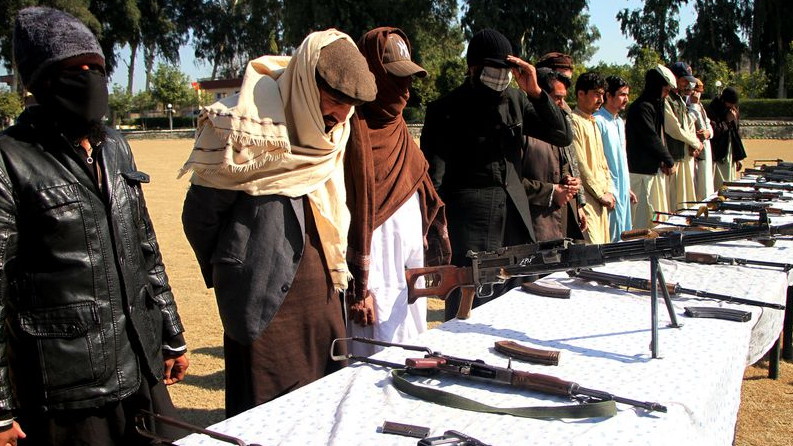
Also, since the Taliban will gain national and international legitimacy and transform into a "political party" after reaching an agreement with the US, their rank and file will be disarmed. As a result, they will no longer have the firepower to destabilize the regional security landscape.
After all, the dismantling of the Taliban and its affiliates, including the Haqqani network, and their integration into the post-deal administration will not only end the 18-year conflict in Afghanistan but also decrease the level of threat to regional peace and stability. Which will boost the regional counter-terrorism campaign, especially if other radical groups learn from the Taliban's experience and pursue reconciliation with established governments.
What could be unsettling for the peace process is that many Afghans doubt whether the Taliban would change their hard-line approach toward human rights and women's rights, and respect Afghanistan's democratic gains and constitutional principles.
Moreover, since the post-US-pullout talks for a comprehensive peace deal between the Taliban and the Afghan government will be more detailed and tough, many fear they could end in deadlock.
The trust deficit between Afghan officials and heads of political parties, the lack of national consensus and controversy over the formation of a team to hold talks with the Taliban are the main hurdles to be crossed before the process to restore permanent peace in the country could begin. To ensure the success of the talks, it is necessary to form an inclusive team comprising multiple ethnic and tribal stakeholders, women representatives, civil society, and religious scholars.
The peace process would have been more productive if the US, instead of holding closed-door talks with the Taliban, had included the Afghan government and regional and global stakeholders in the talks. If the Afghan government and regional and global stakeholders had been included in the talks, a comprehensive trilateral agreement – between the US, Taliban and the Afghan government – could have been reached.
Now, major global players and regional stakeholders, mainly Pakistan which has strong leverage on the Taliban leadership, should back the peace deal so the Taliban do not violate their commitment, and Washington should sign an agreement with the Taliban outlining a step-by-step withdrawal of US troops.
It is also important that Washington and the international community continue to support intra-Afghan talks and make sure the Taliban honor their commitment. And regional and the global stakeholders need to use their leverage to support the intra-Afghan talks in order to prevent the peace process from breaking down.
The author is a writer for Daily Outlook, an independent newspaper in Afghanistan. The views don't necessarily reflect those of China Daily.








