More govt funds needed to fight epidemic







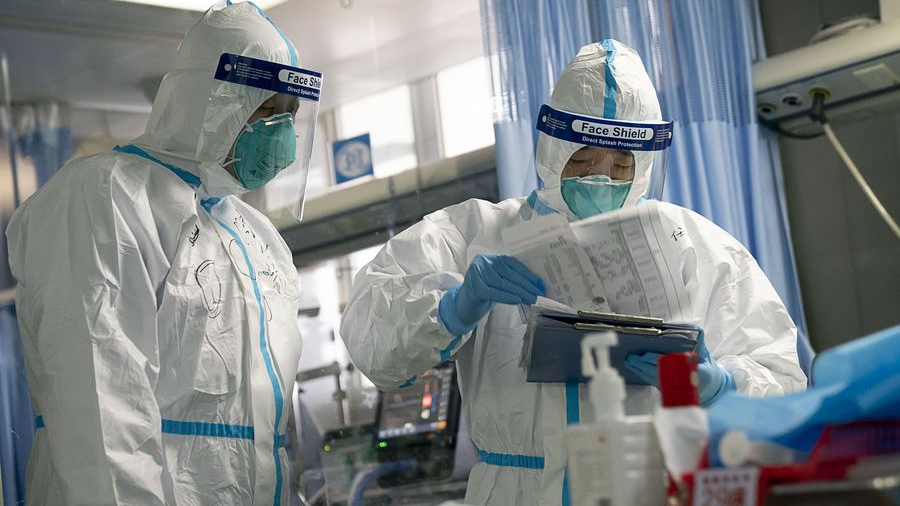
People across all walks of life in China are fighting against the novel coronavirus. And in a fight against any disease outbreak, public finance plays a key role.
Since the outbreak of the virus, Chinese provinces have implemented high-level public health measures, which require public funds. By Feb 14, governments at various levels had allocated 90 billion yuan ($12.86 billion) as epidemic prevention and control subsidies, meant to be used mainly for the treatment of those infected with the novel coronavirus and help medical institutions to fight the epidemic.
Since the epidemic is yet to be contained, the treatment of the growing number of patients, especially those critically ill, requires huge amounts of funds. The medical staff and epidemic prevention and control workers, too, need more financial help.
At this critical stage, more funds are needed to win the battle against the novel coronavirus. Since local financial situations vary, the fight against the coronavirus has put great pressure on the finances of some regions, especially undeveloped regions.
As such, the central government should provide special support for these areas, such as increasing special transfer payments. The central government could also help affected regions by announcing preferential tax policies. For instance, the authorities could exempt imported goods for fighting the epidemic from value-added tax and consumption tax, not impose import tariffs on medical imports, and forego taxes on medical products and equipment donated by enterprises or individuals to public welfare organizations and hospitals.
Public finance should also play its due role in supporting enterprises' operations to contain the epidemic, as prevention and control of a disease outbreak require the participation of all kinds of market forces.
The revenues of many industries, especially the catering, tourism, transportation and film industries, have declined because of the epidemic. And, in particular, small and medium-sized enterprises require fiscal support-even some large-scale enterprises face financial constraints.
Moreover, since the job market is closely related to social stability, a huge number of workers cannot return to work because of the epidemic, so public funds should be used to help enterprises restart their operations, which in turn will help stabilize the social environment and allow workers in many industries to return to work.
But enterprises have to ensure a safe and secure working environment to enable workers to return to their jobs, and since the enterprises' operational costs including human resources cost, epidemic prevention and control costs have greatly increased, they need the government's support. For instance, the authorities could consider exempting enterprises from income tax for a certain period, say a quarter, or reducing their taxes, administrative fees and rents.
The government should reduce other taxes, too, such as value-added tax and consumption tax. And the move to cut taxes, administrative fees and rents should be implemented according to the enterprises' actual situation to provide targeted help for them.
Since the financial expenditure of enterprises will greatly increase owing to the epidemic, the authorities should be prepared for lower fiscal revenue. Also, the government should not worry if spending crosses the bottom line of 3 percent of the budget deficit, because it is essential to provide sufficient fiscal support for epidemic prevention and control work.
Epidemic prevention and control work will test local governments' governance capability. But after the epidemic is contained, we should seriously reflect on the public finance issue. China has continuously increased financial allocation for public health service, but as the novel coronavirus shows, as a developing country, China has to further raise the financial allocation for public healthcare.
More importantly, the government needs to improve the efficiency of financial investment in the health sector to improve returns.
The author is a research fellow at the National Academy of Economic Strategy, Chinese Academy of Social Sciences. The views don't necessarily represent those of China Daily.