Spread of a disease is no excuse to target particular communities







In the late 1950s, I was among the countless number across the world who fell prey to a global pandemic of what, in those politically incorrect days, was called "Asian flu".
I had an unpleasant week or so.
In London alone, almost one-in-two schoolchildren caught the bug. Mercifully, most of us were not among the 2 to 4 million worldwide who died in the 1956-58 outbreak.
It was a relatively modest toll compared to the "Spanish flu" of 1919 that killed up to 50 million.
The convention of applying geographical labels to outbreaks of infectious diseases appears to have fallen out of favor in these ostensibly more sensitive times.
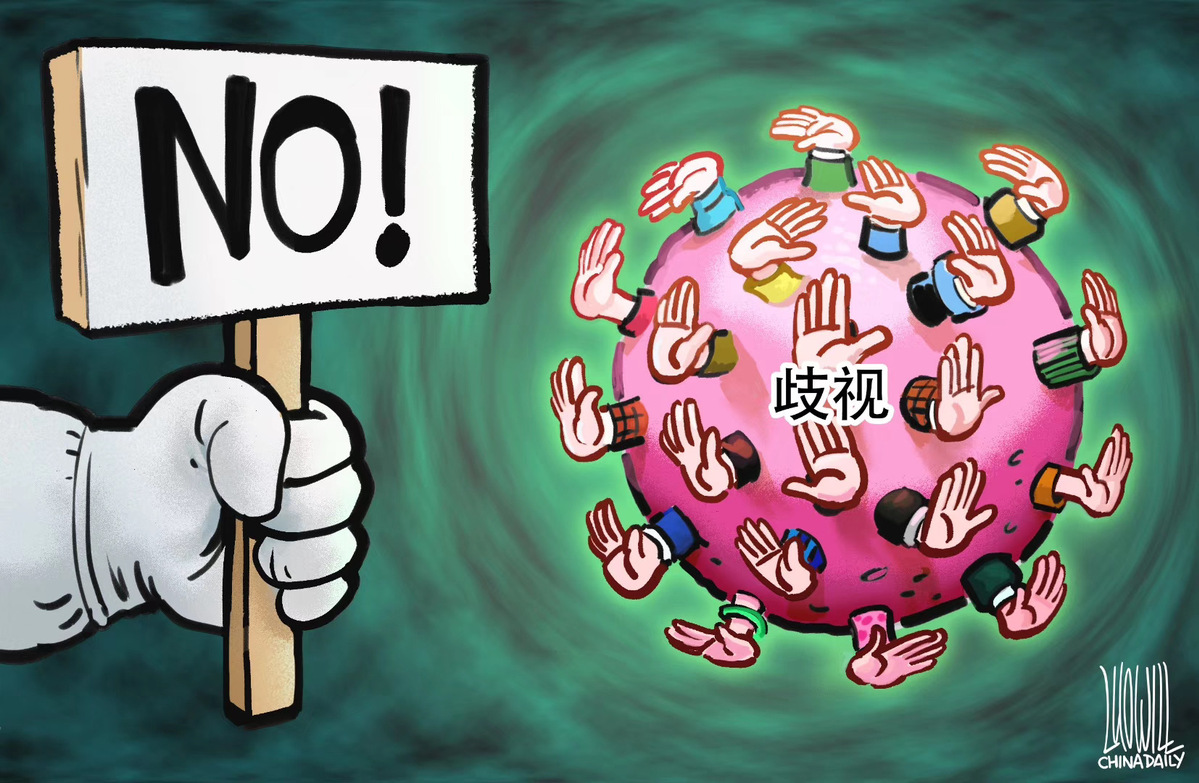
Although the current spread of the COVID-19 was first reported in China, no one has suggested calling it the "Chinese flu". Indeed, some have warned against the use of such simplistic labels.
In Ireland, a senior public health official cautioned the media against headlines referring to the "China virus".
"This is not a Chinese disease," said Kevin Kelleher. "It is very inappropriate to use that in a derogatory way. It is about people who have returned from China."
Sadly, such warnings have failed to deter instances of abuse and bullying.
In the UK, members of the almost 400,000-strong Chinese community, many of them British-born, have reported verbal and physical harassment.
A Chinese mother in northern England said classmates had told each other: "Keep away from the Chinese, they are all poisoned by the virus."
The youngsters may be guilty of simply parroting the prejudices of their ill-informed parents. But that should not really be an excuse for university students. Yet at York University, where a student was unofficially identified as a coronavirus patient, the authorities felt it necessary to remind staff and students "to act in accordance with our shared values of respect, fairness and compassion".
Elsewhere, from France to Italy and from Canada to New Zealand, Chinese visitors and residents have endured outbreaks of xenophobia. In Rome, a cafe at the much-visited Trevi Fountain put up a sign in Chinese and English denying entry to anyone who had traveled from China.
Meanwhile, owners of Chinese restaurants have reported a downturn in business. Historically, racist responses to public health scares are nothing new. The Los Angeles Times noted that the latest panic echoed a long history of anti-Asian racism that identified Asian US citizens as spreaders of epidemic disease.
Medical scapegoating and discriminatory policing of Asian-owned businesses and homes were routine in 19th century California, the newspaper wrote.
In those days, such race-based responses were endorsed by public authorities. Medicine and health policy have since evolved, although it seems that sections of the public still have to catch up.
One of the most forceful rebuttals of the current wave of anti-Chinese abuse has come from the president of the New York-based Foundation for Ethnic Understanding, Marc Schneier.
In a commentary published in Israel's Jerusalem Post, Schneier wrote that the upsurge of anti-Chinese bigotry triggered by coronavirus brought back memories of medieval Europeans blaming Jews for the spread of the Black Death.
Schneier said bigoted talk about Chinese people supposedly spreading the virus had been greatly amplified by social media and he linked the upsurge of anti-Chinese prejudice to a rise in bigotry, xenophobia, and white nationalism.
In Europe, the rise of anti-immigrant populism has turned the clock back to a darker more prejudiced past.
The spread of infectious disease may be regarded by some as a downside of increased travel and interchange in a globalized world. But such phenomena have always existed.
At least we now have better tools to deal with such crises. The spread of disease is no excuse to target particular communities. If the public health authorities can keep their heads as they tackle the emergency, then so can we.
Harvey Morris is a senior media consultant for China Daily UK