



Latin America and Africa hail BRI-powered Chinese economic growth







Editor's note: Azhar Azam works in a private organization as a market & business analyst and writes about geopolitical issues and regional conflicts. The article reflects the author's opinions, and not necessarily the views of CGTN.
People across the world largely deliberate that China's rise as a global economic superpower was an emboldening sign. Worldwide emerging markets, in particular, profoundly welcomed China's economic growth and upheld an overwhelmingly positive view of Chinese economic stature, a latest Pew Research survey found.
Although few nations were wary of their governments' growing economic reliance on China they were equally fretful of United States' piercing influence in their domestic economies. Comparing their bilateral relations with the two biggest world economies, people mostly perceived China's role as more instrumental than the United States.
The countries in Latin America – Brazil, Mexico and Argentina – vividly hailed China's thriving economy, stepping aside from their strong trade ties with the United States. That was somewhat unusual provided that the three sides had a much stronger bilateral trade relationship with the U.S. compared with China.
Even though Mexico had a trade surplus of nearly 85 billion U.S. dollars with the U.S. from January to October in 2019, 50 percent of the United Mexican States' poll participants did not dither to back Beijing's economic growth as favorable against mere 22 percent who thought otherwise.
It was for the reason that U.S. President Donald Trump recurrently ditched the American neighboring country on trade and immigration and therefore the public sentiments went against aggressive policies of the U.S. and pushed their support to radically tilt toward kindlier China.
A significant majority of Argentinians and Brazilians also believed that China's economic and investment advancement was a good thing for them, even when measured with their opinions about the United States.
The proclivity to disapprove U.S. growth is likely to soar after Trump grilled the two countries over "massive currency devaluation" and afterward he threatened to reimpose tariffs on their steel and aluminum exports to the United States. The people from Argentina and Brazil could turn rickety about U.S. scratchy economic policies and could shift their bigger empathies in the direction of China.
Interestingly, neither Argentina nor Brazil was on the watchlist of the U.S. Treasury Department for "unfair currency practices."
Apparently, the U.S. president rationalized exchange rate maneuvering to bash Argentina and Brazil. However, the real intent behind the loudmouthed move was the two countries' growing reconciliation with China that enabled Brasilia and Buenos Aires to become the largest soybean exporter and strike a soybean deal with Beijing correspondingly.
Lately, Brazilian President Jair Bolsonaro's pragmatic and softer approach toward China greatly helped Brazil to embrace stronger economic relations with the largest Brazilian trade partner. At the recently concluded China International Import Expo (CIIE), the transaction volume of Brazilian businesses grew 3.6 times as compared to last year's CIIE.
Bolsonaro's pursuance of coherent and friendly strategy additionally raised its meat exports to China and China became the third-largest foreign investor in Brazil for the third quarter of 2019.
China and Latin America are steadily narrowing the elongated geographical distance to forge a closer economic and strategic partnership. In 2018, the bilateral trade between the two increased by 18.9 percent to 307.4 billion U.S. dollars, one of the reasons why China has gained more confidence in the people in Latin America in recent years.
Latin America is the natural extension of the BRI. Through establishing an open platform of collaboration, Argentina can integrate its development strategy with the BRI while the project is high compatible with Panama's National Logistics Strategy as well. So, the Chinese-offered wider cooperation in the areas of agriculture, energy, infrastructure, mining and manufacturing could bring prosperity to the region that is expected to marginally grow by just 0.7 percent in Q4-2019.
The emerging markets of Africa – Nigeria, Kenya and South Africa – have been quickly cozying up to China too and the increasing numbers of the countries citizens' positive views about Beijing strongly ratified their governments' economic and infrastructure collaboration with China.
China has earned the trust of world's second-largest and second most-populace continent in the world by wielding deep efforts and pouring hundreds of billions of investments in its BRI projects in Africa to lift the poor regional economies and eradicate poverty in Sub-Saharan Africa, which is the home of more than half or 413 million of the global poor head-count.
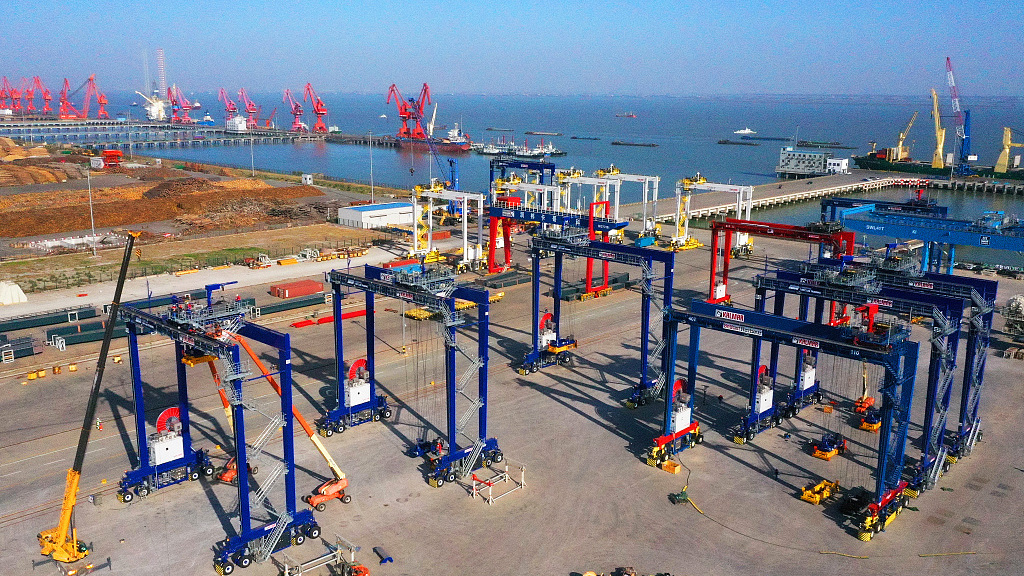
As Beijing has diverted most of its financial resources toward airport construction and marine and water projects (mostly port facilities) in Sub-Saharan Africa, the BRI is poised to add thrust to the African trade, stimulate the economy and alleviate poverty drastically. That is why African people's responsiveness to China is expanding at a rapid clip.
A prior World Bank report noted that besides increasing foreign investments and reducing poverty, BRI projects have the potential to enhance the global trade between 1.7 and 6.2 percent and the global income by 0.7 to 2.9 percent.
And indeed, the marvels of China's insignia BRI such as infrastructure and social development, shared growth and people-to-people exchanges are truly transforming a renewed and more intelligent global community that comprehends the importance of win-win cooperation and multilateralism in all spheres, from trade to development.








