Reminiscing Shaolin







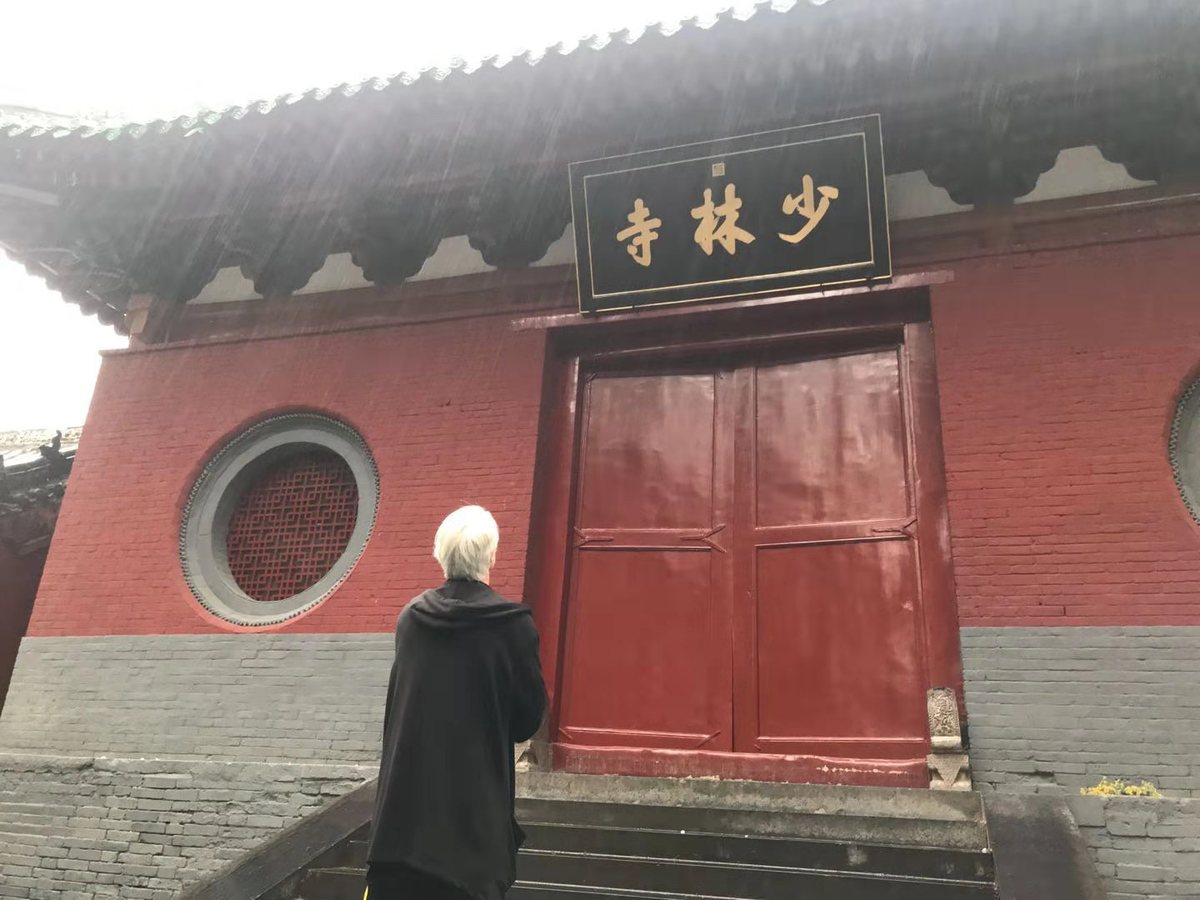
Though it was over 30 years ago, I still remember the first time I came here. In 1981, I was a student at Nankai University in Tianjin. It was late August, and together with some classmates, we began our journey with a long train ride to Loyang. A rickety bus up a long, winding dirt road, mud-soaked from summer rains, brought us the rest of the way to a legendary temple called Shaolin at the sacred Mount Songshan.
We arrived at the iconic Shaolin Temple gate. Having grown up in America with the television series “Kung Fu” starring Keith Caradinne, and as a practicing martial artist immersed in Bruce Lee books and movies, arrival at the gate of the iconic Shaolin Temple was both personal and powerful. Clouds drifted above misty waters like an unmistakably classic Chinese painting. What we would find inside would further awaken the mind, suspended still in a dreamlike astonishment.
Climbing the steps past ancient steles, we arrived at the Great Hall, the ultimate training room for Shaolin’s martial arts monks. There was hardly anything in the room, only a rack of ancient rusted martial arts weapons leaning confidently against the wall. I never forgot the haunting power of this room, marked by large indentations in the stone floor from years of monks practicing their martial arts.
Those imprints in stone, worn over centuries by monks repeatedly practicing the same kungfu forms in unison to work towards achieving their perfection, revealed a lot to me about a value called perseverance. Expressed as “ren” in Chinese, the character is formed by two other characters, “dao” above “xin” meaning a knife pressing on one’s heart, with an additional line that symbolizes a drop of blood. The character conveys that perseverance is a task requiring what we in the West call “blood, sweat and tears.” Perseverance represents the reason for China’s economic success over these past four decades. And that requires another word “Kungfu,” which in Chinese really just means time. One must devote time and patience to achieve a goal. Perseverance is the key. Kungfu is the result.
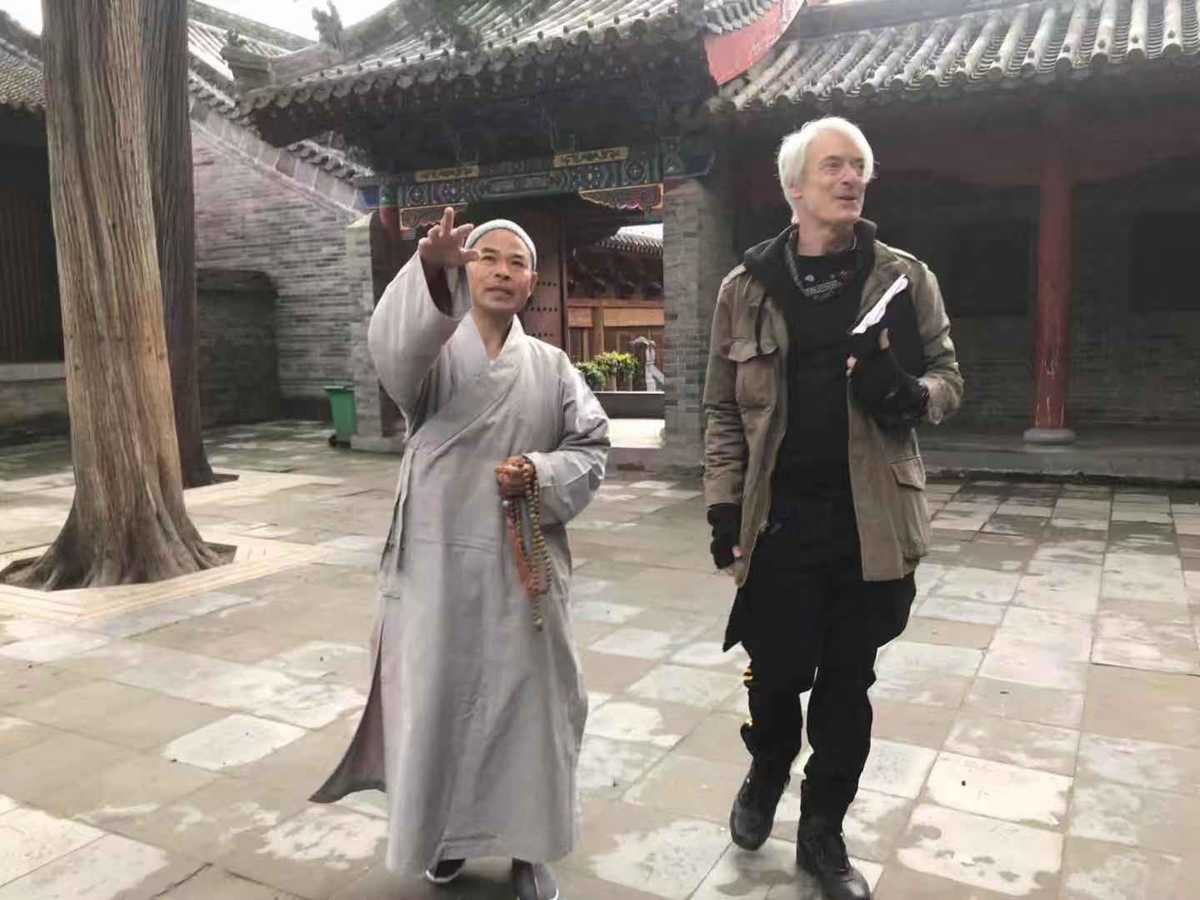
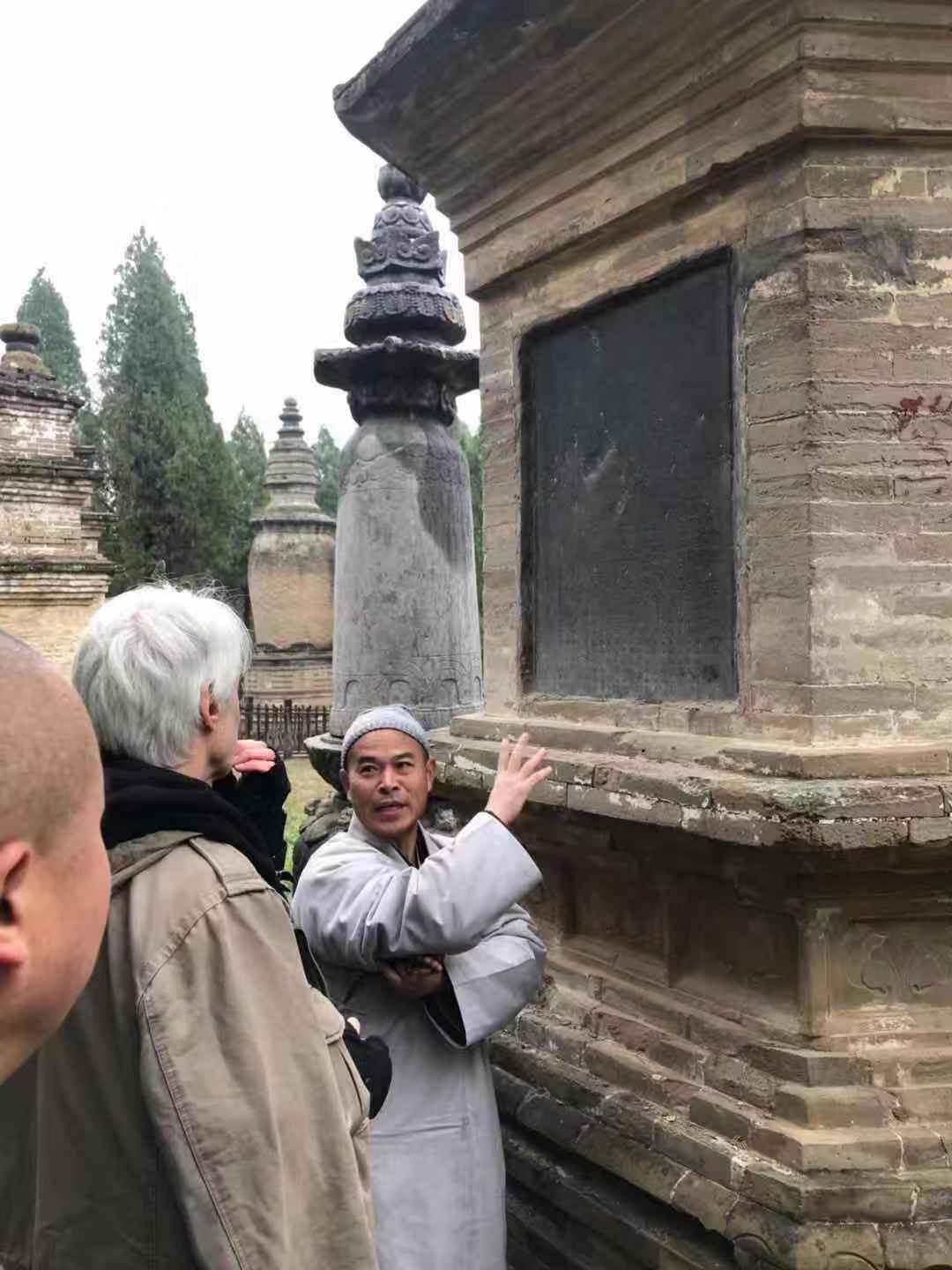
At the entrance to Shaolin, Master De Yang greets me. A quiet, humble monk, De Yang is actually the 31st Lineage Holder of Shaolin. He points to stone tablets, steles raised over decades and even centuries by martial arts associations from all over the world recognizing Shaolin Temple as the source of their own lineage. There are even carvings and records cast in iron on ancient bells, and writings on the stone tablets recalling earlier times when Japanese monks came to Shaolin to study Kungfu, the origin of Karate, even a thousand years ago. Climbing the stairs 38 years later, once again I am in the Grand Hall where the monks of past centuries practiced martial arts. “This is the source of Kungfu,” explains Master De Yang pointing to the almost surreal indentations in the stone floor.
In another hallway Master De Yang shows me a mural dating back to the Ming Dynasty, with an array of monks practicing different Kungfu styles on the grounds of Shaolin. In the mural I see different forms, the embodiment of various martial arts styles. “Shaolin has been recognized as the source of Kungfu by many schools from Karate, Aikido, Tai Kuan Do, and even Ninjitsu,” explains De Yang.
“But there is a common misunderstanding in the world,” he adds. “Many people think Kung Fu is about fighting. Actually, it is about self-cultivation. Making yourself a better person. Real Kungfu practitioners follow a strict code of self-conduct and discipline. Kungfu is to cultivate the body, mind and spirit. However, in history there have been exceptional situations, the stories become legends and even movies.”
He then pointed to another mural of Shaolin monks riding horses to protect the emperor during the Tang Dynasty when their martial arts skills were sought by the emperor as a last ditch effort to save the dynasty from invaders. The monks agreed and the Tang survived and thrived. The movie “Shaolin Monastery” is based on the story recorded in this mural.
I was then received by Abbot Shi Yongxin himself, who had just returned the night before from New York City, where he had presented a call for world peace before the United Nations General Assembly.
My return to Shaolin after nearly four decades made me think about the inter-connected matrix of all things. During ancient times, Shaolin monks were called out from their meditation and practices to save the nation. Maybe they are being called out once again - only this time, to help save the world.
The author is the founding director of the Himalayan Consensus and a senior international fellow at the Center for China and Globalization.
The opinions expressed here are those of the writer and do not necessarily represent the views of China Daily and China Daily website.