



Making mascots come to life







A behind-the-scenes look at how a panda and a red lantern won the hearts of 2022 Games organizers
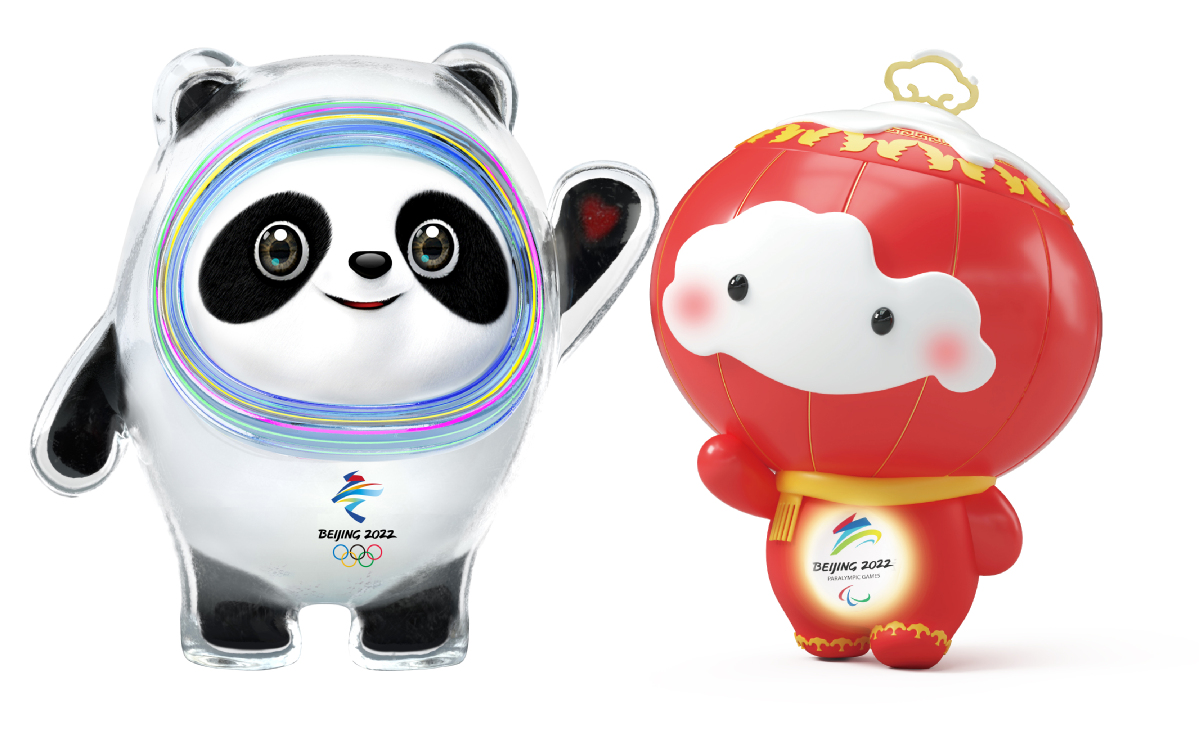
A cute panda "from the future" and a traditional red lantern signifying China's past were unveiled as the respective mascots for the Beijing Olympics and Paralympics on Tuesday, ratcheting up anticipation for the 2022 Winter Games.
Just over a year since submissions were first invited for the project, panda Bing Dwen Dwen and red lantern Shuey Rhon Rhon were revealed as the winners at Beijing's Shougang Ice Hockey Arena.
The 2022 organizing committee is confident the pair will resonate with the world.
"Today is an important step on Beijing's historic journey as the first city in Olympic history to host both summer and winter editions of the Games," said International Olympic Committee (IOC) president Thomas Bach.
"The mascot will be a wonderful ambassador for both China and the 2022 Beijing Winter Olympic Games."
International Paralympic Committee (IPC) president Andrew Parsons said the mascot "is a message of the future to the future generation of Chinese people who will be inspired by the amazing faith of the Paralympic athletes".
Added Gao Tian, vice-director of the culture and ceremonies department of the organizing committee: "The two mascots are a combination of inheritance and innovation, culture and technology, as well as the Olympic Games and daily life."
Back to the future
Bing Dwen Dwen is described as a panda wearing an icy shell that is stylized as a sports helmet. The outfit is similar to a spacesuit, so the panda can be imagined as a winter sports athlete from the future. The ice shell also allows for the addition of new elements.
Many details of the design reference signature elements of the 2022 Games.
A series of colored floating lines around its head resemble tracks on an ice rink, similar to Games venue the National Speed Skating Oval, aka the "Ice Ribbon". The rings are also a nod to the implementation of ultra-fast 5G technology and are meant to empower the panda.
Bing means "ice" in Chinese, which is a symbol of purity and toughness, in line with the spirit of the Olympics. Dwen suggests health and ingenuity, with the repetition of the word giving it a more informal, friendly feel. Altogether, Bing Dwen Dwen is a representation of physical strength, mental toughness and the spirit of the Olympics.
Paralympic mascot Shuey Rhon Rhon is equally intricate in its meaning. It resembles an iconic Chinese red lantern commonly seen on doors and streets during Chinese New Year, which in 2022 falls three days before the Olympic Games opening ceremony. Red lanterns symbolize happiness, harvest and affluence, while the crown-like ruyi is a symbol of sovereignty in Chinese culture.
Shuey Rhon Rhon's head is adorned with paper cuttings of pigeons, a common motif in Chinese culture. Their arrangement forms the shape of the Temple of Heaven, one of Beijing's most famous landmarks. The blush on the mascot's cheeks adds a festive feel, with the color red associated with good luck.
Billed as the first-ever luminous Olympic mascot, Shuey Rhon Rhon is intended to convey a message of lighting up people's dreams and symbolizes friendship, courage and persistence. It is also a representation of the unbending will and fighting spirit of the Paralympic athletes.
Shuey means "snow" in Chinese, while Rhon Rhon are two different Chinese characters with the same pronunciation, meaning inclusiveness and integration respectively. The name symbolizes harmony and exchanges between different cultures, and building a community with a shared future.
"The mascots draw inspiration from China's rich culture, at the same time reflecting the Chinese philosophy of communicating with the world and reaching out to the future," explained review panel member Zhang Yiwu, a professor at the Department of Chinese Language and Literature of Peking University.
Tough decision
The 2022 organizing committee launched a global appeal for mascot design proposals on Aug 8 last year, coinciding with the 10th anniversary of the 2008 Beijing Summer Olympics.
Elementary and high school students across China were encouraged to create their own mascots for the Winter Games. Nearly 15 million students from 45,000 schools were involved, with their designs used as barometers of what appeals to kids.
"When we visited schools in northern China, we could tell they were familiar with winter sports and had a great passion for them. When we visited southern cities, students came with curiosity and listened attentively. The contrast left a deep impression on me, but all of them were happily involved in the designs," recalled Piao Xuedong, the organizing committee's marketing director.
When the two-month submission period closed on Oct 31, a total of 5,816 designs were spread over 100 desks in a room inside the Beijing 2022 headquarters at Shougang Industrial Park.
Submissions were received from all over the world-35 countries and regions in total-while the designers ranged in age from 3 to 75. Among the more commonly used ideas were indigenous deers, pandas and tigers, and cultural symbols such as dragon dancing and the Great Wall.
According to the organizing committee, the number of design proposals was nearly three times that of the 2008 Games.
"There was a lot of diversity, with everyone from little children to professionals submitting proposals. It's interesting to see the different directions people have taken," said panel member Alexis Georgacopoulos, director of the University of Art and Design in Lausanne, Switzerland, where the IOC is based.
The 18-person review panel was comprised of experts from fields including graphic design, animation, children's literature and marketing, and after two days of evaluation whittled the submissions down to 100 possibles on Jan 7. The next day, the panel compiled a shortlist of 10 designs.
The panel was guided by an online survey that sought to discover the public's preference for features such as color and personality of the mascots.
"A great number of the designs were quite creative, and that really amazed me," said panel member Lin Cunzhen, who designed the emblems for Beijing 2022.



Most Popular
- China ties Iraq 0-0 in its U23 Asian Cup opening match
- A learning curve
- Russian team wins Harbin International Ice Sculpture Competition
- Worldloppet ski season opens with Changchun cross-country event
- Women's half-marathon draws 20,000 runners to Guangzhou
- Picture perfect