China's monetary policy seen in 70-year perspective







Reflections of Monetary Reform Challenges in Perspective
I will never forget the day I arrived in China in 1981 in late spring. On that first moment on a hot spring day, the equation of China's future currency evolution and monetary policy would be spelled out in a single equation of simple events that would occur that afternoon.
Beijing airport seemed empty. In those days the only airport terminal was T1 and there were no direct flights coming from the US. We had to transit in Tokyo overnight, arriving by Japan Airlines, which only ran a few times a week to Beijing. That is how little international communication China had in 1981.
My first clear memory from leaving Beijing was taking a long drive into Beijing on a narrow road lined with poplar trees, and stopping at the Friendship Store. There I changed my U.S. dollars for something called the "FEC", Foreign Exchange Certificates, then valued nearly 1 to 1 with the U.S. dollar. Of course, given China's low foreign exchange reserves at that time, it was an artificial valuation, based on an old, Soviet style trading system that was restricted and buffered by having two currencies instead of one. Basically the yuan was a local currency used domestically for local goods and services. The FEC was a semi-convertible intermediary currency between the RMB and foreign currencies that was convertible with conditions.
That afternoon, I spent $1 to purchase a Coca-Cola. By teachers criticized me, being from a capitalist country like United States, I'm spending so much money, maybe a large portion of their month's salary on a mere soft drink. Most Chinese in those days had access to only one kind of soft drink called "QISHUI". It came in all colors, from Miami pink to purple to golf course green, which looked more like the colors some punk rock singers might dye their hair with rather than a drink one might wish to consume.
In that tin of Coke that day lay the dilemma of China's entire foreign exchange and currency reform challenge that would play out over the next 40 years.
As I left the Friendship Store, I saw many Chinese standing outside, wearing white thin shirts. So thin, you could even see their undershirts. They either wore green or blue pants, depending on they either wanted to associate with army or worker. Everyone outside was trying to figure out how to get inside. They wanted to obtain the Foreign Exchange Certificates to allow them to purchase imported items that were only available in the Friendship Store, primarily for the diplomatic community as most of the embassies were nearby.
There was suddenly an unofficial market between the US dollar or other foreign currencies, and the yuan itself. There was also another informal price differential between the foreign currency and the foreign exchange certificate, as the value of the certificate did not represent the value of the yuan on the actual market. Moreover, the Foreign Exchange Certificate served as an access pass that allowed one to enter the Friendship Store to purchase foreign goods. Therefore, the FEC had a higher value than the currency value itself.
The experience in 1981 gave me at least a foundation understanding of the dilemma that China faced, stepping out from a central-planned system and moving toward a market economy, then a globalized economy. To understand the future direction of China's globalization of the yuan currency, one must keep in perspective the situation from which China came out of in the 1980s and the broader perspective of overall stability required to have an effective and sustainable reform opening and eventual influence on the global stage.
Birth of the renminbi as a new nation’s currency
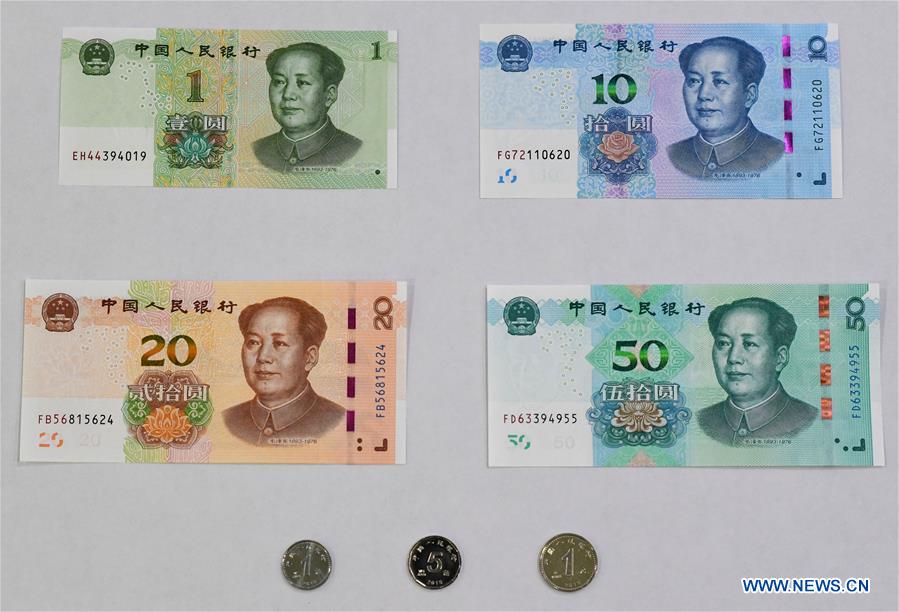
On the day that the People's Bank of China was founded, Dec 1, 1948, the renminbi, or yuan, was issued as China's legal tender. After 1949, the People's Bank of China began to fix renminbi exchange rates against foreign currencies to promote foreign trade and investment. Nevertheless, price levels continued to vary from region to region: Branches of the PBOC were setting their own exchange rates without regard to the fledgling central monetary policy of the time.
On July 8, 1950, the head office of the PBOC was authorized to publish national exchange rates; this was China's first real attempt to establish a unified monetary system. The State-owned foreign trade corporations were soon established, and foreign trade began to be conducted through these entities. In line with the command economics of the time, the exchange rate was then fixed based on a weighted average of three apparently unrelated and irrelevant factors: The costs of major export goods traded in volume, a profit margin for private traders and an index of daily essentials for a family of four. The result was that exchange rates were adjusted whenever it was felt necessary, and large fluctuations were frequent.
In an economy of past scarcity, the fact that the yuan was not convertible was due to an established trade system that was largely structured to control both commodity and cash flows. From 1980, the Foreign Exchange Certificate was issued as a partially convertible currency principally for foreign use. During the 1980s, it became a tool for rationing consumer commodities – particularly imports – and providing a means of stopping the drain on China's foreign exchange reserves.
China's need for both raw materials and technology imports, combined with growing domestic consumer demand for foreign products, eventually made the FEC a part of the demand for foreign products and a part of the regulatory mechanism, until its abolition in 1993.
That China has brought its currency to the threshold of convertibility illustrates the success of a series of carefully planned moves involving experimentation and re-evaluation of policy. The emergence of a freely convertible renminbi will clearly mark China's entry into the community of world economic and trading powers.
The renminbi's past non-convertibility must be viewed in conjunction with the Government's concern over the control of domestic resources and its fear of the depletion of national foreign exchange reserves, future renminbi devaluations, and the acquisition of external debt. Consequently, the policy of allowing the Renminbi to become a convertible currency was considered in the light of China's economic reforms, its trade surpluses linked to a successful export promotion policy, and its determination to open up economically to the outside world.
To some extent, China may have perceived the problem as being partially resolved by the return of Hong Kong in 1997, an event which in itself would make China the first socialist country in the world to have inherited an international traded convertible currency - the Hong Kong Dollar.
1997 Asian financial crisis envisions a new global monetary policy
The idea of creating financial resilience to the volatility of the USA-manipulated financial system emerged during the 1997 Asian financial crisis lessons. China refused to devalue the yuan against IMF advice and moreover challenged the hedge funds in the HK market. China's firm resilience to devaluation pressures in turn stabilized the region and led to the eventual revitalization of Asia.
A decade later, in 2008 the cards were reversed as the American sub-prime crisis imploded into a global financial crisis due to the deregulation and hyper leveraging policies of the then Bush administration. The response, quantitative easing, a policy of purchasing debt to issue more currency against debt – cementing the debt conundrum – would become the hallmark of American monetary and debt policy for the next decade. It was clear that such an approach could create further global volatility.
In 2008 Asian countries convened with China the Chiang Mai Initiative calling for an Asian monetary fund to resist speculation. By 2012 the BRICS countries at their annual meeting in its Delhi Declaration noted the irresponsibility of the USA Fed and quantitative easing, and called for new institutions to establish resilience against the old economic order. 2015 AIIB and BRICS Development Bank were formed.
The vision was a new financial architecture that is South-South supported financially, and sensitive to issues of development and resilience. The policies of these institutions are made by those nations that have come out from underdevelopment for those nations about to undergo the same experience. So experiences are relevant. China did not believe in political conditions or imposition of cultural values. It has been more concerned with financing the infrastructure and connectivity to get people out from underdevelopment, end poverty, and make nations competitive.
Critical is the emergence of a new global order, comprising the nations of the developing south, whose collective experience and challenges can be overcome through exchanges of experience, collaborative infrastructure investment, and coordinated financial policy.
The success of such a vision of a new global monetary policy approach lies in the eventual globalization of the yuan currency and the emergence of the yuan as a reserve currency for the global south. That reserve currency can take one or two forms, either Yuan as an actual reserve currency; two, the Yuan as a major weighed currency in the basket of currencies of denominated currency that could be issued by the new development bank. Or it is the combination of these with the alignment of countries creating a regional Belt and Road Currency. Any of these options are not exclusive of each other and they can all come to play.
The key of success to this is that once the yuan is a reserve currency, the ability of the US to control global finance will have ended. It would be effectively the liberation of the global south from the controls of Washington and Wall Street. This may offer temporary chaos in the markets of America. In a long term, it will be globally stabilizing for all markets by creating diversity and democratization for our financial system.
The history of the yuan's evolution from a highly restricted, fixed currency of an old, state-planned system to its emergence as a potential global reserve currency has been a process consistent with China's approach to development: gradual, systematic and sustained, rather than shocking or a sudden. The entire process is counterintuitive to western economic and political mindsets. That is why they continue to question it, because they cannot understand it.
The author is the founding director of the Himalayan Consensus and a senior international fellow at the Center for China and Globalization.
The views don't necessarily represent those of China Daily.