


Interpreters preparing for next year's Tokyo Games







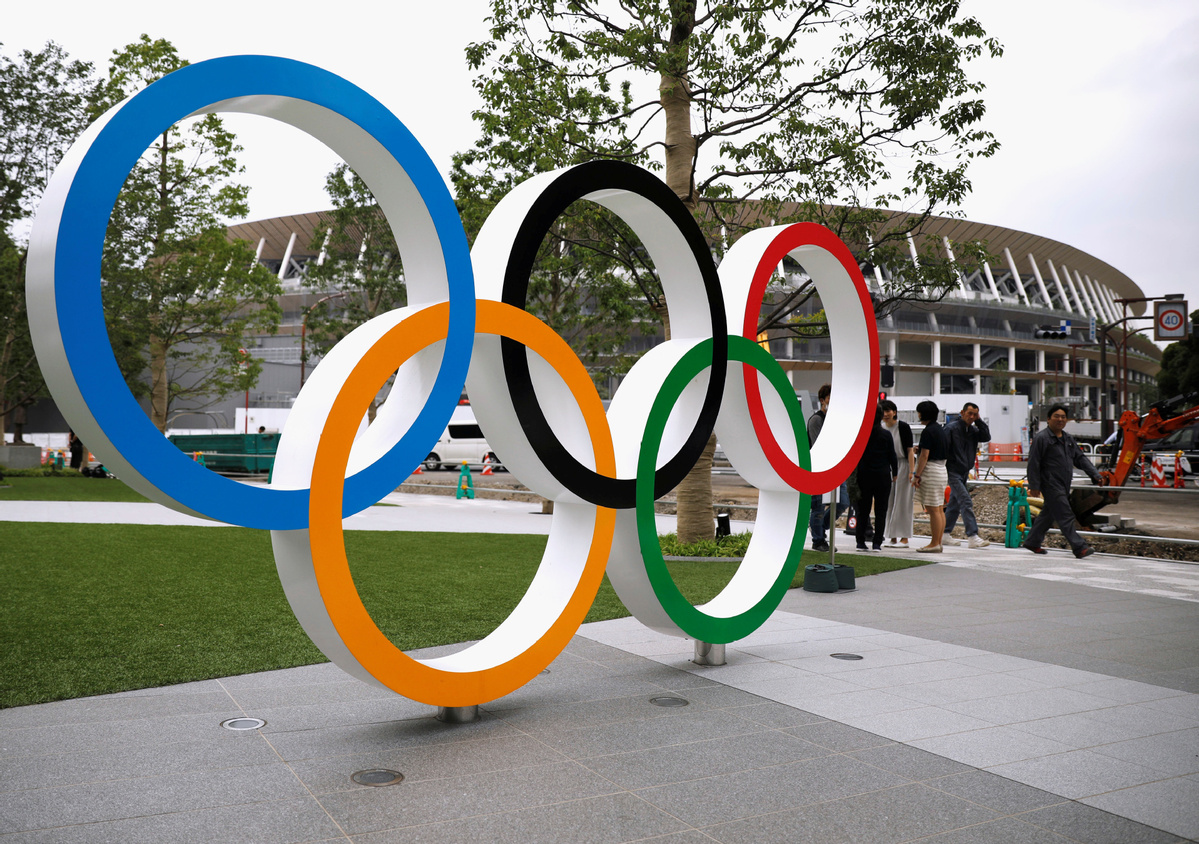
Small army of interpreters preparing to tell it like it is at next year's Tokyo Games
TOKYO - Alexandre Ponomarev is the chief interpreter for next year's Tokyo's Olympics. He is fluent in Russian, English, Spanish, French, German, Danish and Ukrainian, and he can get by in a handful of others.
But at times, even Ponomarev needs an interpreter - for instance, when he's working in Japan.
"I can't speak all languages, unfortunately," he told Associated Press. "I wish I could."
Next year's Olympics will be an interpreter's delight, with more than 10,000 athletes representing about 200 nations and territories - many of which also have minority dialects that are spoken alongside the national language.
Stepping into the din are 100 interpreters - 40 from Japan and 60 from elsewhere - handling 11 official languages for Tokyo: English, Chinese, Japanese, French, Spanish, German, Russian, Italian, Arabic, Korean, and Portuguese.
It's a team accustomed to interpreting for presidents, prime ministers and monarchs.
But the Olympics are different and require fluency in the nuances of judo, the ins-and-outs of archery or the vagaries of modern pentathlon.
Then throw in the lingo from new Olympic sports like surfing, skateboarding and sport climbing.
"They train. They prepare," Ponomarev said. "We have glossaries, we have Olympic terminology and we study different sports."
Even that is not always enough.
Ponomarev said he was bamboozled when a snowboarder at the Pyeongchang Winter Olympics responded in English about a performance.
"'Oh, totally rad man. Just so bad,'" Ponomarev repeated.
Interpretation?
"It was a great run."
"The surfers, they have their own way of speaking," Ponomarev said. "The same goes for snowboarders at the Winter Olympics. That can be challenging. But we certainly found an equivalent."
In Japanese, Arabic, German. Or whatever.
Ponomarev's team includes at least one former Olympian, and most have done several Games. He also corrects anyone who confuses interpretation with translation, pointing out that translation refers to the written word.
Much of the interpretation service is for athletes after they've won medals. But interpreters also work briefings for the International Olympic Committee, the World Anti-Doping Agenc, and the Court of Arbitration for Sport.
In those forums, the focus can be disputes, doping, and other rule-breaking. One poor interpretation can cause confusion, or even legal fallout.
"They are used to working under pressure," Ponomarev said. "They know that every word they get wrong is going to have repercussions. If you cannot understand what is being said, you do not invent. That is rule No 1."
Ponomarev sees the power of artificial intelligence on the horizon, closing in on the professional interpreter's space.
"AI is not nearly as evolved as one might think to replace humans," he said.
"I'm not trying to say that I'm not worried about it, because I certainly am to be absolutely honest. Maybe 10 years down the road something will change. Maybe not."
He said machines still can't always catch humor, a play on words or intonation. And they "can't see a wink."
"It's a similar question. Would you trust your legal affairs to a machine? Would you trust only a machine to fix your teeth or perform surgery on you?" said Ponomarev.
"It's a common misconception that we interpret words. We don't. We first understand the meaning behind them and then we convey the message."
Ponomarev said cultural differences can affect language - and vice versa. He said he might assign a speaker of Brazilian Portuguese to a Brazilian, and a peninsular Portuguese speaker to someone from Portugal. Likewise with Spanish, which is spoken differently across 20 countries.
"There is a mentality behind every language," he said. "I believe in acquiring a language you also acquire a certain mentality."
Tokyo's Olympics will deploy an improved system of interpretation over Rio de Janeiro 2016. Interpreters will work out of the main press center, taking audio and video feeds from the scattered venues. Ponomarev said a recent test of the system was nearly perfect, and could do five media events at once.
"It worked brilliantly, like a charm," he said.
This means nearly every media conference will have simultaneous interpretation, in which the speaker's words are relayed over an earpiece as they are spoken, rather than consecutive interpretation, which is slower and gives an interpretation only after the speaker finishes several sentences.
Ponomarev said he worked his first Olympics in 2008 in Beijing, and took over as the chief in Rio. He credits his mother with getting him started, smuggling DVDs of American films into the old Soviet Union.
He eventually trained in Moscow and the Middlebury Institute of International Studies in Monterey, California.
Under the Soviet system, he was assigned to study Danish, which is not widely spoken but helped with learning German and gave him a conversational understanding of Norwegian and Swedish.
"Once you acquire one language, you just keep going ... it stacks up," he said.
Associated Press


Most Popular
- China ties Iraq 0-0 in its U23 Asian Cup opening match
- A learning curve
- Russian team wins Harbin International Ice Sculpture Competition
- Worldloppet ski season opens with Changchun cross-country event
- Women's half-marathon draws 20,000 runners to Guangzhou
- Picture perfect