The myth of forced transfer of technology







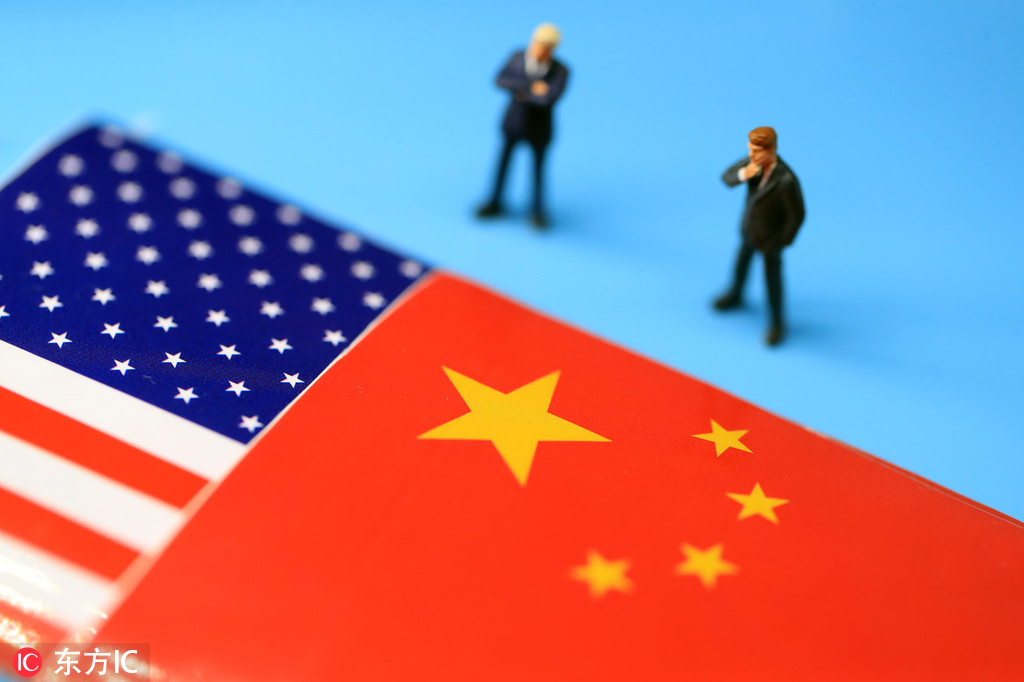
For more than a year, the United States has been accusing China of "forced transfer of technology", an accusation that has been at the core of the US' trade dispute with China.
It is critically important to make a clear distinction between commercial deals between foreign companies and their Chinese business partners, and the acts of the Chinese government. While commercial contracts are based on agreements between foreign and Chinese enterprises, "forced transfer of technology" is related to the Chinese government. It is therefore ridiculous to regard the complaints against Chinese companies as "forced technology transfers".
As for joint ventures in China, foreign businesses are free to negotiate the terms of the contract with their Chinese counterparts. Either party can walk away if it is not happy with the terms proposed by its negotiating counterpart. Two parties enter into a contract at their own will, based on their respective calculation of the cost and benefit of their participation in a business venture. As part of a contractual relationship, technology transfer is all about meeting one's obligations under the contract. It is not "forced".
'Never forced to turn over anything'
Summing up his experience of working for many years for a joint venture between his company and China Construction Bank, Stephen Roach, a faculty member of Yale University and former chairman of Morgan Stanley Asia, said: "Forced technology transfer overlooks the simple fact that joint ventures are commercially and legally binding agreements between two partners working together willingly to build a new business that undoubtedly requires a sharing of personnel, systems, and processes." He added: "I was never forced to turn over anything."
In a typical joint venture, foreign companies and their Chinese partners pool and share their resources to capitalize on their relative advantages. Often technological edge is what local companies seek from their foreign counterparts so as to become more competitive. Just the other day, a friend who is an executive in a leading fiber glass manufacturing company in China told me: "We have everything we need for expansion-capital, sales network, clients, supplier and trained workers. New technology is the only thing we look for in a potential partner." His remark reflects the position of many Chinese companies, that they want to set up joint ventures with foreign companies.
With a savings rate of more than 40 percent, China doesn't have a shortage of capital. In fact, financing is often readily available for creditworthy local companies. On the other hand, advanced technology is highly valued.
Investing with their technologies makes excellent business sense for overseas companies, because that will help them to secure a foothold in China's market and expand their businesses.
GM earns more profits in China than US
Those companies that have chosen to do so have generally been rewarded handsomely. By investing its technologies and processes in China, General Motors, for example, makes more cars in China than anywhere else in the world. It earns more profits in China than in its home market. According to the American Chamber of Commerce in China, 90 percent of US companies' China operations were profitable or broke even in 2018.
Since local companies are fast developing their capacities to innovate and Chinese consumers are becoming increasingly choosy, more often than not there is a compelling need for foreign investors to bring in their technologies. If they fail to put their best foot forward, they would run the risk of not only losing one of the world's biggest markets, but also losing out to competitors in China and beyond. Therefore, it is the market and market competition that make it imperative for foreign companies to transfer technology.
Toward the end of the 1990s, I served as the deputy director-general in the local government's department of foreign investment in Shenzhen, a pioneering city in China's drive to open up its market to the outside world. I knew of no national law then requiring foreign investors to divulge sensitive trade secrets to their Chinese business partners. Nor did I hear of any national policy which stipulated that the approval of a foreign invested enterprise is conditional on the enterprise handing over its technology to Chinese entities.
US has failed to back its claim with evidence
In its Section 301 report released last year, the US was unable to provide any evidence to substantiate its claim that there is a Chinese law that requires foreign companies to transfer technology in order to set up business in China.
The US also failed to furnish a single real case to prove that the Chinese government had forced or pressured foreign investors to transfer their technologies. And its failure to do so has called into serious question the validity of its claim.
The fact is, there is neither any legal requirement nor an official policy in China that stipulates technology transfer is a prerequisite for foreign investors to access the Chinese market. Some foreign businesses have lodged complaints against technology transfer, but those belong to the commercial realm. It would be unfair to blame it on the government.
To allay the real and imaginary concerns of some foreign businesses, China has gone as far as to revise its law on foreign investments. The new law, which came into effect recently, specifically states that forcing transfer of technology by administrative means is prohibited. Should instances of such unwanted interventions by certain over-enthusiastic government officials come to light, foreign businesses can file administrative appeals or lawsuits. Yet Washington does not seem to be impressed by the Chinese government's initiative.
Washington's unsuccessful attempt to prove its claim
Washington attributes "forced transfer of technology" to Beijing's legal requirement that foreign businesses' operations in some sectors in China take the form of a joint venture with a local company, with a cap on foreign equity. In an attempt to link "forced transfer of technology" with market access, the US claims that China's joint venture requirement "lays the foundation for the Chinese government to require or pressure technology transfer".
However, market access is a totally different issue. China's joint venture requirement and foreign equity limitations are the negotiated results between China and the other World Trade Organization members for more than a decade. Their imposition is consistent with WTO rules, and in line with China's commitment to the multilateral trade body. To share the benefits of its economic development, China has done more than just fulfilling its obligations under the WTO. The restrictions on foreign investment have been drastically reduced, with those in place in 2018 being one-third of the 2011 level.
China is not alone in restricting foreign ownership. This is a common practice in most, if not all, countries. The US, for instance, limits foreign investment not just on national security grounds, but also in "critical technologies". The Committee on Foreign Investment in the US routinely investigates and rejects potential deals with foreign companies. Largely due to the implementation of a stricter foreign investment review regime by the US, Chinese investment in the country in 2018 declined 90 percent year-on-year.
Germany also limits foreign investment
Besides, in Germany, the government scrutinizes-and sometimes blocks-purchases of 10 percent or more stakes by non-European companies in German companies in sectors such as energy, water, food supply, telecommunications, defense, finance and transportation.
Admittedly, the Chinese market is not as open as some foreign investors and their governments would like it to be. The good news is that the opening-up process in China is accelerating.
New measures are being taken to allow foreign companies easier access to the Chinese market, including the abolition of the joint venture requirement in sectors such as exploration and exploitation of oil and gas, and the removal of caps on foreign equity for insurance companies, shipping agencies and call centers. As such, China is expected to embrace foreign investors even more enthusiastically.
It is clear that Washington's accusation is baseless. But what is the real motive behind the US' accusation? One wonders if the US' accusation is a smokescreen, and its real motive is to force open the Chinese market by extracting more concessions from China than it would otherwise agree to give.
The author is deputy permanent representative of China's Mission to the UN Office in Geneva. Source: chinausfocus.com
The views don't necessarily reflect those of China Daily.