



Reforming consumption rules to fully unlock spending







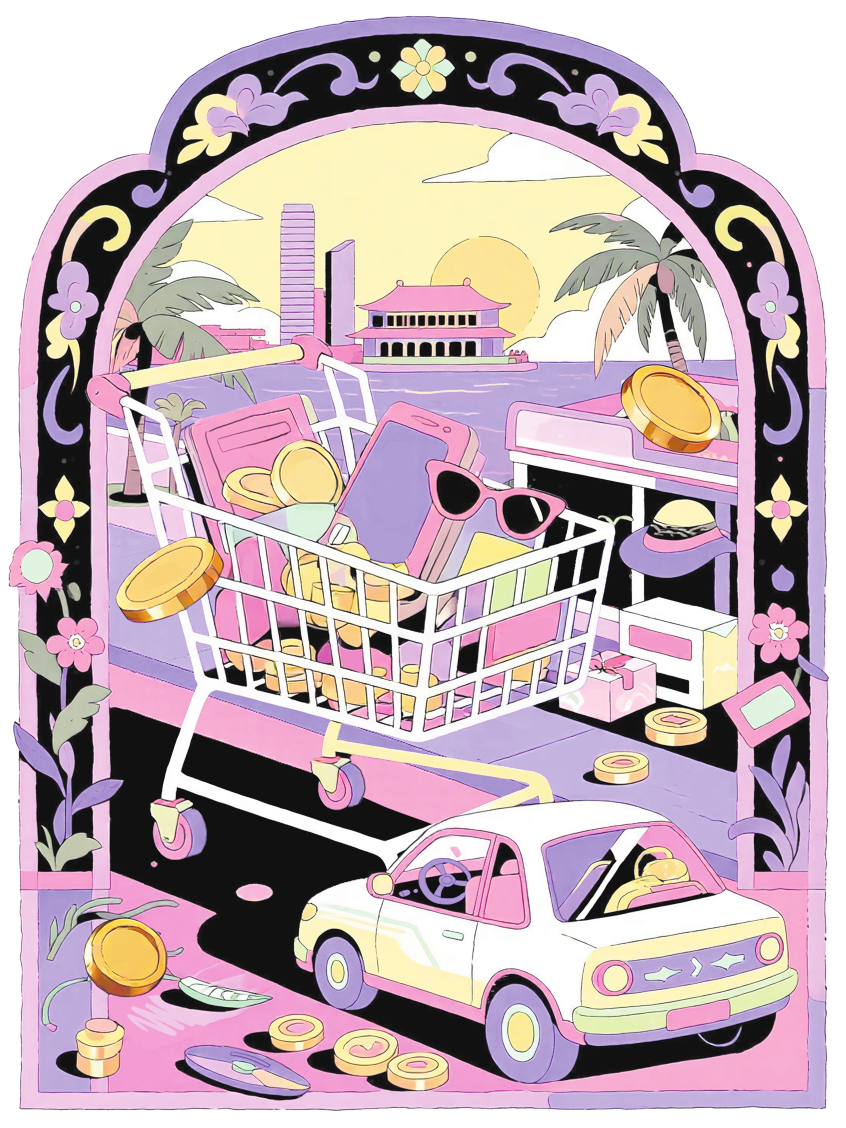
China is now the world's second-largest consumer market and has ranked as the world's second-largest importer for 16 consecutive years. During the 15th Five-Year Plan period (2026-30), China is expected to expand its domestic consumption market, cultivate the middle-income group so that it expands to over 800 million in the next 10 years, and unleash the vast spending power of its 1.4 billion people.
To achieve this, the country is advancing a comprehensive consumption-boosting initiative — removing unreasonable restrictions in the key automobile and housing sectors, improving regulations for new consumption models and scenarios, implementing staggered paid leave, and refining institutional mechanisms that promote spending. The goal is to shape an economy increasingly driven by domestic demand and consumption-led growth — by strengthening internal momentum and enhancing residents' purchasing power.
However, several barriers still constrain consumer demand. In the automobile sector, some cities continue to impose purchase quotas and driving restrictions while following license plate lottery systems, all of which suppress potential demand. In housing, many large cities still maintain controls on purchasing, lending and pricing — curbing both first-time and upgrade-oriented buyers.
In the service sector, areas such as healthcare, elderly care, education and entertainment face entry barriers and operational hurdles, while innovative business models and consumer scenarios remain limited. Meanwhile, China's "holiday economy" has surged in recent years, yet inflexible public holiday arrangements and restrictive leave systems dampen people's enthusiasm for leisure spending.
During the 15th Five-Year Plan period, China is likely to further refine its consumption policies — removing outdated restrictions, optimizing consumption structures and stimulating purchasing desire — to help raise the national consumption rate.
The first is to shift from purchase restrictions to usage management in the auto sector. Automobile spending spans the entire value chain — from vehicles themselves to insurance, maintenance, fuel, and parking. Relaxing purchase and driving limits will not only release pent-up buying demand but also boost downstream industries.
Over the next five years, China will refine its "trade-in" policies, move from restrictive controls toward proactive guidance, and emphasize usage-side management. Targeted quota increases for long-waiting families and households without cars will be encouraged, while new-energy vehicle incentives — such as stable tax policies, charging subsidies, and toll discounts — will be maintained during energy transition periods. Smarter traffic management will allow differentiated driving restrictions — tight during rush hours, flexible during off-peak times — to alleviate congestion efficiently.
The second is to further unlock rigid and improvement-oriented housing demand. China's property market has entered a new stage, requiring timely policy adjustments. On the demand side, measures will include reducing transaction taxes and fees, revising definitions of standard housing, stabilizing and lowering mortgage rates and reforming the presale system. Locally tailored "trade-in" housing schemes will also help release improvement-oriented demand.
On the supply side, efforts will focus on building a new model for real estate development — integrating reforms in land, finance, and taxation — and creating a coordinated system linking people, housing, land and capital. These steps will encourage the construction of high-quality, livable "good houses".
The third is to unlock the expanding potential of service consumption. To boost service consumption, China will open up market access in key service industries, eliminate unreasonable entry barriers and ease regulations in areas such as environmental protection, public health, security services, quality inspection and fire safety. Breaking down local protectionism and regional segmentation will help smooth factor flows and economic circulation. A stable, transparent and predictable business environment will support the upgrading of goods and services consumption. Restrictions on qualifications, ownership ratios, capital requirements and operational scope will be further eased. China will also promote emerging consumption areas such as holiday tourism, ice-and-snow activities and the silver economy, while fostering new, highly visible consumption scenes. Greater public spending on social welfare and more inclusive consumer policies will enhance all-age-friendly consumption.
The fourth is to improve the paid leave system to stimulate holiday spending. To make paid leave more accessible and appealing, China will improve the linkage mechanism between wages and vacation prices and strengthen legal protection of the right to rest — especially for women workers.
Flexible arrangements such as staggered and combined leave that allows annual leave to be merged with public holidays will be promoted to boost travel and leisure consumption. Maternity and paternity leave will be extended, with related allowances included in social insurance coverage — helping workers balance family life and employment while expanding the "holiday economy".
Through these reforms, China aims to transform its growth model toward a more consumption-driven, inclusive and sustainable economy — one that empowers households, energizes markets and sustains high-quality development from within.
The author is a researcher at the China Center for International Economic Exchanges.
The views don't necessarily reflect those of China Daily.
If you have a specific expertise, or would like to share your thought about our stories, then send us your writings at opinion@chinadaily.com.cn, and comment@chinadaily.com.cn.





