US administration gets egg on its face with fallacious currency claim







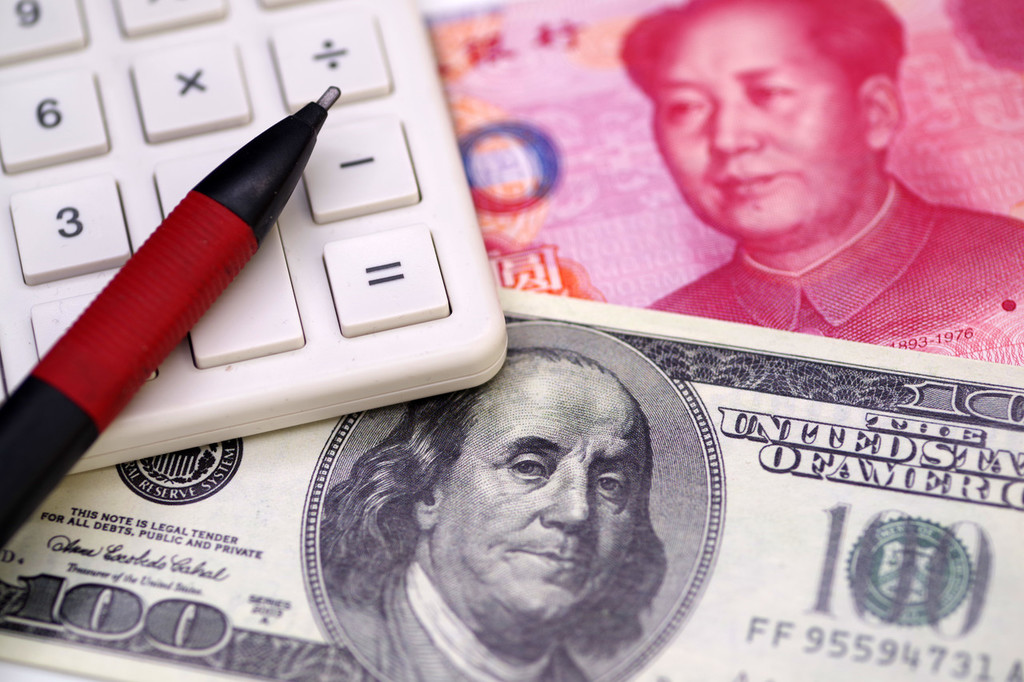
The labeling of China as a currency manipulator on Monday by US Treasury Secretary Steven Mnuchin is another sign of the impulsive nature of the US administration's decision-making that is often based on its twisting of facts.
In May, the Treasury's semi-annual report to the US Congress determined that China is not a currency manipulator. The International Monetary Fund said at the time that China's handling of its currency was "broadly in line" with the state of its economy. A few months ago outgoing IMF managing director Christine Lagarde had dismissed the idea that China is manipulating its currency to gain a competitive advantage.
China's central bank has been letting market forces play a larger role in determining the yuan's exchange rate, and on Monday, when the yuan faced growing devaluation pressure under the latest US threat to impose 10 percent punitive tariff on $300 billion Chinese goods starting Sept 1, it went beyond 7 to the US dollar.
The People's Bank of China said it was the "arbitrary unilateral and protectionist practice" of the US that had caused the Chinese currency to weaken.
The US claim that China is a currency manipulator has been criticized and questioned by many in the US including former US treasury secretary Larry Summers and Fred Bergsten, a leading currency expert.
The title of Summers' Washington Post column on Tuesday tells it all: "By naming China a currency manipulator, Mnuchin has damaged his credibility".
Summers argued that China does not come close to fitting the template as a currency manipulator. China has reduced its trade surplus from more than 8 percent of GDP to almost zero in the past eight years. And the yuan's weakening on Monday was not artificial-it was an entirely natural market response to the US' new threat to impose more tariffs.
On Tuesday, Bergsten, a former US assistant secretary of treasury, listed three fundamental reasons for the yuan's fall. First, US tariffs and rising global uncertainty have pushed the dollar up against most currencies, including the yuan. Second, US tariffs are hurting the Chinese economy, thereby reducing the demand for the yuan by overseas investors. Third, investors think China's central bank will continue pumping money into the economy. That also puts downward pressure on the currency.
He called the US designation "toothless" and "fallacious" and said it won't get support from the IMF.
I have talked with Bergsten and Summers in Washington in the past few years and their views have been consistent.
So far, no US economist has come out in support of the US Treasury designation. People from economics Nobel Prize winner Paul Krugman to Derek Scissors, an economist and usually a critic of Chinese economic policy at the American Enterprise Institute, have all rejected the listing.
A story on Markets Insider on Tuesday quoted experts as saying that based on the US administration's definition, the US has a long history of "currency manipulation", or letting the US dollar slide.
There is no doubt that the US Treasury's designation, under the auspices of the US administration, is aimed at justifying protectionist tariffs on Chinese goods in the escalating trade war.
But the trade war the US administration initiated with China has already proved to be a failure as it could not bully China into conceding one-sided concessions. The economists from top think tanks in Washington I interviewed early last year had already predicted that it would not be easy to win a trade war as the US administration claimed, and that has proved to be the case.
The US administration continues to claim that the tariffs are being paid by the Chinese. But a Goldman Sachs study belies that, showing the tariff costs fall entirely on US businesses and households.
The author is chief of China Daily EU Bureau based in Brussels.
chenweihua@chinadaily.com.cn