



Protecting the Rights and Interests of Persons with Disabilities in the PRC







IV. Special Education and Inclusive Education
China provides equal rights to education for persons with disabilities. The state has promulgated and revised the Regulations on the Education of Persons with Disabilities, included education for them in the "Outline of China's Plan for Medium-and Long-term Education Reform and Development (2010-2020)", "China's Education Modernization 2035", and "Plan for Promoting Equal Access to Basic Public Services in the 13th Five-year Plan Period", and enacted two phases of the "Special Education Promotion Plan". All of this is designed to improve special education, develop inclusive education, and ultimately improve overall education for persons with disabilities.
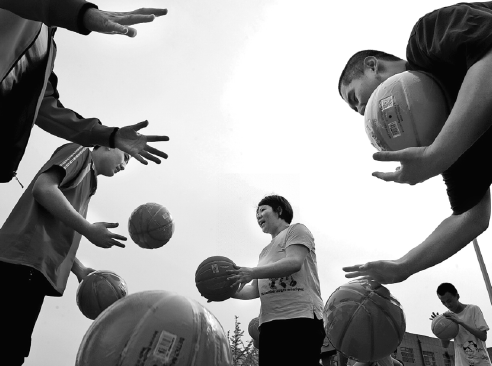
The system of education for persons with disabilities has become more complete. In China, education for persons with disabilities is primarily managed by educational departments, assisted by civil affairs organs, disabled persons' federations, and social organizations. It covers preschool education, elementary education, secondary education, and higher education. Most children with disabilities attend school with children without disabilities or go to special education schools, and some receive education at home either with visiting teachers or through long-distance education programs. Both forms of education are available for coordinated implementation. A funding system has been put in place to cover children and students with disabilities from kindergarten to college. Since the fall semester in 2016, poor students with disabilities in regular senior high schools have been exempt from fees, so that they receive 12-year free education from elementary school to senior high school.
More children and teenagers with disabilities have received compulsory education. Based on the principle that all school-age children and teenagers with disabilities must go to school and none shall be denied schooling, the state has gone to great lengths to increase the capacity of special education schools and regular schools to accommodate more students with disabilities, as well as designating teachers to go to teach these students at their home. Through these efforts children and teenagers with disabilities enjoy the greatest possible right to compulsory education. The number of students at special education schools has grown significantly over the years, and children and teenagers with visual, hearing, intellectual and other types of impairments now have more chances of schooling than ever before. In 2018, 666,000 students with disabilities studied on campus, an increase of 298,000 persons, or 81 percent over 2013.
Non-compulsory education for persons with disabilities has made steady progress. The state has continued to expand the scale of preschool education for children with disabilities, encouraging regular kindergartens to enroll more of them and special education schools to open preschool courses or kindergartens. Preschool costs for disabled children from poor families have been included in funding programs for children. In 2016, more than 30,000 disabled children attending kindergartens received subsidies. From 2012 to 2018, about RMB310 million from the public welfare lotteries for persons with disabilities were used to support preschool education for 105,000 disabled children from poor families.
Senior high schools have opened special departments or classes for students with disabilities, so that they have more opportunities to receive senior high school education. The state has issued the "Directives on Accelerating the Development of Vocational Education for Persons with Disabilities". In 2018, China had 133 secondary vocational schools or classes with an enrollment of 19,475 students with disabilities.
To develop higher education and provide more channels for students with disabilities, the state has issued the Regulations on the Participation of Persons with Disabilities in the National Exams for Regular Institutions of Higher Education, providing convenient access to exams, along with necessary support for students with disabilities. From 2012 to 2018, a total of 62,200 students with disabilities were enrolled into regular institutions of higher education.
Regarding admissions, to ensure that the rights of examinees with disabilities are fully protected, the Ministry of Education has clear regulations that colleges and universities shall not refuse students with physical disabilities as long as they can care for themselves, can complete their studies in the disciplines they have applied for, and their exam marks have reached the admission requirements.
To provide more opportunities to students with disabilities, the Ministry of Education has ratified 22 higher education institutions to organize exams for them, and distinguished their admission plans from regular admissions. The state encourages institutions of higher education to open disciplines on special education. By June 2018, 61 colleges and universities with regular four-year undergraduate courses were running disciplines on special education, with some 10,000 students. In 2018, higher vocational colleges in China provided 37 programs on special education.
Efforts have been made to develop inclusive education. In 2017, inclusive education was covered by the Regulations on the Education of Persons with Disabilities. Other policy papers, such as "China's Education Modernization 2035" and the "Phase-2 Special Education Promotion Plan (2017-2020)", have also called for developing inclusive education. Across China, efforts have been made to provide the support necessary for students with disabilities to go to regular schools, such as building more classrooms with resources for special education at regular schools and recruiting full-time and part-time teachers of special education. As a result the number of students with disabilities at regular schools has seen a steady increase, from 191,000 in 2013 to 332,000 in 2018, an increase of 73.8 percent. Over the past decade, more than 50 percent of students with disabilities have been able to study at regular schools.
Public spending on special education has continued to grow. In the period from 2008 to 2015, the state introduced two construction programs for special education schools, investing RMB7.14 billion to build, renovate, or expand 1,182 special education schools in China's central and western regions, and to support improved facilities in 61 institutions of higher education, secondary vocational schools and special education normal schools. Since 2014, the central government has increased the subsidies for special education to RMB410 million per year to cover all areas outside of Beijing, Tianjin and Shanghai.
Public spending on students with disabilities in compulsory education at regular and special education schools has increased to RMB6,000 per person per year. In some areas, teachers of disabled students at regular schools, and those teaching home-schooled students, receive subsidies for special education teachers. In addition to state policies already in place, such as exemption from tuition and fees, free textbooks, and living subsidies for poor students in compulsory education, students with disabilities have also received subsidies from local governments, and the standards of the subsidies are improving. In some provinces and municipalities directly under the central government, students with disabilities enjoy free education from elementary to senior high school.
East China Normal University and four other colleges and universities have been selected to carry out a special education program to train excellent special education teachers, and the State Training Program for Elementary and Secondary School Teachers has sub-programs for training presidents and teachers of special education schools. By 2018 the program had trained 726 presidents and 10,298 teachers.








