China's position on the China-US economic and trade consultations







II. The US has backtracked on its commitments in the China-US economic and trade consultations
In response to the economic and trade friction started by the US, China has been forced to take countermeasures, as bilateral trade and investment relations took a hit. For the well-being of the Chinese and American people and the economic development of the two countries, both sides deemed it necessary to come to the negotiating table to seek a solution through consultation. Since they were launched in February 2018, the economic and trade consultations have come a long way with the two sides agreeing on most parts of the deal. But the consultations have not been free of setbacks, each of them being the result of a US breach of consensus and commitments, and backtracking.
(I) The first US backtracking
China had advocated resolving economic and trade friction through negotiation and consultation from the start. In early February 2018, the US government expressed the wish that China send a high-level delegation to the US to engage in economic and trade consultation. Demonstrating great goodwill and positive efforts, China held several rounds of high-level economic and trade consultations with the US, characterized by in-depth exchanges of views on trade imbalance among other major issues. The two sides made substantial progress as they reached preliminary consensus on expanding China's imports of agricultural and energy products from the US. However, on March 22, 2018, the US government unveiled the so-called report on Section 301 investigation of China, falsely accusing China of "IP theft" and "forced technology transfer", and subsequently announced an additional tariff of 25 percent on US$50 billion of Chinese exports to the US.
(II) The second US backtracking
Taking a big-picture view of the bilateral relationship, the Chinese government sent a working team again to the US to engage in genuine consultations. On May 19, 2018, China and the US issued a joint statement, agreeing to refrain from fighting a trade war, to continue high-level communications, and to actively seek solutions to respective economic and trade concerns. The US publicly announced that it would suspend the plan for additional tariffs on Chinese goods. On May 29, 2018, despite the opposition of its domestic business community and the general public, the US administration tore up the consensus just ten days after the joint statement, gratuitously criticizing China's economic system and trade policy, while announcing the resumption of the tariff program. Starting from early July 2018, in three steps, the US imposed additional tariffs of 25 percent on Chinese exports worth US$50 billion, and additional tariffs of 10 percent on US$200 billion of Chinese exports, which, according to the US, would be raised to 25 percent on January 1, 2019. In addition, the US threatened further tariffs on all remaining Chinese exports, leading to quick escalation of the economic and trade friction between the two countries. In defense of its national dignity and its people's interests, China had to respond in kind and raised tariffs on imports worth US$110 billion from the US.
(III) The third US backtracking
On November 1, 2018, US President Donald Trump had a telephone conversation with Chinese President Xi Jinping and proposed a summit meeting. On December 1 the two presidents had a meeting on the margins of the G20 Summit in Argentina. In accordance with their important consensus on economic and trade issues, the two sides agreed to halt new additional tariffs for 90 days to allow for intensive talks geared toward the full elimination of all additional tariffs. In the ensuing 90 days, the working teams of China and the US held three rounds of high-level consultations in Beijing and Washington D.C., reaching preliminary consensus on many matters of principle for the China-US economic and trade deal. On February 25, 2019, the US announced the postponement of the additional tariffs scheduled for March 1 on US$200 billion of Chinese exports to the US. From late March to early April, the working teams of the two countries held another three rounds of high-level consultations and made substantial progress. Following numerous rounds of consultations, the two countries had agreed on most of the issues. Regarding the remaining issues, the Chinese government urged mutual understanding and compromise for solutions to be found.
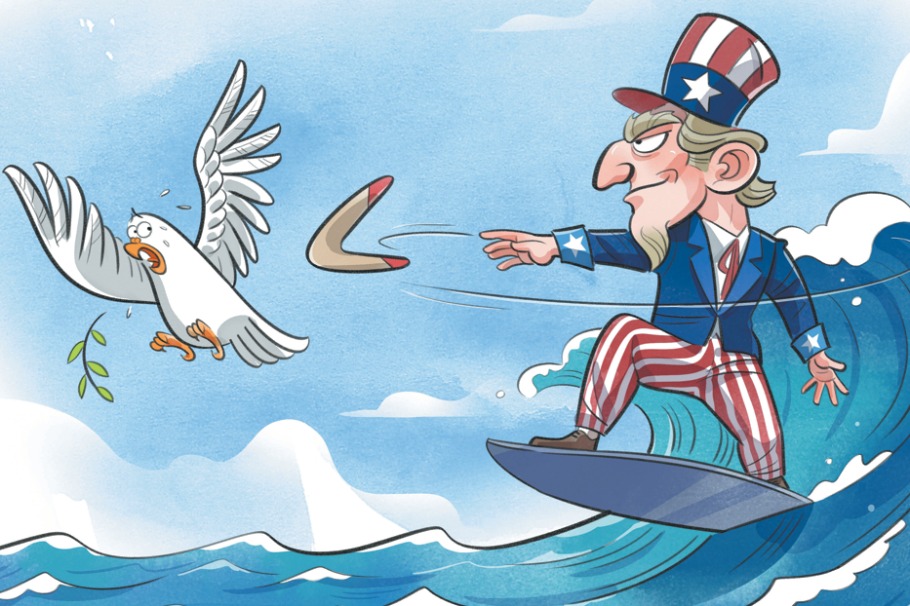
But the more the US government is offered, the more it wants. Resorting to intimidation and coercion, it persisted with exorbitant demands, maintained the additional tariffs imposed since the friction began, and insisted on including mandatory requirements concerning China's sovereign affairs in the deal, which only served to delay the resolution of remaining differences. On May 6, 2019, the US irresponsibly accused China of backtracking on its position to shift the blame for the inconclusive talks onto China. Despite China's fierce opposition, the US raised the additional tariffs on US$200 billion of Chinese exports to the US from 10 percent to 25 percent, which represented a serious setback to the economic and trade consultations. On May 13 the US announced that it had launched procedures to slap additional tariffs on remaining Chinese goods, which are worth around US$300 billion. These acts contradicted the agreement reached by the two presidents to ease friction through consultation-and the expectations of people around the world-casting a shadow over the bilateral economic and trade consultations and world economic growth. In defense of its own interests, China had to take tariff measures in response.
(IV) The US government should bear the sole and entire responsibility for this severe setback to the China-US economic and trade consultations
The US government accusation of Chinese backtracking is totally groundless. It is common practice for both sides to make new proposals for adjustments to the text and language in ongoing consultations. In the previous more than ten rounds of negotiations, the US administration kept changing its demands. It is reckless to accuse China of "backtracking" while the talks are still under way. Historical experience has proved that any attempt to force a deal through tactics such as smears, undermining and maximum pressure will only spoil the cooperative relationship. Historic opportunities will be missed.
A civilized country turns to forceful measures only when gentler approaches have failed. After the US issued the new tariff threat, the international community was widely concerned that China might cancel the consultation visit to the US. It kept a close watch on the future direction of the China-US trade negotiations. Bearing in mind the broader interests of trade and economic relations between the two countries, China remained coolheaded, exercised restraint, and sent a senior delegation to the US, as agreed, for the 11th round of economic and trade consultation from May 9 to 10. In doing so, China demonstrated the greatest sincerity and a strong sense of responsibility for resolving trade disputes through dialogue. In the following candid and constructive discussions, the two sides agreed to manage differences and continue consultations. China expressed strong opposition to the unilateral tariff increase by the US and stated its firm position that it would have to take necessary countermeasures. China emphasized once again that trade deals must be based on equality and mutual benefit. China will never compromise on major principles concerning China's core interests. One prerequisite for a trade deal is that the US should remove all additional tariffs imposed on Chinese exports and China's purchase of US goods should be realistic while ensuring that a proper balance in the text of the agreement is achieved to serve the common interests of both sides.