Rules and red tape holding back tech revolution, says Ma







Entrepreneur opens up debate on need for boundaries
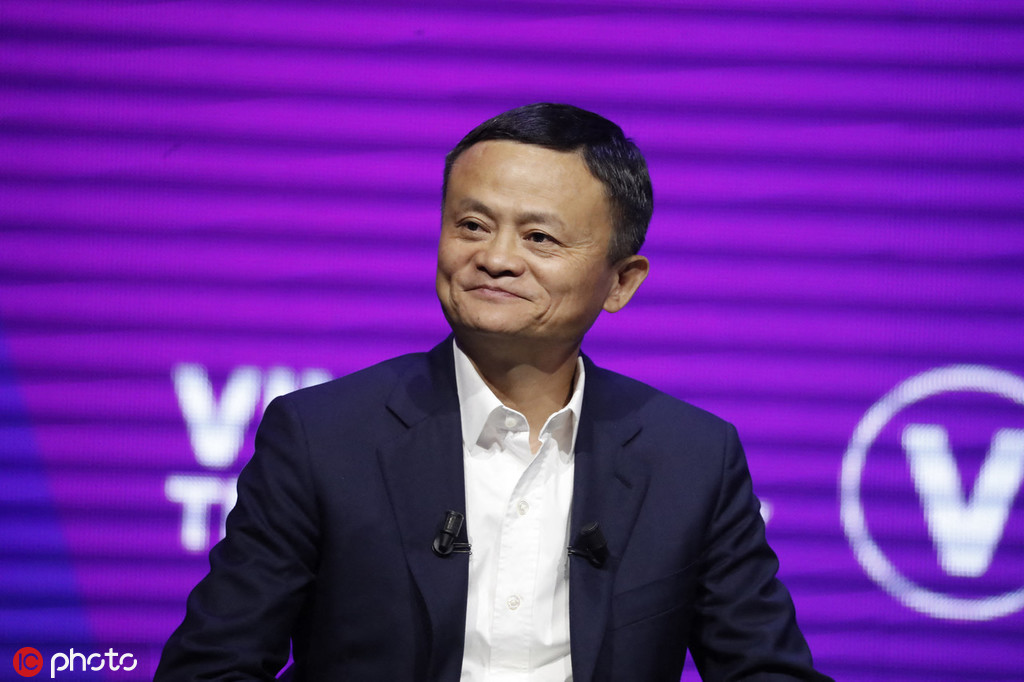
Alibaba founder Jack Ma says he is worried that over-regulation in Europe threatens to stifle innovation in the tech sector.
Ma suggested Europe's attitude had held back its tech sector and was the reason it had lagged behind China and the United States in building the kind of tech giants that now dominate.
"Everything they do is full with rules and laws," he told a tech conference in Paris. "And everything they think about, they start to worry. When they worry, they make rules and laws."
Having grown what is now one of the world's top half dozen e-commerce and internet conglomerates in less than two decades, Ma knows what he is talking about.
The tech giants in their present form probably would not exist if they had been held back at every turn by regulators more geared toward monitoring the old industrial economy.
However, there are those who now challenge the tech free-for-all and say that regulators should be alert to the potential downsides of the online revolution in an increasingly connected world.
In her book The Age of Surveillance Capitalism, the US academic and social psychologist Shoshana Zuboff warns that the pervasiveness of tech in every area of 21st century life threatens to alter human nature in the service of huge profits.
Charting the evolution of Silicon Valley giants such as Google and Facebook, Zuboff shows how they found ways of monetizing the vast caches of personal and behavioral information they received from their users - the so-called data exhaust.
Rather than dump this surplus data, tech companies realized they could use information from growing numbers of users to offer advertisers - their real customers–near-perfect predictions of individuals' needs and desires.
The commitment to informing and connecting people began to come second to cashing in on what the tech giants learned about them.
With the evolution of machine-learning and artificial intelligence, Zuboff fears that this surveillance phenomenon will extend to the everyday"smart"devices that surround us in our own homes and report back to big tech about every element of our behavior.
She says that when tech giants are challenged on issues such as privacy and for providing a forum for hate speech and fake news, they tend to fend off regulation by committing to reform themselves.
In most advanced tech markets, it has been left to private activist groups to sound the alarm against data intrusion. There is also a growing phenomenon of tech workers blowing the whistle on their employers when they believe ethical considerations are being breached.
In Europe, as Ma pointed out, politics and the law have tended to follow a more interventionist line.
A year ago, the European Union's General Data Protection Regulation came into force, requiring companies to justify their use of data, limit the distribution of personal data and put a higher threshold on how the public consents to the terms for using online services.
Last month, the European Commission, the EU's executive arm, set out guidelines for the ethical requirements of AI technology. These include maintaining human oversight of AI systems and putting mechanisms in place to hold systems accountable.
Among the barriers to regulation that Zuboff and other critics cite is the fact that the resources of the tech giants, and their monopoly on the vast amount of data they hold, far exceed the resources of those seeking to keep them in check.
It is also in Europe that a public backlash against the perceived excesses of big tech is most apparent. Activists have warned not only against invasions of privacy but also about the negative aspects of young people being constantly connected and threatened by online predators and cyberbullies.
The reputation of the online giants has not been improved by claims that big data was abused to try to influence the 2016 US presidential election and the UK's Brexit referendum the same year.
For all that, it is easy to sympathize with Ma's frustration. In its relatively brief history, big tech has given people ready access to a global store of information and made it easier to buy, sell and connect with friends, colleagues and counterparts across the planet.
Ma said China's tech revolution began at a time when most government officials could not establish rules because most did not fully understand the capabilities of the internet. "That gave us the chance to grow fast," he told the Paris conference.
There would always be bad players out there, according to Ma, who nevertheless pointed out that Alibaba had used AI to catch of lot of would-be internet thieves.
He said tech advances should not always be viewed as a problem but also as an opportunity.
Most enthusiastic online users, who enjoy the benefits that tech has to offer, would probably agree. But that does not mean regulators should not be there to make sure surveillance capitalism does not unintentionally end up leaving us all worse off.