Australia reveals its double standards with surveillance?bill







Australia has become another "surveillance state" with the passing of the Telecommunications and Other Legislation Amendment Bill or the Assistance and Access Bill 2018.
In general, the bill primarily amends the Telecommunications Act of 1997 and establishes a voluntary and mandatory legal framework for Australia's law enforcement and intelligence agencies to provide technical assistance to the private sector in encryption technology. Meanwhile, it also amends criminal laws, enhancing the powers of law enforcement and intelligence agencies to search and retrieve computers and data, and increases the punishment for whistle-blowers and fines for non-compliance.
One of the most contentious issues of the bill is whether to require "designated communication providers" to set back doors. On its official website, the Australian Home Office has opened a special column to clarify the "myths about the Assistance and Access Act" and states that the bill does not give the government the power to create a back door.
Even though the Australian government has claimed that the bill does not give the government the power to set back doors, Australian private sectors always believe that this is the purpose of the bill. The law is strongly opposed by many technology companies, who argue that it "artificially" and "intentionally" makes their products and services less secure.
Kishwar Rahman, general manager policy and advocacy at Australian Information Industry Association (AIIA), said that the Australian private sector has absolutely no confidence in the government, which has been given unprecedented, excessively broad powers and totally unpredictable consequences in practice.
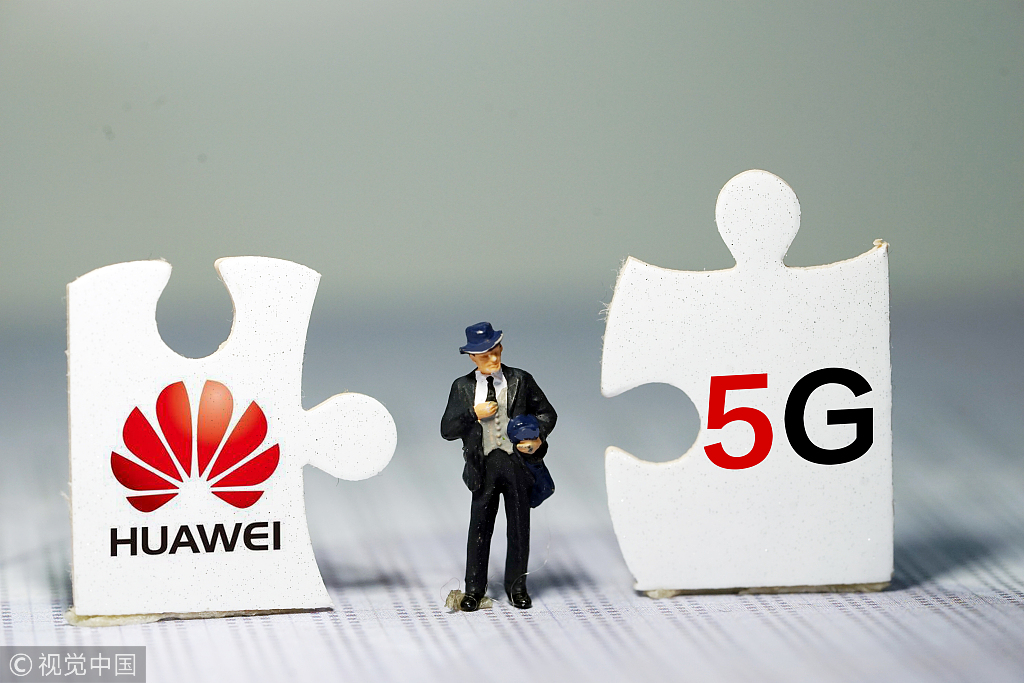
In August 2018, the Australian government announced that it would ban Chinese telecommunications equipment manufacturers (such as Huawei and ZTE) from providing 5G technology and products to domestic mobile phone operators for national security reasons, and banned the use of Chinese telecommunication devices in domestic broadband networks.
However, the Australian government has never provided any proof. The only reason they listed was the "to maintain supply chain security" rhetoric. In announcing the ban, the Australia government listed something to the effect that "some suppliers may follow instructions from foreign governments that conflict with Australian law and launch unauthorized visits or interventions".
On one hand, the Australian government excludes Chinese products and services in the name of ensuring supply chain security. On the other hand, it has built back doors in products and services through the "Assistance and Access Law" to weaken the safety of products and services.
Before this law, Edward Snowden has already revealed that US and UK intelligence agencies worked together to deliberately reduced the security of encryption technology. It can be seen that public interest and privacy protection is nothing but a fig leaf for their actions.
The Australian government is not concerned about the safety of products and services. The real concern is whether it can effectively force products and service providers to act according to their own will.
It still subscribes to the Cold War mentality of "anyone who is different from us cannot be trusted", and thinks that domestic enterprises are their own people, and products and services from outside the Commonwealth countries are simply not reliable.
Such thinking and behavior will only lead to a zero-sum situation. Australian technology companies are currently most worried about the passage of the "Assistance and Access Law" will cause other countries to question their products and services, making it difficult for the Australian companies to enter the international market, and ending up in a dilemma similar to Huawei's.
Michael Hong, Research Fellow, China Cyberspace Security Association.
The opinions expressed here are those of the writer and do not necessarily represent the views of China Daily and China Daily website.