Country hosts tech training for BRI talent







Programs by Academy of Sciences help graduates serve home nations
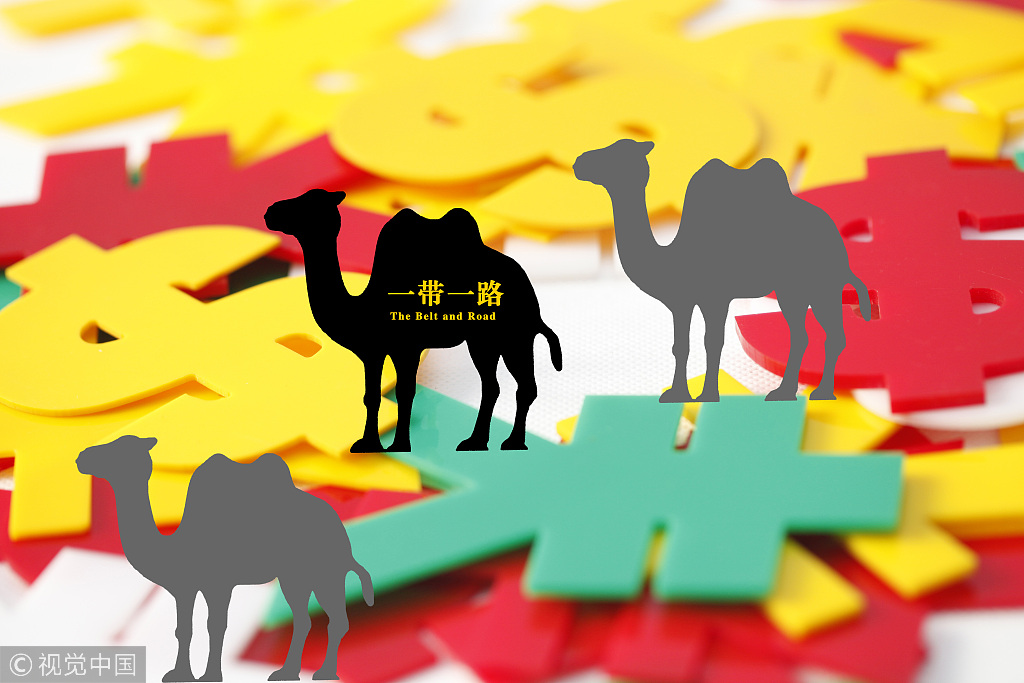
The Chinese Academy of Sciences has trained nearly 5,000 high-level scientific and technology students from countries and regions involved the Belt and Road Initiative since 2013, including more than 1,500 doctoral and master's degree students.
More than 700 foreign scientists from BRI countries have come to China for their postdoctoral work or visiting research, said Bai Chunli, the academy's president, at a news conference in Beijing on Friday. They studied genetics, biodiversity, medicine, climate change, green engineering, new materials and other fields in which their expertise is highly valued, he said.
"Many of these talented people have returned to their home countries and had a huge positive impact," he said, noting that the academy will continue to grow innovative and capable talent through scholarships, exchange programs and joint research projects.
The academy has also trained more than 1,000 administrative officials and staff members in science and technology fields, and some currently hold key government or research posts in their home countries, Bai said.
Some examples include the water management, public health and maritime environmental protection bureaus in Sri Lanka; intellectual property and biodiversity research centers in Uzbekistan; and the national reserve preservation agencies in Vietnam.
"Talent training has become a key bridge for communicating policies and enhancing people-to-people relations," Bai said.
For example, the academy's Central Asian Center of Drug Discovery and Development, the University of Chinese Academy of Sciences and the National University of Uzbekistan jointly built a science and education center in the Uzbek city of Tashkent. The center has become an important platform for training innovative medical talent in Central Asia, he said.
Over the last six years, the academy has invested more than 1.8 billion yuan ($268.7 million) into the BRI and launched more than 100 scientific projects to make the initiative more green and sustainable, Bai said. The projects are dedicated to tackling development obstacles, such as climate change, public health, disaster prevention and mitigation, food and water security and ecological protection.
The academy has also launched nine joint overseas research and education facilities with foreign partners around the world, with the 10th one currently being built in Pakistan. The centers are to serve as platforms to enhance scientific cooperation, talent training and innovation capability for China and BRI participants, Bai said.
In November, the academy launched the Alliance of International Science Organizations, the first organization created to connect the science communities of BRI participants, with the goals of improving scientific cooperation, sharing knowledge and promoting sustainable development.
The first 37 members of the alliance recently published an action plan for the 2019-20 period. They planned to establish a prize for contributing to scientific cooperation within the BRI, new scholarship programs, subsidiary groups on specific issues and new joint talent training programs, Bai said.
Cao Jinghua, the director of international cooperation at the academy, said the BRI has provided ample opportunity for scientists around the world to collaborate and use science and technology to solve challenges related to people's livelihoods.
In recent years, China provided technical support to aid Pakistan in building its infrastructure and mitigating natural disasters, he said. China also helped local governments in Sri Lanka, Cambodia, Laos and Tajikistan solve their culinary water problems.
"We hope our joint research centers and scientific projects will greatly benefit people overseas," Cao said.



- Latest addition to Shiziyang Bridge constructions brings main tower above 300 meters
- Hebei's 'ancient pressure cooker' setting internet ablaze
- Major urban renovation restores Xi'an's ancient moat
- China launches nationwide employment assistance program
- Shanghai braces for record passenger numbers during Spring Festival
- China’s disciplinary bodies penalize over 3,700 staff in 2025