Cooperation will be key to tackling global issues








This year will be a time of crucial challenges for peace and global security, and saving multilateralism is the key priority we have to tackle collectively.
It is all about providing global responses to international issues. But saving cooperation means taking initiatives to reinvent global governance. My conviction is that China must be at the forefront of this new world order.
First, given the growing role China is playing in global affairs, it is about responsibility. Over the past four decades, China has positioned itself as a pole of world stability. We see this in its long and fruitful commitment to global peace. We see it in economic and financial stability, too: Since the opening-up strategy initiated by Deng Xiaoping in the late 1970s, China's GDP has multiplied by 30, today representing more than 15 percent of international growth. Recently, a new step forward has been made in opening-up with a newly approved law to facilitate foreign investment. We also witness China's growing role in environmental issues. Chinese support for the 2015 United Nations Climate Change Conference as well as its 13th Five-Year Plan (2016-20) have been strong signs of Chinese awareness of the environment.
Today, China's responsibility is symbolized by a new pace of domestic reforms. This is evident in the financial sector, where important changes have been introduced to control risk and ensure more stability. In 2018, for example, the People's Bank of China, the country's central bank, implemented impressive reforms such as the creation of a super-regulator for the banking and insurance industries.
It can also be seen in the domestic economy, where the authorities have been encouraging the transition from export-based growth to an economy driven by high-quality products and national consumption. The development of the internet sector with giants such as JD.com and Alibaba has been crucial to boost services and domestic demand.
It is also true in social and urban organization, where China has made great progress to improve the quality of life. The Xiongan project, under the leadership of President Xi Jinping, aims to foster the creation of smart, connected and eco-friendly cities focused on both stability and quality.
Second, China's internationalization is about trust and exemplarity. When investing abroad, Chinese companies have to think in terms of partnership and show the prospects for other parties in terms of employment, growth, social benefits and other areas.
Exemplarity also means the capacity to show and develop good practices. Chinese companies can create global advisory boards to gather skills from different backgrounds and areas, helping them design a tailor-made strategy for each project abroad. They can develop "50-50" partnerships with local players to reassure and provide signs of a balanced approach. They can also initiate interactions and debates locally, through universities and think tanks, showing goodwill and the effort to better understand the place where they operate.
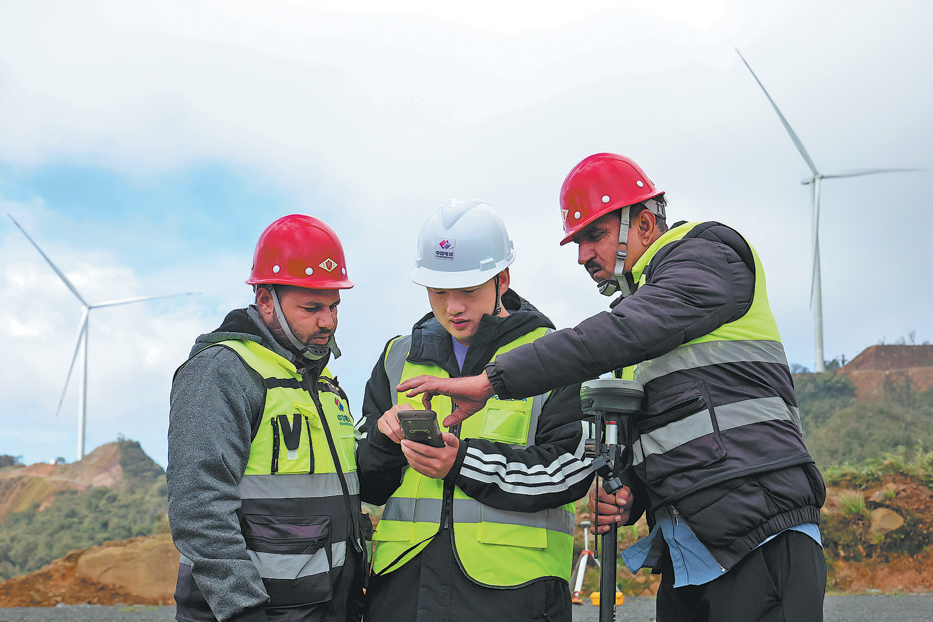
Third, China's success in globalization is-above all-about ambition and imagination. Since 2013, President Xi has outlined a highly dynamic project to help Chinese companies internationalize in the long run: The Belt and Road Initiative is a unique opportunity to carry out a global vision of inclusiveness, cooperation and shared development. It is a new economic impulse in a time of slowdown. The initiative comes with highly promising perspectives. In Asia alone, the need for investment in infrastructure over the coming decade is more than $20 trillion.
It is also a political game-changer, bringing together more than 60 countries. The ambition to create roads, railways, hospitals and other infrastructure is the best alternative to low development that generates exclusion and extremism. What is more, the BRI outlines a cultural new deal fostering bridges between people, states and civilizations. It will pave the way for intercultural understanding through industries such as tourism, architecture and lifestyle.
But more than projects, we also need new frames of cooperation to turn the initiative into reality. Political cooperation should be improved, thanks to concrete innovation. I have long been calling for the creation of a political mechanism driving the implementation of the Belt and Road at the highest levels. To begin with, we could initiate a pilot committee bringing together Chinese and European leadership to set priorities and address major obstacles. On the one hand, this committee would be in charge of handling regulatory issues regarding reciprocity, investment, intellectual property and public markets. On the other hand, it would be the relevant place of dialogue to build up a road map and exchange good practices on a reliable basis.
Economic cooperation is also key to facilitating financial operations and successfully driving cross-border projects. It is crucial to improve synergy by pooling resources and combining capacities. Bridges must be developed between financial instruments such as the Asian Infrastructure Investment Bank, the New Development Bank, the African Development Bank and the European Investment Bank. My conviction is that all these institutions can be part of cooperative and inclusive projects along the BRI.
The author is a distinguished professor at China Europe International Business School. The views do not necessarily reflect those of China Daily.