By using Taiwan, US is playing with fire







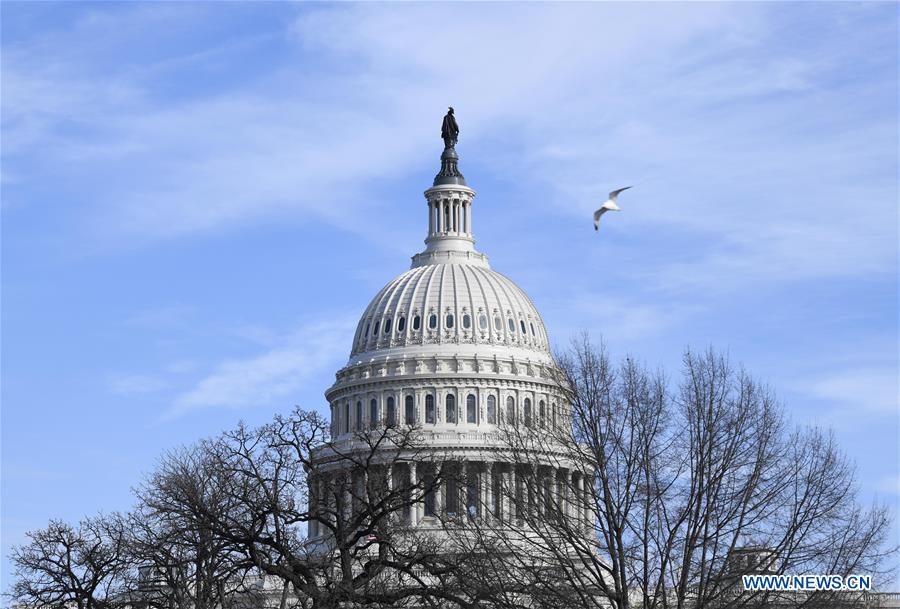
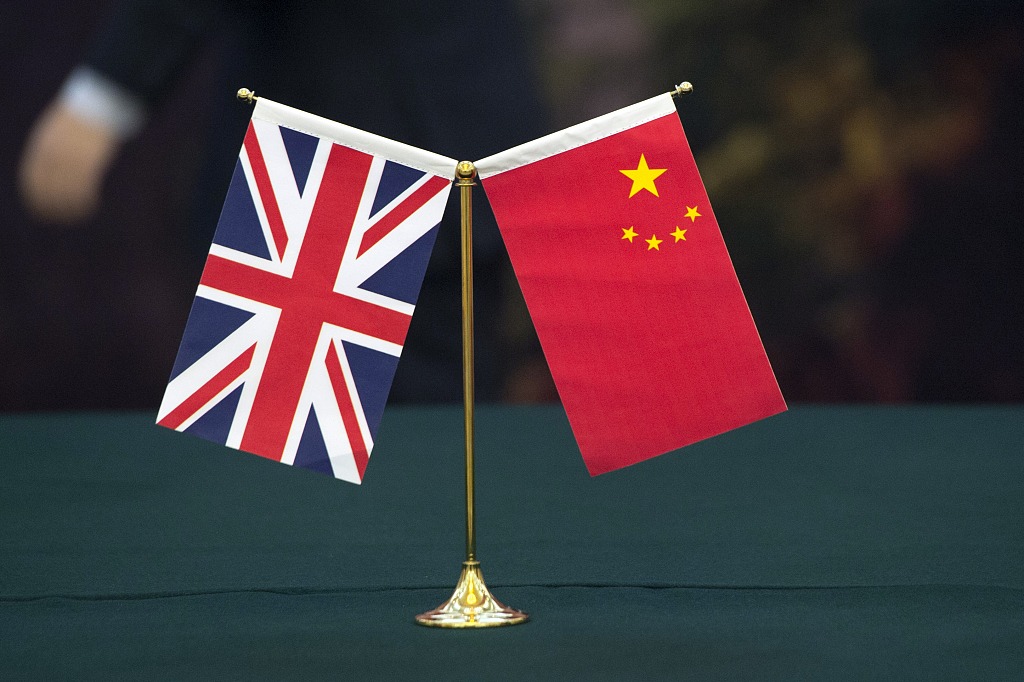
This year marks the 40th anniversary of the Joint Communiqué on the Establishment of Diplomatic Relations signed by Beijing and Washington that acknowledges there is only one China and Taiwan is part of China. It is also the 40th anniversary of the Taiwan Relations Act the US Congress passed to permit unofficial relations with Taipei to continue and the US to sell arms and military equipment to the island.
For 40 years, US administrations have frequently used the Act as a political card to influence Sino-US ties and interfere in China's internal affairs, as well as to provide "spiritual" support for the island authorities that seek "security" guarantees from the US.
Washington breaching established protocols
But by allowing Tsai Ing-wen, the island's "pro-independence" leader, to stop over in Hawaii on her way back to the island after an eight-day tour of three Pacific island nations this week, Washington is breaching all established protocols and violating the 1979 Joint Communiqué. Beijing lodged "stern representations" with Washington on Thursday against Tsai's transit in Hawaii.
"We have consistently and resolutely opposed the United States or other countries which have diplomatic relations with China arranging this kind of transit," Foreign Ministry spokesman Geng Shuang said in Beijing. Beijing has urged Washington not to send "Taiwan independence forces any wrong signal", Geng said.
The method behind fluctuating policy of US
When the US intends to maintain good relations with the mainland, it significantly reduces the use of or even refrains from mentioning the Taiwan Relations Act. But when Washington wants to put pressure on Beijing to finalize a deal or sign a trade agreement in its favor, it promptly resorts to using the Act. At times, even the island's authorities stir up trouble, prompting the US to use the Act to try and browbeat or incite the mainland.
In recent years, some US Congress members have been trying to foment trouble across the Taiwan Straits. The US has already made a highly provocative move by introducing the Taiwan Travel Act a year ago, as it allows high-level diplomatic exchanges between the US and the island. And now some in the US say Tsai, who doesn't acknowledge the 1992 Consensus that there is only one China, should be invited to visit the US Congress.
By suggesting such an outrageous idea, these people are playing with fire, because if Tsai were to visit the US, Sino-US relations would suffer a serious blow, and the security and stability across the Straits would be damaged.
US must not worsen already tense situation
To make matters worse, last week the US and Taiwan announced the launch of a new "dialogue mechanism" to achieve closer "bilateral cooperation" and to defend and promote "shared values". Titled the "Indo-Pacific Democratic Governance Consultations", the new "dialogue mechanism" is aimed at "exploring" ways to increase "US-Taiwan exchanges" and pursue joint projects, said Brent Christensen, the highest-ranking US official posted in Taiwan.
As if that was not enough of a provocation, Christensen said the first consultation will be held in September when a US delegation, led by a senior official from the State Department's Bureau of Democracy, Human Rights and Labor, is expected to visit Taipei.
The US has been using one pretext or the other to provoke Beijing and violate the 1979 Joint Communiqué. But for the sake of Sino-US relations and regional peace, Washington should realize that instead of gaining anything, it would suffer huge economic and political damage by interfering in China's internal affairs.
Xi's message of peace and reunification
Delivering a speech to mark the 40th anniversary of the Message to Taiwan Compatriots on Jan 2, President Xi Jinping said that, on the basis of the common political foundation of upholding the 1992 Consensus and opposing "Taiwan independence", political parties and people across all sections of society on both sides of the Straits can recommend their representatives to hold in-depth democratic consultations and establish institutional arrangements for peaceful development of cross-Straits relations.
Xi's speech was widely welcomed by people on both sides of the Straits, most of whom support the peaceful reunification of Taiwan with the motherland. But the separatist forces on the island, who represent a miniscule percentage of the island's population, and their representative, the ruling Democratic Progressive Party, have devised a counter-plan against the peaceful reunification plan to fulfill their own narrow political gains.
And at such a crucial moment, 10 US Congress members have made a 7-minute video to commemorate the 40th anniversary of the Taiwan Relations Act to openly show their support to Tsai and her "pro-independence" supporters.
Although they comprise a small part of the Congress, they hold representative posts-for example James Inhofe is co-chairman of US Senate Committee on Armed Services and Congressional Taiwan Caucus, and Eliot Engel is chairman of House Foreign Affairs Committee, who has said the US would provide security support for Taiwan to jointly counter the mainland.
Conspiracy to contain Beijing won't work
The Congress members have also demanded that the US administration put into practice the Taiwan Travel Act and the Asia Reassurance Initiative Act, both passed last year, to fulfill its promise to the Tsai authorities. In their letter to US President Donald Trump, some Congress members have said the Taiwan Relations Act will help maintain peace, security and stability in the Indo-Pacific region and suppress Beijing's so-called aggression.
Moreover, to seek the US' protection and contain Beijing, the Tsai authorities have been hyping up the island's strategic value for Washington. But the fact is, the empty promises given by the Congress members cannot guarantee any safety to the Tsai authorities and, instead, could put them in danger.
Ahead of the 2020 elections on the island, some US Congress members are inciting the Tsai authorities to provoke disputes with the mainland by supporting those seeking "Taiwan independence". But since any attempt to split Taiwan from the motherland would lead to a conflict, it will be in the interest of neither side of the Straits nor the US. Worse, such a conflict would destroy peace and stability in the entire Asia-Pacific region.
US Congress must stop sending wrong signals
If the US Congress continues to send the wrong signals to the "pro-independence" DPP, it will embolden the Tsai authorities to take more risky actions, and thus damage cross-Straits ties further, harming the interests of Beijing and Washington both.
US Congress members are elected by American voters as their representatives and, therefore, they should always put the interests of their people and country first. And instigating the Tsai authorities to further damage cross-Straits ties certainly doesn't serve the interest of either American voters or the US as a country.
The author is a professor at the Institute of Taiwan Studies, Beijing Union University. The views don't necessarily represent those of China Daily.